
10 & zero one is pleased to present Plastic Age, the first solo exhibition in Italy by Mona Young-eun Kim (Korea, 1988), curated by Chiara Boscolo, with a critical text by Miriam Rejas Del Pino.
Plastic Age is an exhibition populated by deformed, suffering skeletons wrapped in themselves. Korean artist Mona Young-eun Kim poposes a dystopian tale in which human remains tell the story of the fatal fate of our civilisation. On this occasion,
10 & zero uno becomes a container for the memory of the last human beings on Earth, who experience first-hand the annihilation of the species. Thus, the exhibition reflects on humans’ harmful behaviour towards the Earth and its inhabitants through a narrative concerning the social balance and biopolitical control of bodies.
The artistic experience proposed by Young-Eun Kim in Plastic Age is divided into two acts. Through an almost playful visual rendering, the artist tackles one of the most delicate issues of our everyday life: preserving the planet to avoid the end of Humanity. Or rather, of species. At first, the viewer is surrounded by inorganic organs, no longer functioning, almost like broken, extinguished containers. These organs, preserved in perfect condition thanks to the plastic inside them, have changed their morphological characteristics to the point where they no longer fulfil their original functions. In this first scenario, the spectator plays a role between the archaeologist and the anatomopathologist. These organs, arriving from the not-too-distant future, prostrate themselves before our eyes, eager to be scrutinised with the coldness of a scientific gaze. Our task is, therefore, to open the human body to look inside: open to know but, to open, we must destroy first.
The second act of the narration consists of an immersive VR work that, as a sort of mystical penance, forces the viewer to watch an action repeatedly. “Drink water! Drink! Drink!” says the voice, forcing the virtual character to start over and over. Dueto its medial nature, the work emulates a dissolution of the illusory dimension of representation into the real one inhabited by the viewer. By collapsing these two spatialities, the viewer is subjected to a perceptual discontinuity between the space of his ocular and auditory vision and the haptic perception of his surroundings. The artist uses a technology that allows us to step outside the immersive narrative at will. Perhaps we can react now from this privileged position.
Observing these artistic objects puts the viewer in a condition of extreme presence. “Presence” is understood as “pre-essence”, a vision that precedes something that has yet to happen. This catastrophic event brought back by Young-eun Kim’s artistic gesture recalls plastic as the pharmacopoeia of our society (poison on the one hand and remedy on the other). Following the data produced by the most recent studies on the subject, one can see how China was, until recently, the country that managed the recycling of almost half of global solid waste1. After the ‘National Sword’, China’s 2018 ban on importing foreign waste, Europe found itself without a recycling system capable of absorbing the volume and accumulation generated by its inhabitants. Thus new migratory “waste routes” take place, and other political agreements are born whereby countries such as Malaysia, Thailand, Indonesia or Turkey are the new owners of our rubbish.
In the artist’s proposal, Humanity, which can no longer manage an eco-sustainable recycling system, is forced to feed exclusively on this artificial substance. Unfortunately, the only one left after the drastic reduction of available resources. Nothing could be further from fantasy; we are already ‘threatened’ by microplastics that ubiquitously populate our surroundings. Every week a human ingests microplastics equivalent to the weight of a credit card. In the artist’s imagination, this is the act that, consciously performed, will lead the human species to its extinction. Not before a desperate attempt to adapt, however. The excess plastic ingested could weigh down the organs to collapse the human spine and deform our anthropomorphic appearance. To become quadrupeds again, to regain the position of our ancestors where hands and feet are dipped in mud. No longer look into each other’s eyes, but stare at the floor or the bottom of the person in front of you and retreating, submitting to the point of exhaustion.
With lacerating iconography, we are shown the ‘baseness’ achieved by the human species, where the bodily suffering of the last humans on Earth results from a concatenation of bad decisions made in our present.
Young-eun Kim’s humans, who had to overcome the limits of their condition to survive, reached a state where the organic and inorganic coexist in one being and form a new body doomed to failure.
Fortunately, there is still something we can do.
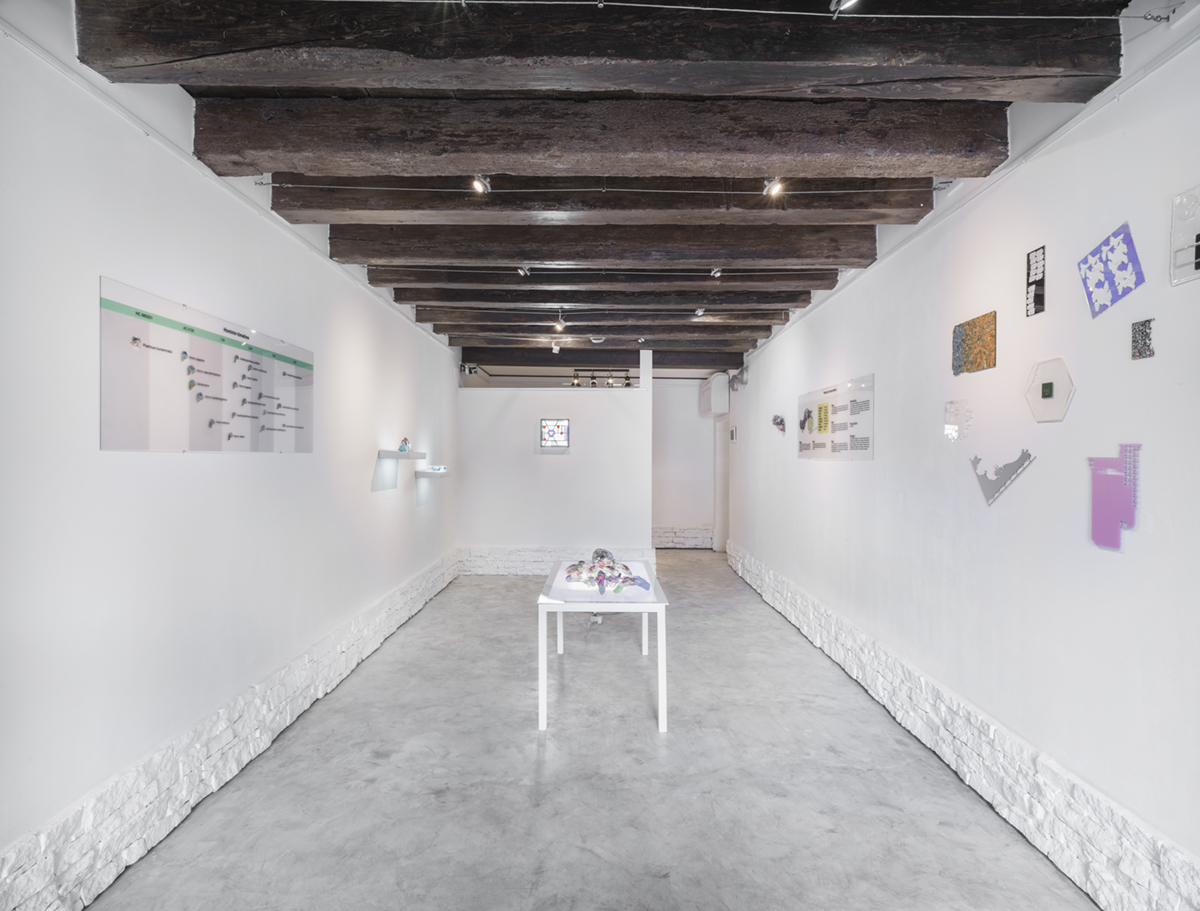
Exhibition view, Plastic Age, 2022, 10 & zero uno, Ph. Filippo Molena 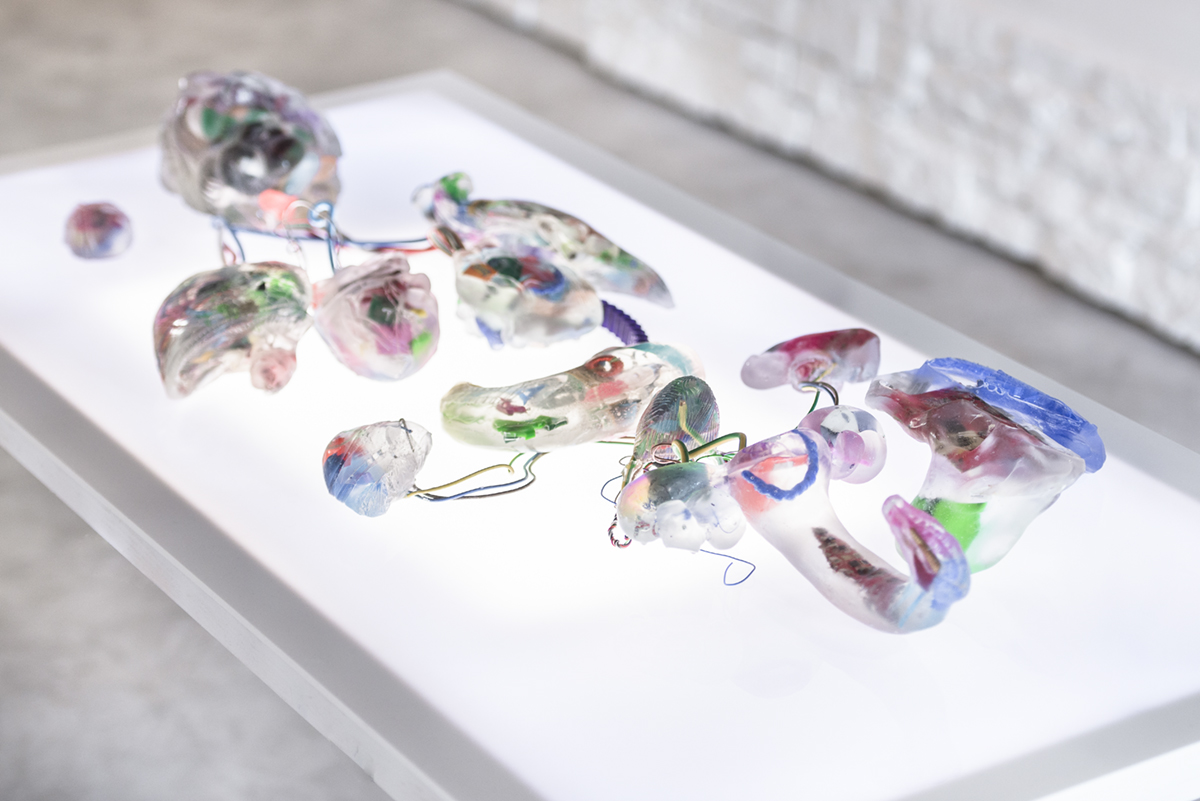
Exhibition view, Plastic Age, 2022, 10 & zero uno, Ph. Filippo Molena 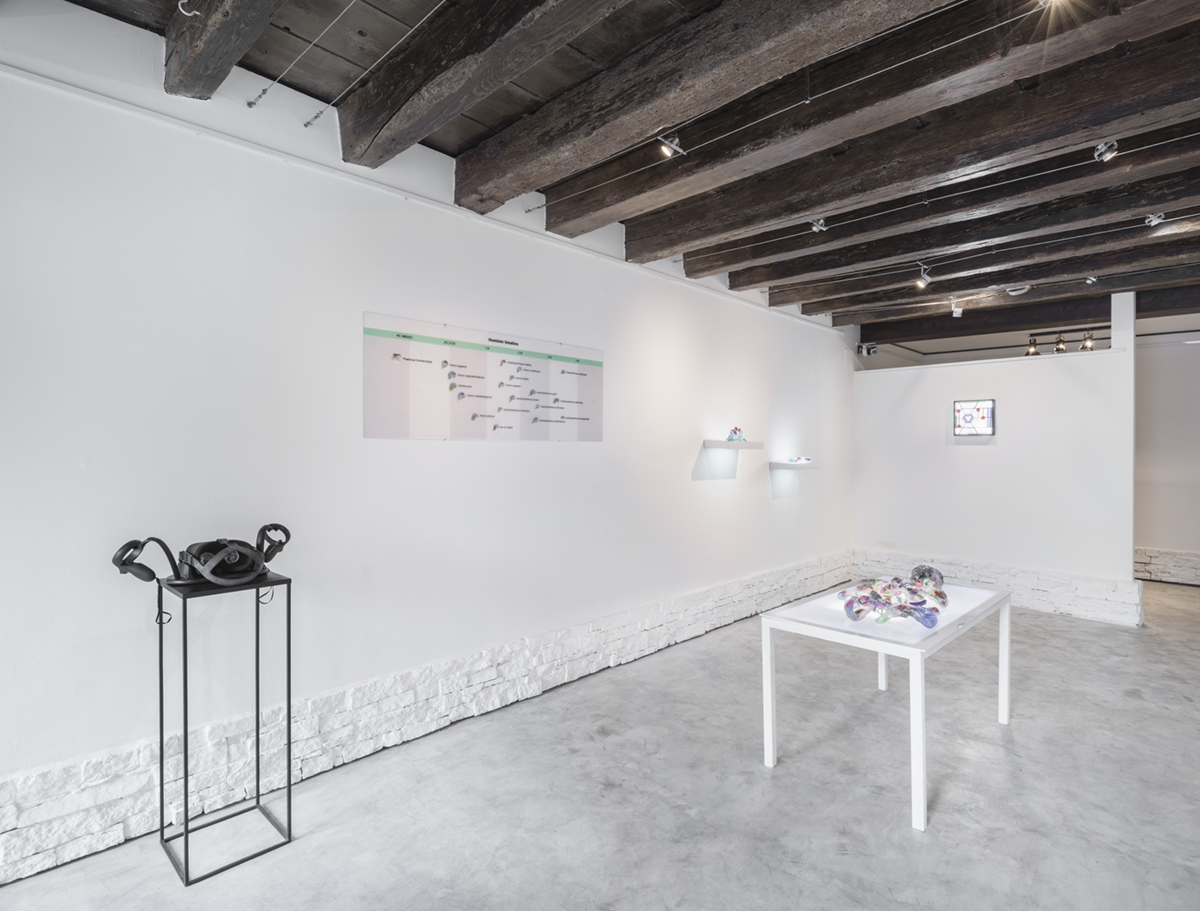
Exhibition view, Plastic Age, 2022, 10 & zero uno, Ph. Filippo Molena 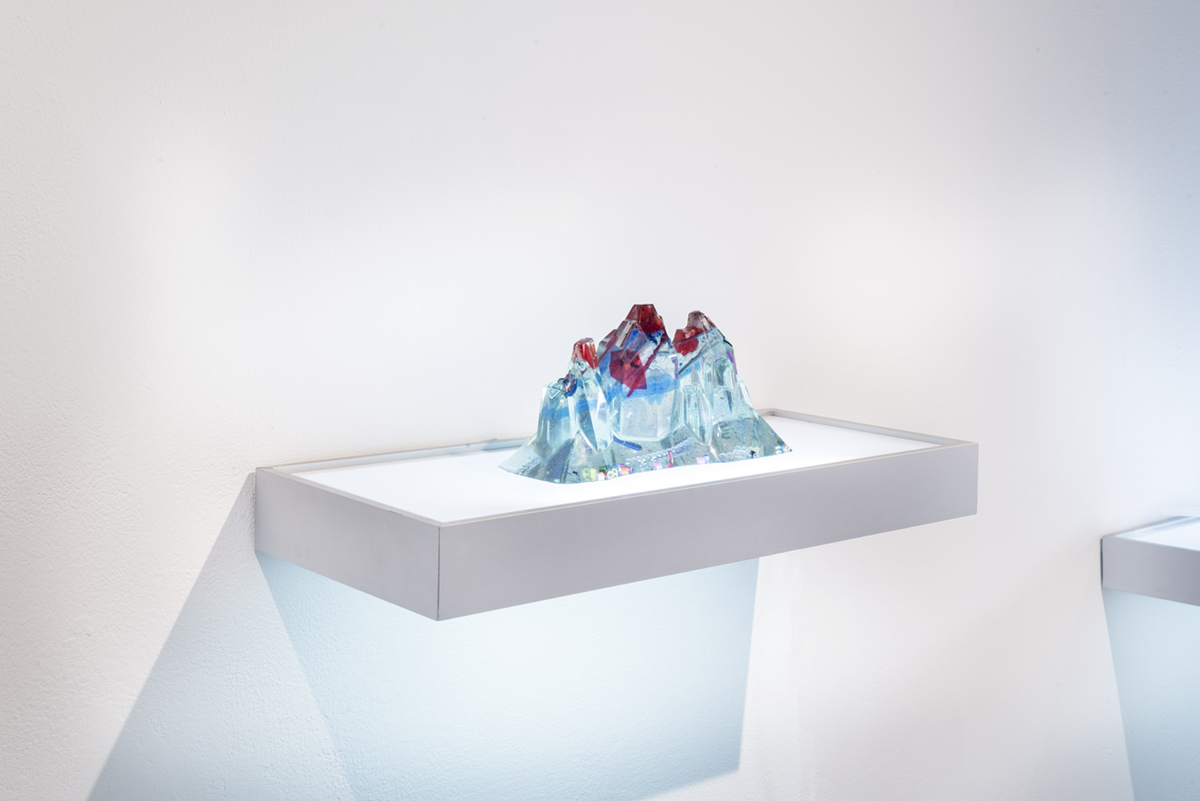
Exhibition view, Plastic Age, 2022, 10 & zero uno, Ph. Filippo Molena 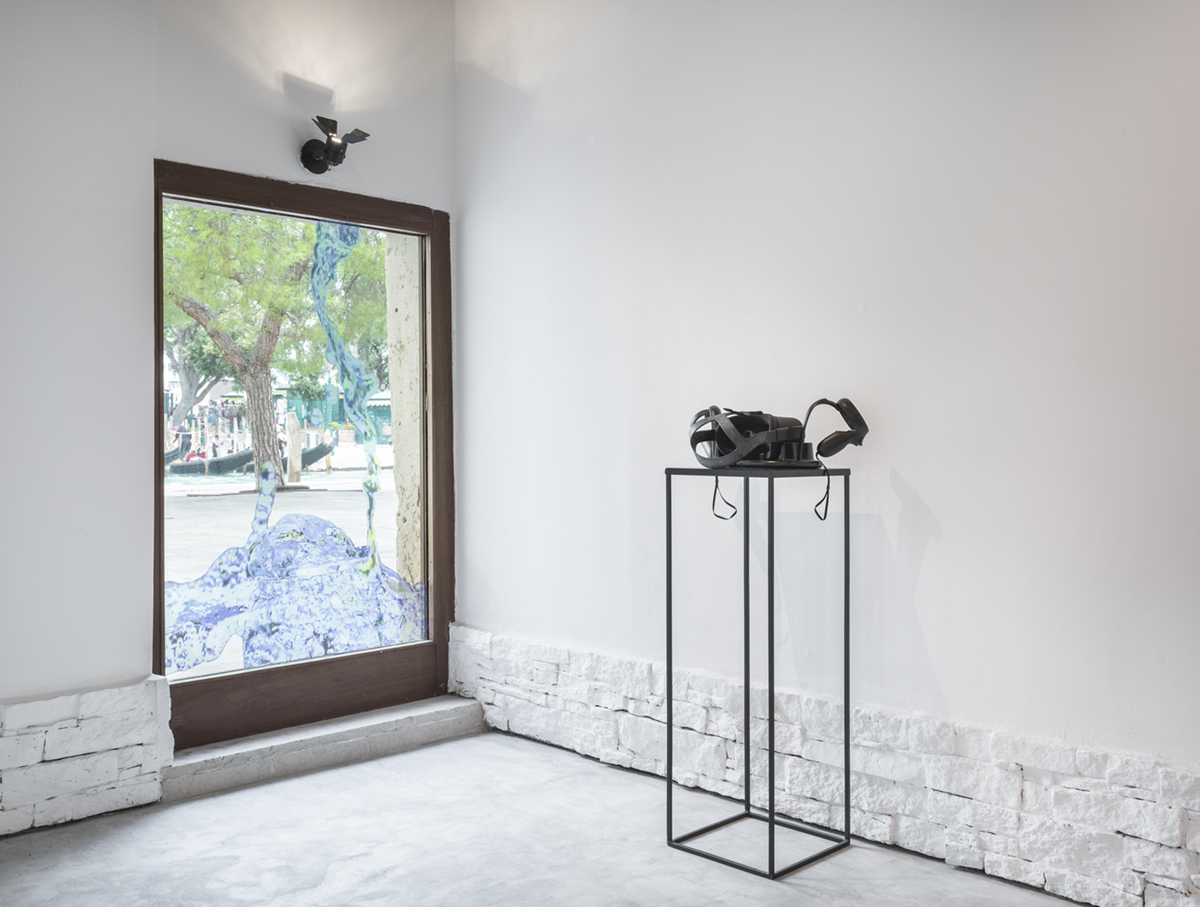
Exhibition view, Plastic Age, 2022, 10 & zero uno, Ph. Filippo Molena 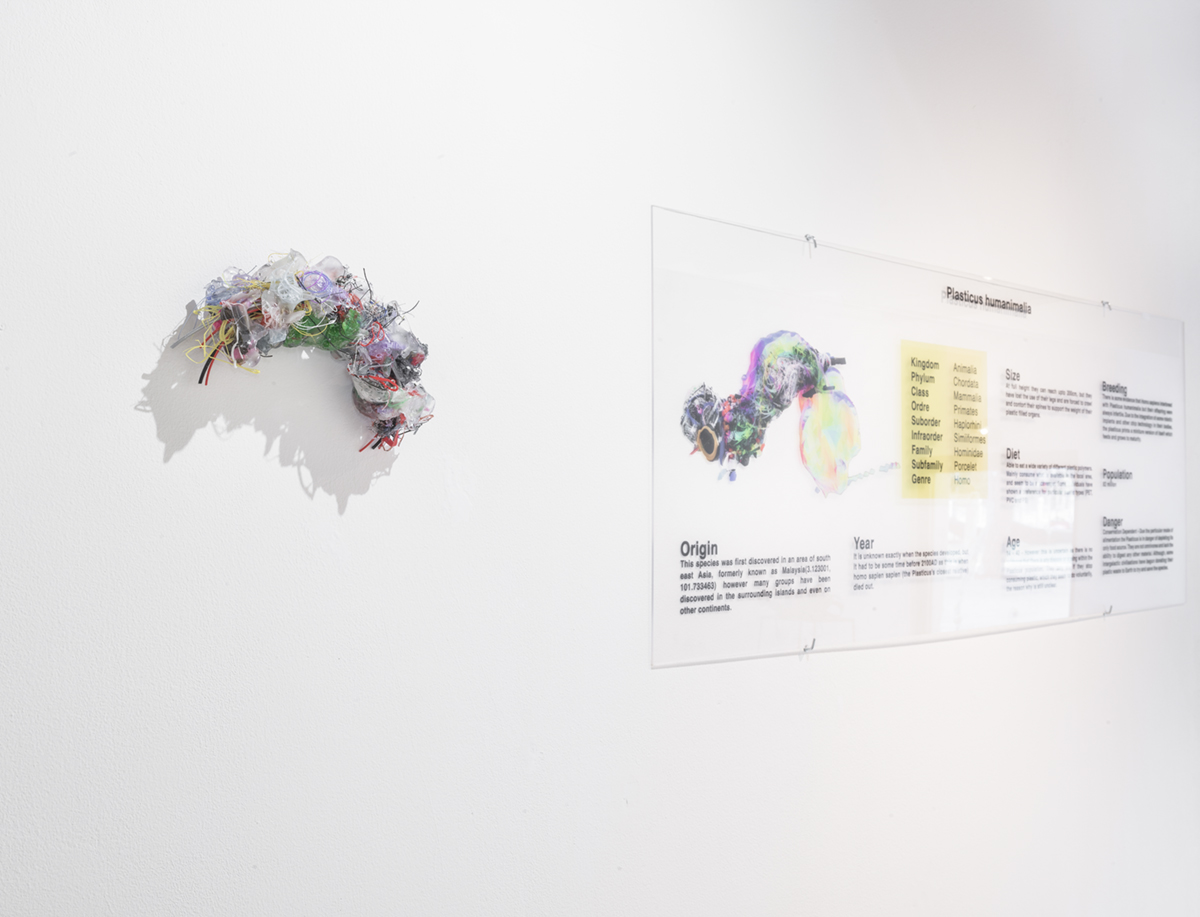
Exhibition view, Plastic Age, 2022, 10 & zero uno, Ph. Filippo Molena 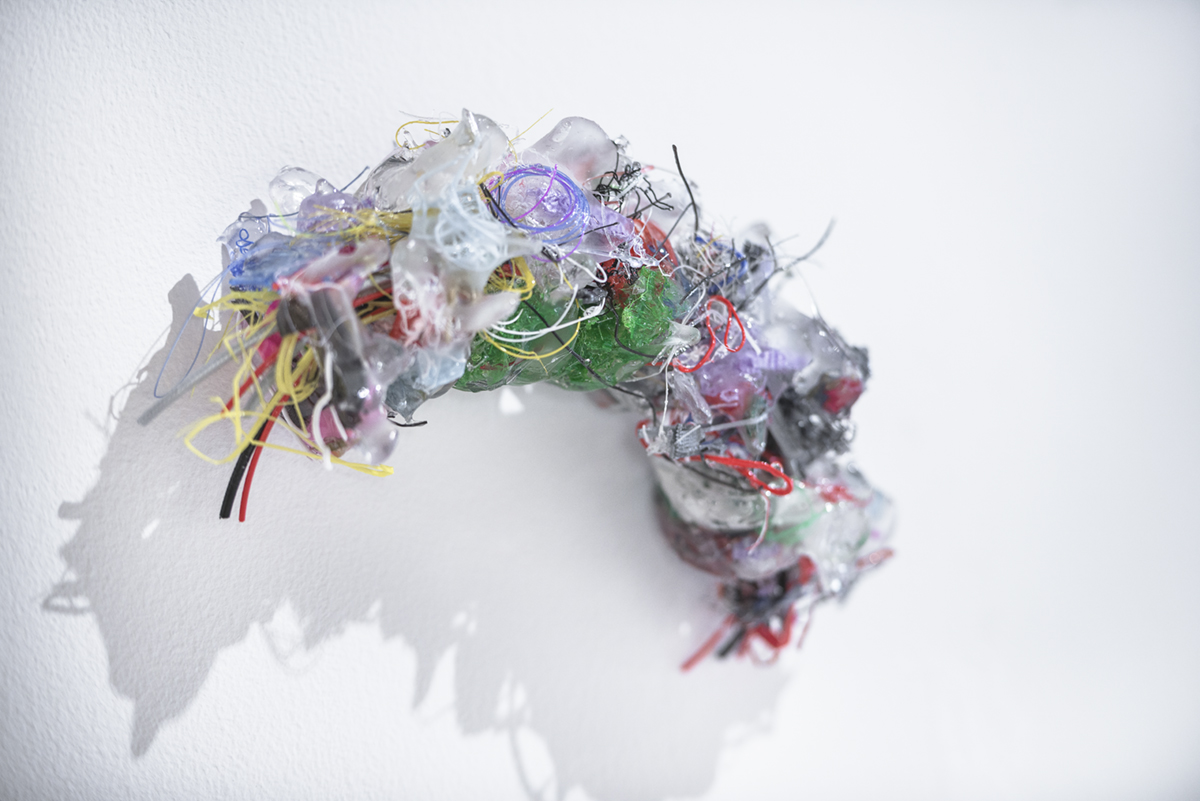
Exhibition view, Plastic Age, 2022, 10 & zero uno, Ph. Filippo Molena 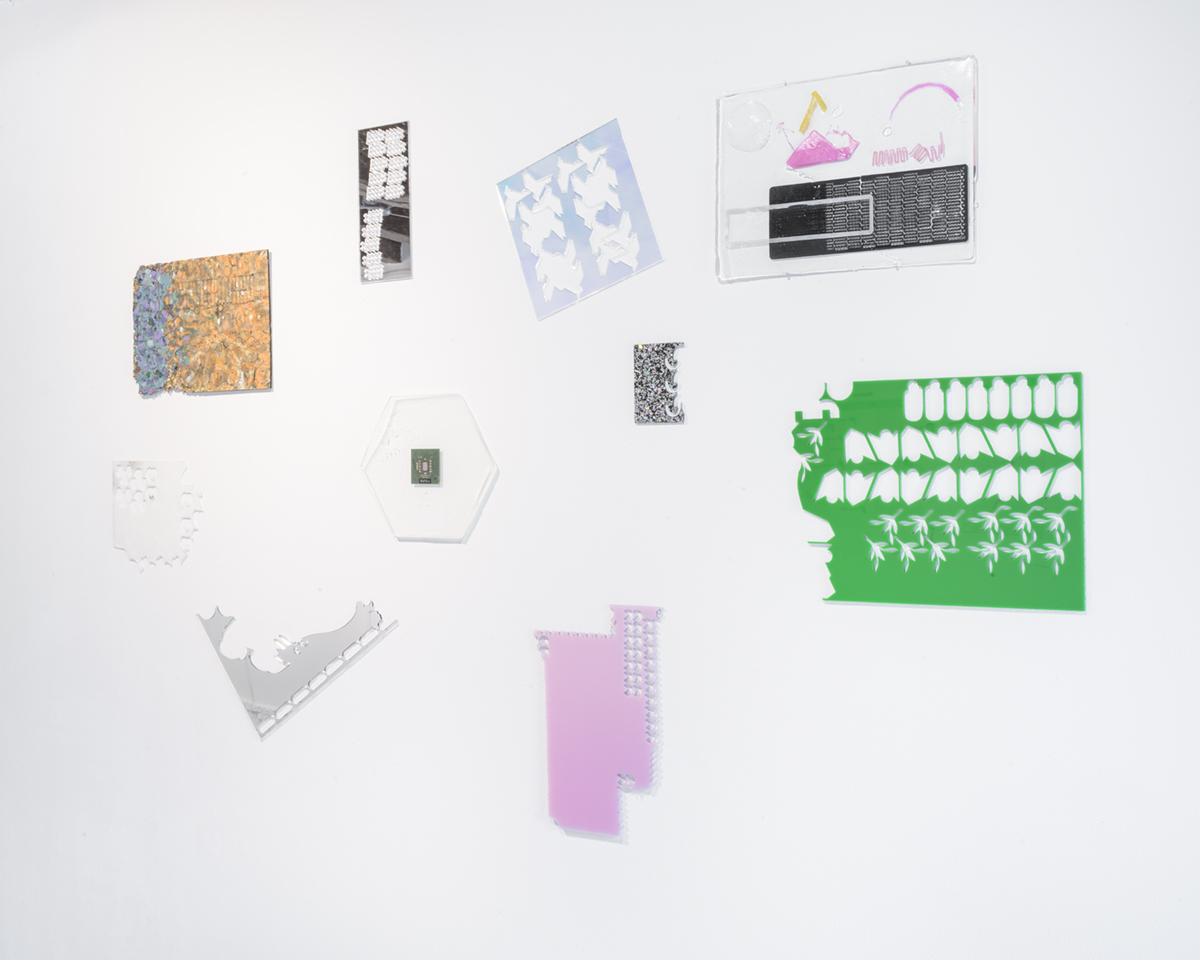
Exhibition view, Plastic Age, 2022, 10 & zero uno, Ph. Filippo Molena 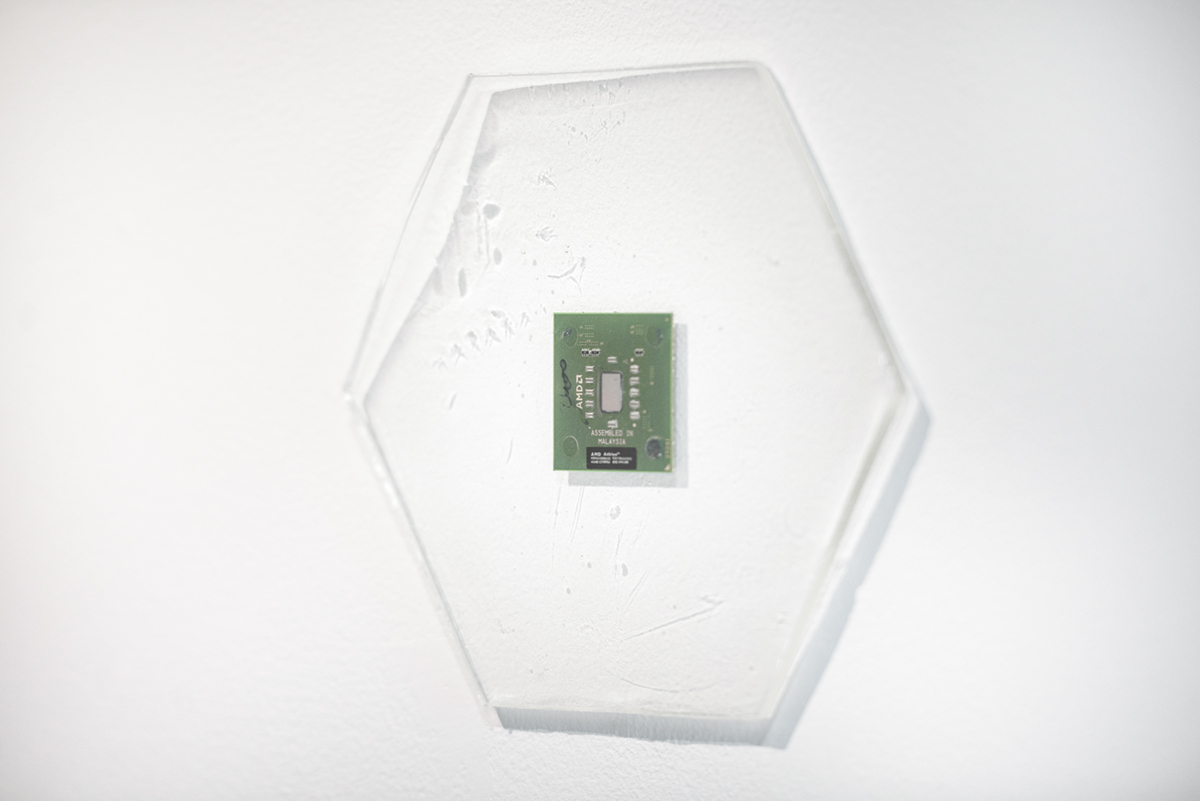
Exhibition view, Plastic Age, 2022, 10 & zero uno, Ph. Filippo Molena
🖌️ Mona Young-eun Kim (1988, Korea)
Her practice is dystopian, satirical and surreal. She often uses VR and AR to reproduce and modify the surrounding space. Her work remains current through the use of objects and languages. Many of her works question the understanding of visual signs and information and their possible evolution in the future. The signs he puts into work, however, are not always legible. This ambiguity creates a poetic and humorous space. Her participatory works address the notion of social connectivity, offering the audience the freedom to reinterpret them and make them their own. Interested in artistic interventions in public space, Mona young-eun Kim produced a public installation work (2017-2018) for the rehabilitation of Les Halles Laissac in Montpellier. She also created a 360-degree geolocated video as part of the artistic and cultural programming of Grand Paris and 104 Paris (2019). She participated in the Season 6 art residency (2018-2019), sponsored by Mo.Co. in Kochi (India), Venice (Italy) and Istanbul (Turkey) during the international biennials. She was artist-in-residence at the Cité internationale des arts 2020-2021 in Paris.
 10 & zero uno