
10 & zero uno is pleased to announce the opening of its new venue in Venice, located at Via Garibaldi 1830. To mark the occasion, the works of Luca De Gaetano will take center stage at the inauguration of this new space!
The exhibition, curated by Chiara Boscolo and narrated through the words of Giada Pellicari, opens on January 27th, 2023, at 6:00 PM.
As described in the accompanying essay, “Illumina, custodisci, reggi e governa me” (“Enlighten, guard, rule, and guide me”) is the title of Luca De Gaetano’s new project, referencing a well-known prayer from the Christian tradition. Angelo di Dio evokes a spiritual and simultaneously mystical dimension.
This phrase, through its circularity and repetition, takes on the form of a mantra, alluding to a plea for protection and safety.
For this exhibition, De Gaetano highlights some of his deep esoteric and religious interests, cultivated through years of studying symbology from tarot and pagan traditions, interwoven with his Catholic background. […]
The series of works on display follow a painterly path that continuously interweaves eroticism and mysticism, sacred and queer imagery, alongside an ongoing portrait practice primarily dedicated to friends.
His painting process is accompanied by drawing: the canvas is first outlined in colored pencil, then built up with layers of oil paint—initially thin, and gradually thicker. In some works, he incorporates embroidery, considered a method for creating magical, artistic amulets using colored cotton thread. The reverse side of these pieces is also revealing.
Luca’s witches are powerful beings.
Here, they are warrior women—referred to as “protectors,” “soldiers,” or “guardians.” Intelligent and emancipated, “Minervan” figures wear boots and high heels, and are unmistakably contemporary thanks to their use of neon colors. In contact with both artificial and natural elements—such as water springs, meadows, and mountains—they are sometimes placed within domestic interiors. Often, we find them near a refrigerator, conceived as a contemporary lair where raw materials are preserved. This becomes a sort of strange, frozen cabinet of curiosities, where among the food one might find statues, amulets, and cats.
Primal, reptilian behaviors also appear—like brutally defecating in the kitchen, though not without a certain charm, as seen in Strega Custode I – The Blue Fridge Will Release Your Pain. Sometimes, the fridge is displaced into alien contexts, within landscapes that feel archaic and remote. It becomes an emotional baggage dragged along a nomadic pilgrimage, akin to a psychological state of never feeling at home. In this sense, the idea of protecting one’s body and fragility becomes essential. These witches, in the end, may help us do just that.
A sense of encountering a magical and seductive being comes through in the painting Strega Mistica I – The Ingredient I Was Looking For Was Already There, where the central figure is a sharply curved, sinuous creature offering us a mushroom. This work is best viewed in a warm, soft light to fully appreciate its inviting emergence.
She may be a green witch, a specialist in herbs and plants, reminiscent of a deaconess—evoking Christoph Daxelmüller’s writings on the connection between the “saint” and the “witch” in his studies on Christianity, superstition, and magic. He notes how, in early Christianity, women participated in ritual activities and liturgies just like men. With later references to Saint Paul’s texts on the necessity of women’s silence in church, such figures were relegated to subordinate roles. Witchcraft and its study are therefore intimately connected to questions of female emancipation and feminist inquiry.
The analysis of feminine energy is also informed by the artist’s readings on the moon-mother relationship and on plant medicine, understood in a Plinian sense. Pliny the Elder, for instance, devoted long chapters in his Naturalis Historia to magic, where he identified close ties between it, medicine, religion, and the mathematical arts.
A standout piece in the exhibition is Strega Soldato II – As You Defend All That I Have Found, I Will Bring the Light to You. The work reveals a cinematic, narrative vision unfolding from left to right, like a storyboard. Three vertical sections can be discerned: the soldier-witch near the refrigerator—an almost constant element—the table for tarot reading, and a background figure secluded from the world, obsessively posting to Instagram. This piece is filled with details that may not be apparent at first glance.
At the center, a quiet tarot reading is taking place, where the Tower, the Devil, the Wheel of Fortune, and the Star appear. These likely reference the most well-known decks in the European tradition: the Tarot de Marseille and the Rider-Waite deck, both familiar to the artist. Recently, he has also shown interest in the symbolism of the Sola Busca tarot: a 15th-century deck, fully preserved and attributed to Nicola di Maestro Antonio d’Ancona, now part of the collection at the Pinacoteca di Brera.
The powerful energy of the witch series dialogues intimately with the more delicate flower series—a decidedly more intimate project, also in scale.
It speaks of nature and the seasons as cycles of time, understood as a form of spiritual renewal. The protagonists are gazes, silent in their communication, yet forceful and persuasive. With feline, magnetic traits, they are recognizable eyes—familiar or from popular culture—belonging to women who may symbolize feminine archetypes, such as Alda Merini, Lady Diana, Bette Davis, and Sandra Milo.
And finally, his mother Daniela, who always returns.

Exhibition View, Illumina, custodisci, reggi e governa me, 2023, 10 & zero uno, Ph. Filippo Molena 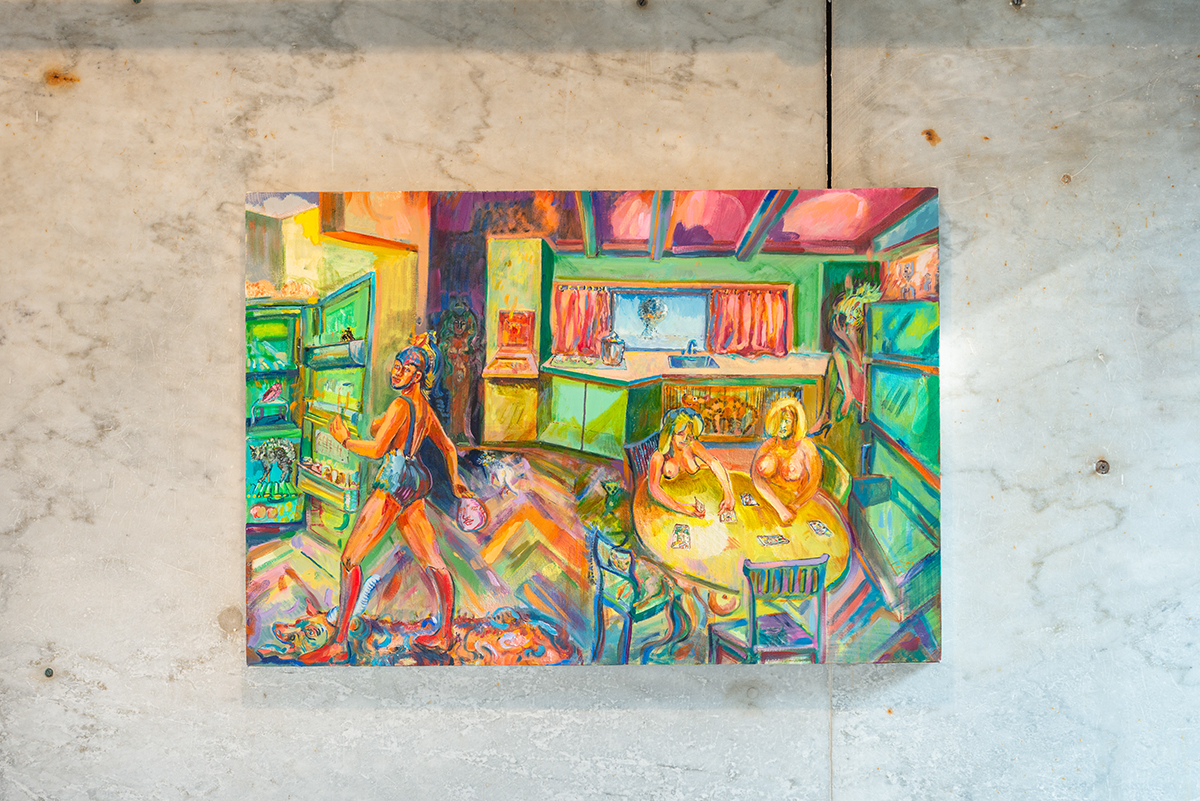
Luca De Gaetano, Strega soldato II – as you defend all that I have found, I will bring the light to you, 2022, oil on canvas, 58,5 x 85 cm, Ph. Filippo Molena 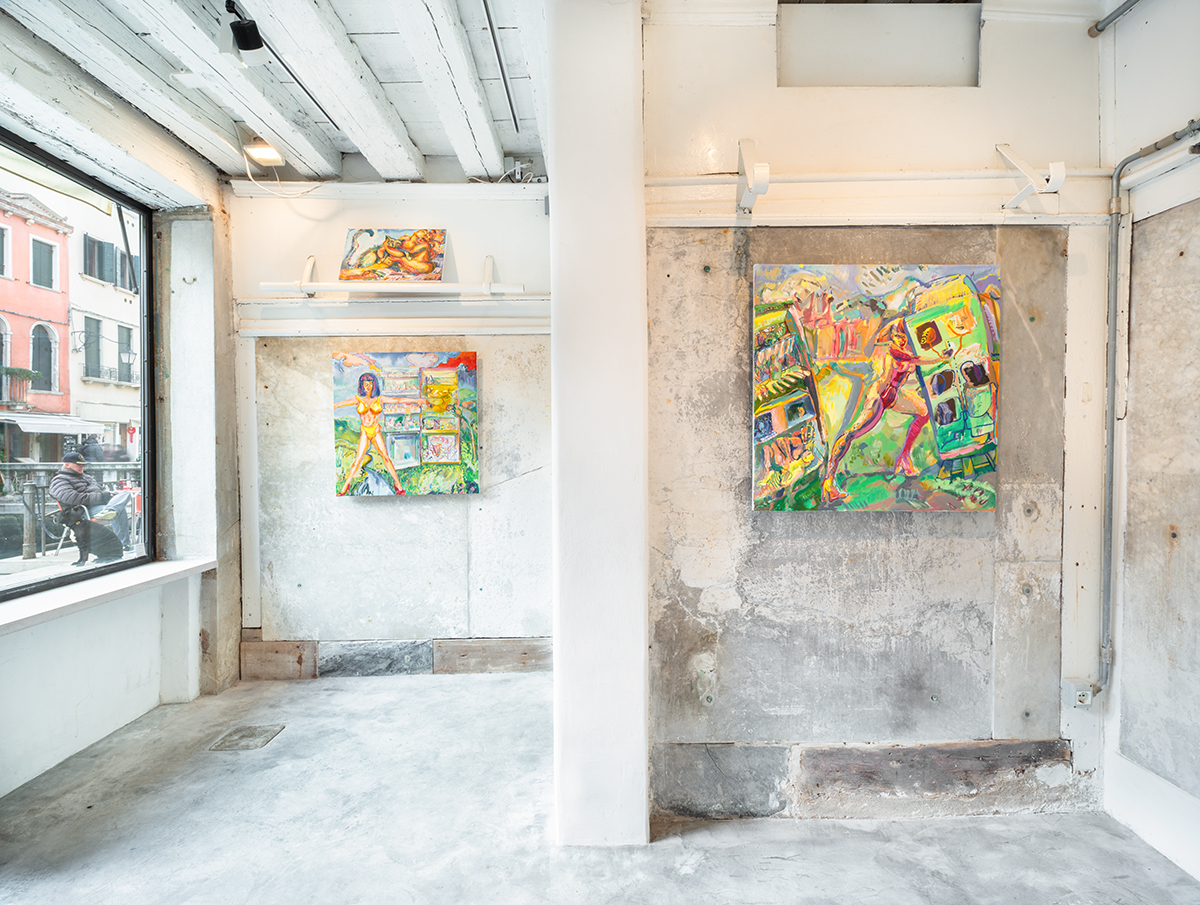
Exhibition View, Illumina, custodisci, reggi e governa me, 2023, 10 & zero uno, Ph. Filippo Molena 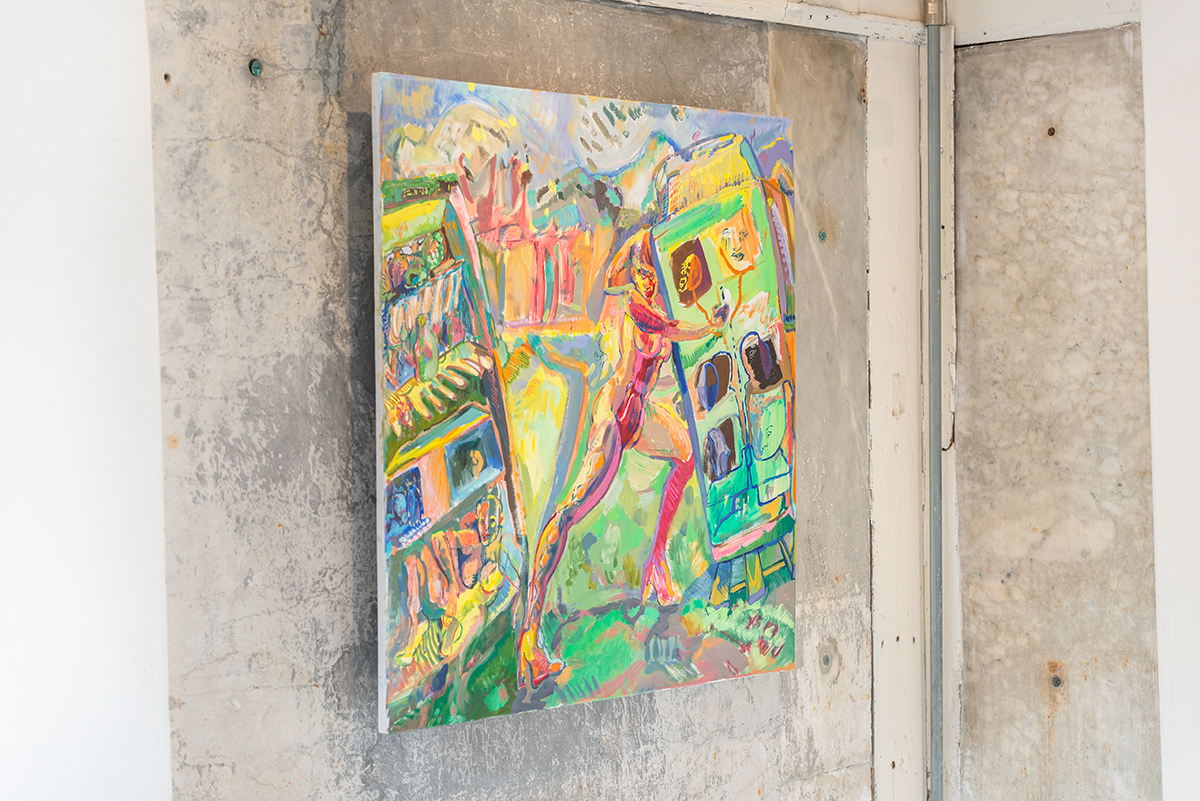
Luca De Gaetano, Strega soldato I – carrying my family tree away, 2022, oil on canvas, 80 x 80 cm, Ph. Filippo Molena 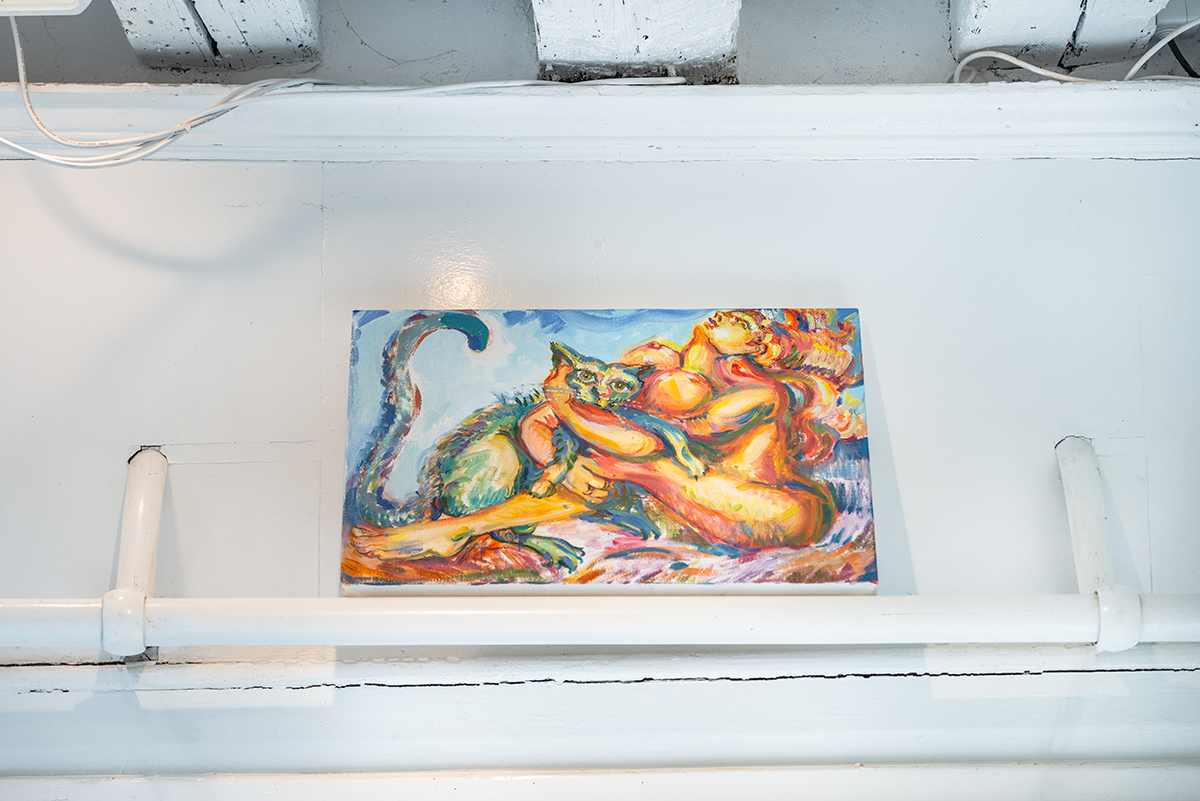
Luca De Gaetano, Sandra the cat, 2022, oil on canvas, 35 x 54 cm, Ph. Filippo Molena 
Exhibition View, Illumina, custodisci, reggi e governa me, 2023, 10 & zero uno, Ph. Filippo Molena 
Luca De Gaetano, Strega Mistica Raccoglitrice, 2022, ink and watercolor on paper, 32 x 24 cm (unframed), Ph. Filippo Molena 
Exhibition View, Illumina, custodisci, reggi e governa me, 2023, 10 & zero uno, Ph. Filippo Molena 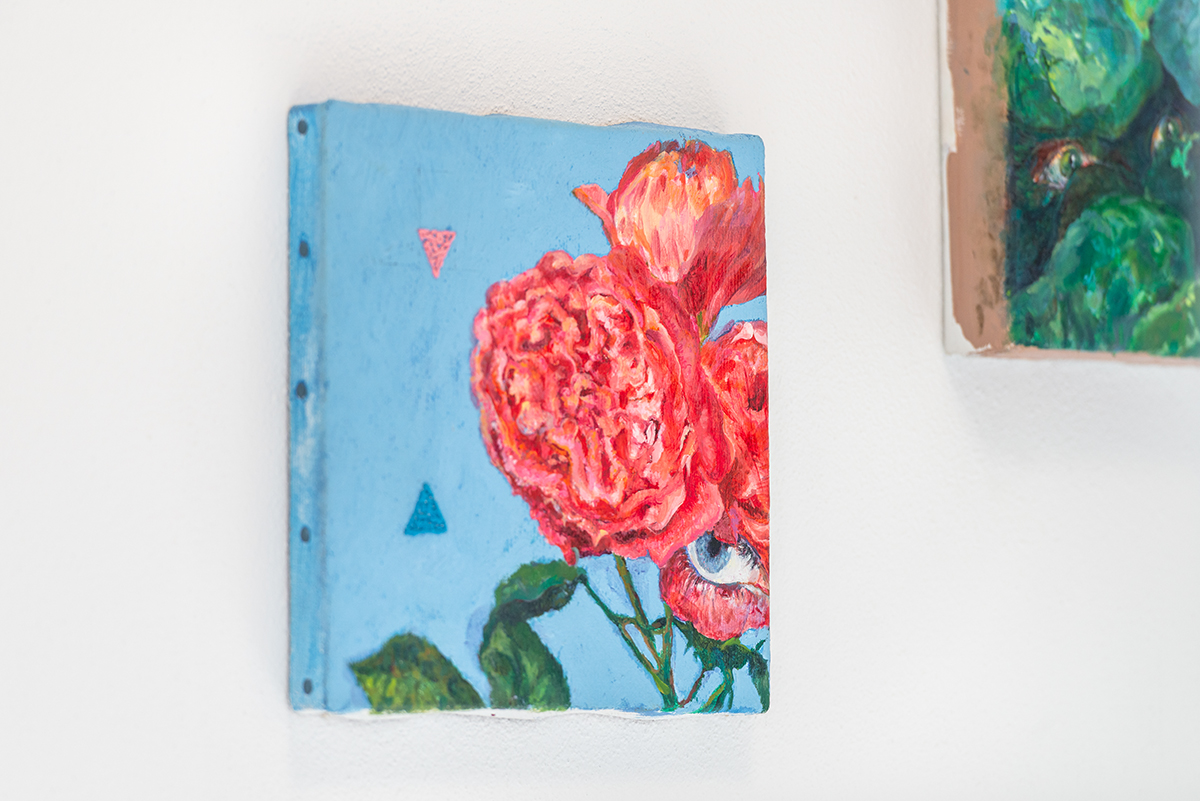
Luca De Gaetano, Diana, 2022, oil on canvas, 20 x 20 cm, Ph. Filippo Molena 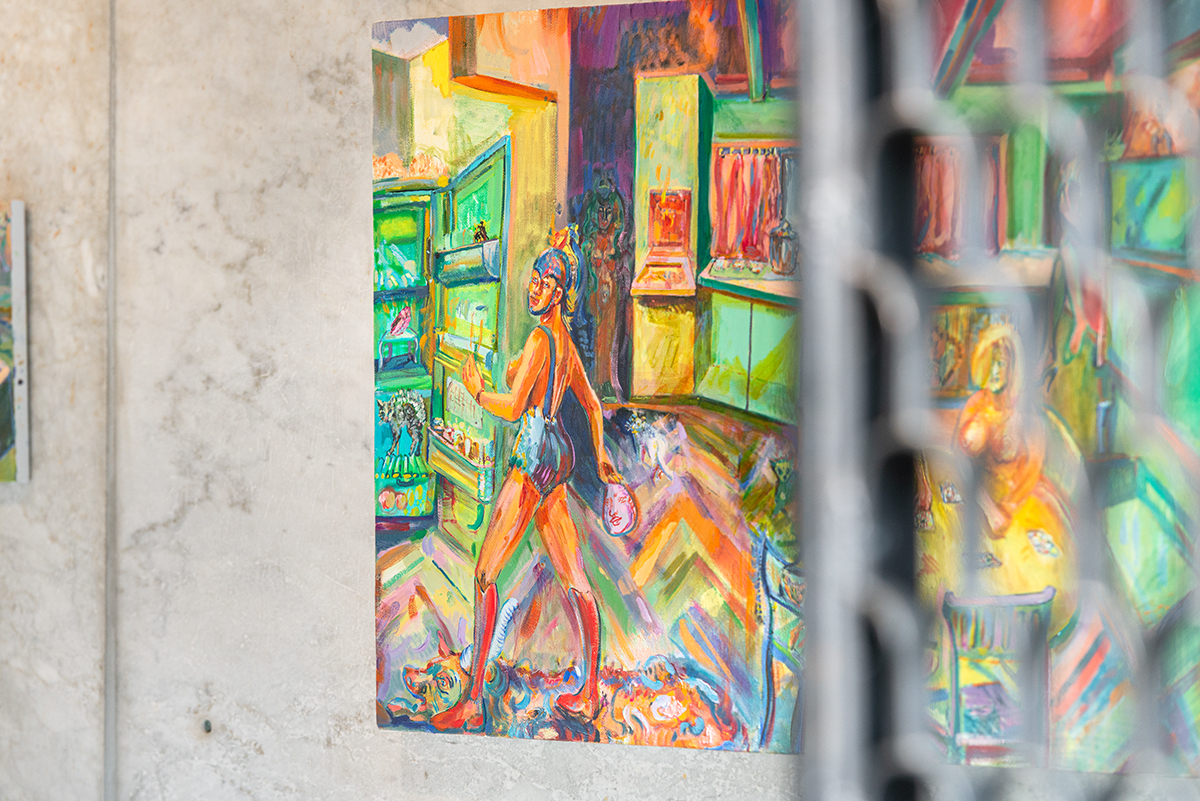
Exhibition View, Illumina, custodisci, reggi e governa me, 2023, 10 & zero uno, Ph. Filippo Molena 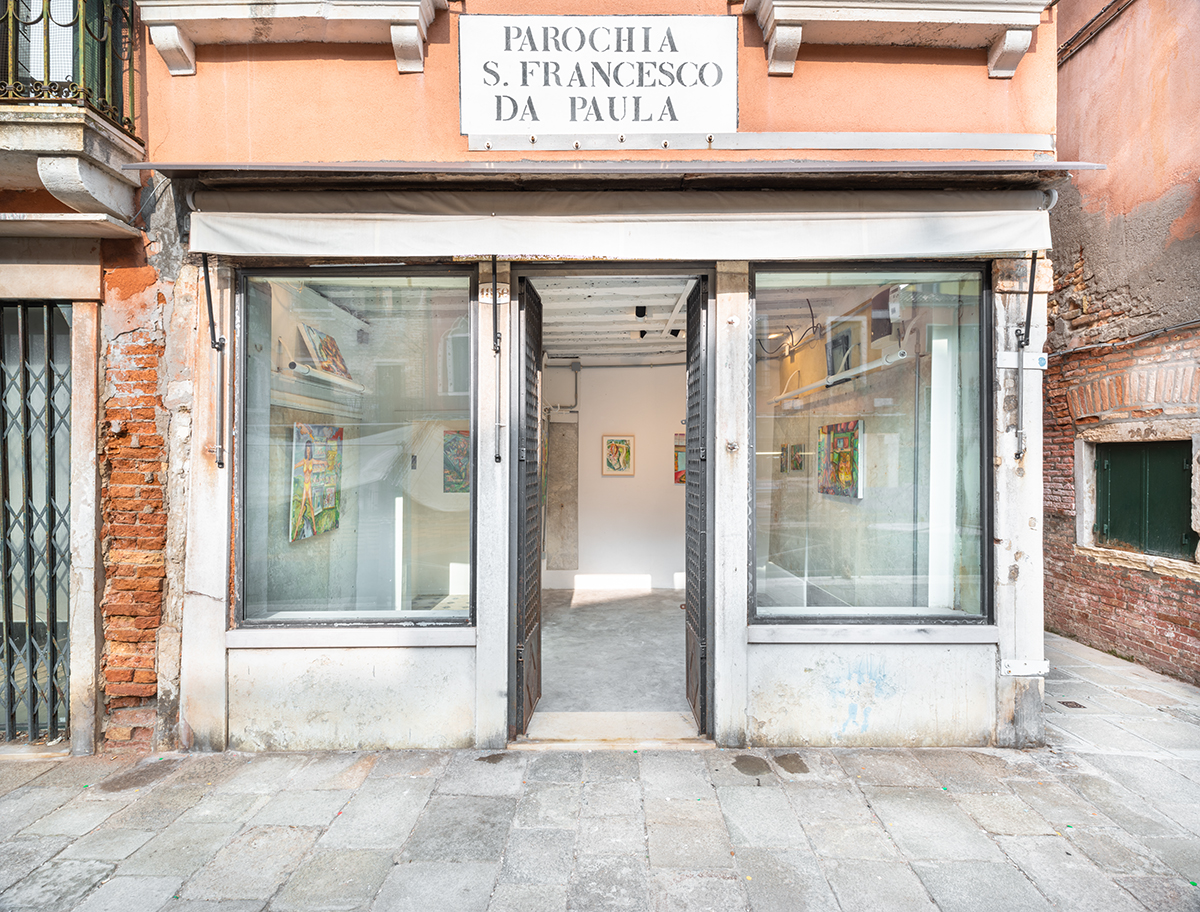
Exhibition View, Illumina, custodisci, reggi e governa me, 2023, 10 & zero uno, Ph. Filippo Molena
🎨 Luca De Gaetano (1976, Milan)
graduates with honors in Architecture from the Politecnico di Milano (including a one-year Erasmus program in Lisbon) and worked as an architect in Milan, Paris, London, and Abu Dhabi. Throughout his career, he never abandoned his deepest passion: art, drawing, and painting. His artistic practice focuses on the invention of fantastic narratives and on life portraiture.
In 2008, Luca moved to Boston, USA, to pursue his artistic career professionally. Thanks to multiple scholarships, he studied at the School of the Museum of Fine Arts in Boston and later at Boston University’s College of Fine Arts, where he earned an MFA in Painting in 2013. That same year, he was awarded the Kahn Award and offered a teaching position in drawing and painting at Boston University’s Venice program. In 2015, he returned to the United States, continuing to teach drawing and painting for Boston University and the Montserrat College of Art and Design, while also collaborating with various other schools and institutions. His paintings and prints are regularly exhibited in Paris, Venice, and Boston; one of his works was selected and exhibited at the Danforth Museum of Art.
In 2013, he began collaborating with Massimo Giorgetti for the fashion brand MSGM, creating paintings and drawings for the collections. In 2017, he moved to Brooklyn, NY, driven by a desire to take part in New York’s artistic and cultural life. He remained there until 2021, painting and teaching multimedia residencies within the vast and complex network of New York City public schools, hired by the esteemed foundation Studio in a School. In 2021, Luca became a U.S. citizen and decided to return to Milan to expand his practice, establish his new painting studio, and continue teaching painting for Boston University in Venice and for the Libera Accademia D’Arte Novalia in Alba.
 10 & zero uno