
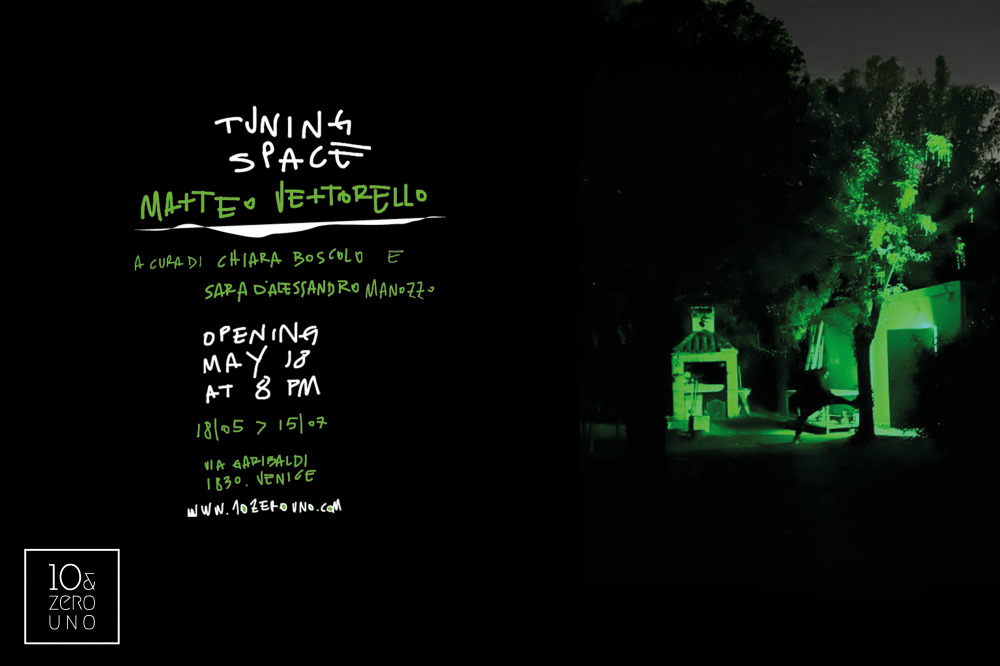
10 & zero uno is pleased to present Tuning space, a solo exhibition by Matteo Vettorello, curated by Chiara Boscolo and Sara d’Alessandro Manozzo at its new headquarters in Via Garibaldi 1830 from May 19th to August 31st, opening on Thursday May 18th, at 8 PM.
In English, the word tuning can refer to musical instruments, but also to devices of various kinds, such as the radio. Tuning also has a figurative meaning: being in tune with someone means having a good understanding of someone. Each of these meanings has some relation to Tuning space. First of all, the work is a site-specific tuner. Two people coordinate their vocalizations using microphones outside the gallery. Depending on their ability to synchronise their inhalation and exhalation, they operate a winch connected to two flashing lights. The changes in the position of the lamps and their glow express the different conditions in which the gallery is located: a light at the bottom flashing fast, predominantly red, indicates that the place is lonely, stressed; an upward movement, a lower frequency of flashing and a blue preponderance that interaction has taken place. The vocalizations tune the space like a musical instrument and the sculpture measures how much we are in tune with someone.
Matteo Vettorello (Venice, 1986) works on devices capable of quantifying incalculable elements: the moods of people in relation to places, the degree of harmony achieved between users, the emotion expressed by a space. The series of Rilevatori di benessere del vicinato per ottimizzare la tranquillità di un luogo (R.B.V.O.T.L.), of which Tuning space is also a part, consists of sculptures that, when put into operation, become “the means of activating a process of synergy between people, becoming itself a ritual space to foster the connection between individuals and the environment”. The works presented in April 2022 at 10 & zero uno gallery asked the public to interact, with breath or voice, to provoke a physical reaction – to create a water vortex, for example – and activate the sculpture.
The operation is oxymoronic on several levels. Firstly, because it attempts to establish parameters and unity in phenomena that are at least apparently non-calculable, continuous and non-discrete, such as the relationships that exist between two or more people and between them the place where they are. It is an extremely current challenge, if we observe the efforts made in A.I., machine learning and cognitivism to study human behaviour, their reactions, their feelings, transform them into data and use them for more or less virtuous purposes, from social policies to marketing. In those cases, extremely powerful and elaborate systems, perceived as immaterial (as much as we know that digital language is all about zeros and ones, we do not perceive social as a machine, but as media) strive to predict the actions of the masses, to potentially direct them. Vettorello’s tuners operate in the opposite way. With Tuning space you can see and hear it very well. Its components – the winch, the chain, the club lights – are prosaic, noisy, even annoying. It is closer, visually, to the constructivist obsession with the machine than to the immaterial phantasmagoria generated by digital technologies. It is controlled by specially developed software, but on an Arduino platform, which is open source. The data it collects does not predict future behaviour, rather, it merely indicates the present state: that of the place that feels too lonely or that the people who are breathing have started to synchronise. It is the user, in agreement with one or more people, who must direct subsequent actions. Necessarily it must create a relationship, long or short, that leads to temporary harmony. Like all relationships, this also requires a certain commitment, an effort.
The immediate reference, on an art-historical level, is to relational art, codified by Nicolas Bourriaud in 1998. In reaction to the hedonism of the 1980s, an attempt was made to reconstruct a community through works of art. Like public art, the trend interpreted the work as a device with social value. The drive was utopian, with a spirit taken from the avant-garde. In the vastness – and quality, ideal impetus – of the research, however, some unpredictable but very impactful drifts emerged: on the one hand, a spectacularisation of participatory works; on the other, a repetition of methods and approaches multiplied by endless urban-social redevelopment and maquillage initiatives. Perhaps because of these macro-phenomena, in the last decade there has been a return to looking at individuality, at paths that show a uniqueness sunk in the irrational and the mystical, as shown by two of the most influential Biennales of recent years, the 2013 edition curated by Massimiliano Gioni and the 2022 one, curated by Cecilia Alemani. The latter was contrasted with great clarity – and to the great satisfaction of us art historians, always lovers of clear categorisations – by the most participative Documenta ever, curated by a collective – the ruangrupa – with the motto “make friends, not art”.
The Documenta collective is an expression of the resistance of a Global South in which the influence of politics is still perceived as impacting life (suffice it to say that the ruangrupa were formed in 2000, at the end of the Indonesian military regime of Suharto). In the West, this awareness has, little by little, dissipated, subsumed by neo-liberal competitive mechanisms. Having exhausted all utopian impetus, what sense does it make to do participatory works in Europe in 2023?
One possible meaning is to restore, through interaction with a work, some form of knowledge. The knowledge to which the R.B.V.O.T.L. seem to bring us closer is that of the other, of the relationship with the other. It is a momentary relationship, all carried out in a present time – one does not speak, one does not tell each other anything, one can coordinate one’s breathing even without knowing any sensible data about the other. Breathing together is an attempt to slow down a moment in which to attempt an impossible encounter. “The other is the agreement with the whole, it is through the other that we perceive the present”, writes Vettorello, echoing Rimbaud’s “Je est un autre”, taken up by Lacan to affirm how the origin of identity is always outside of us. In the moment of agreement with Tuning space, when the breath is detached from us, space is also affected, it “feels better”. A complex, machinic, apparently cold device used to create an atmosphere, an emotional and environmental dimension, the Stimmung, understood as affective tonality and openness to the world. Far from cathedratic stances, Vettorello’s work maintains a playful, visionary tone, the same as that found in his design drawings, made up of imaginative geometric lines and chromatic explosions, accompanied by equally anti-technical instructions such as: “when time is running out the whole world will be less happy / synchrony and intent will relieve him from his torment / The two people with their voices / will distract him from his cross / only company / he wants our friend the round sky / loneliness and little harmony will drive him to madness”.
Text by Sara d’Alessandro Manozzo

Exhibition View, Tuning Space, 2023, 10 & zero uno, Ph. Filippo Molena 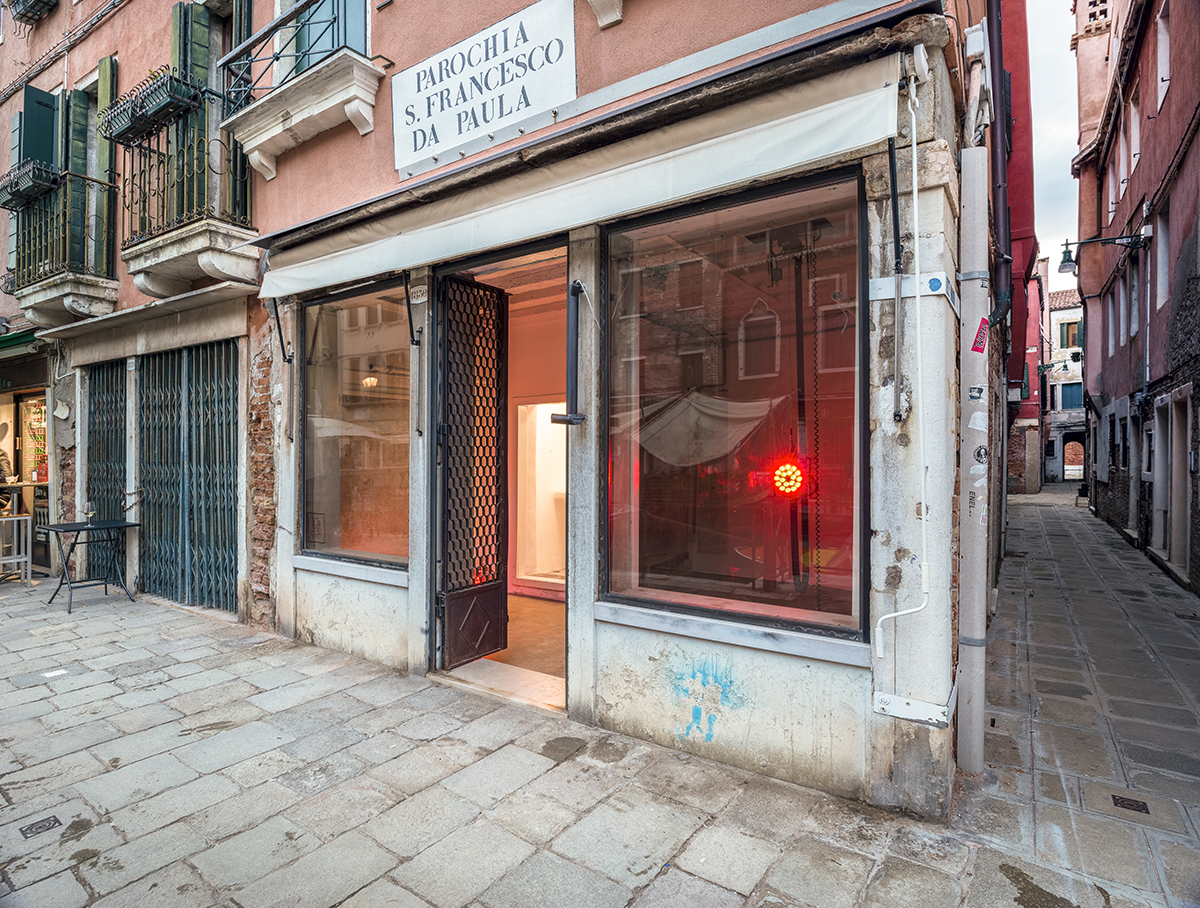
Exhibition View, Tuning Space, 2023, 10 & zero uno, Ph. Filippo Molena 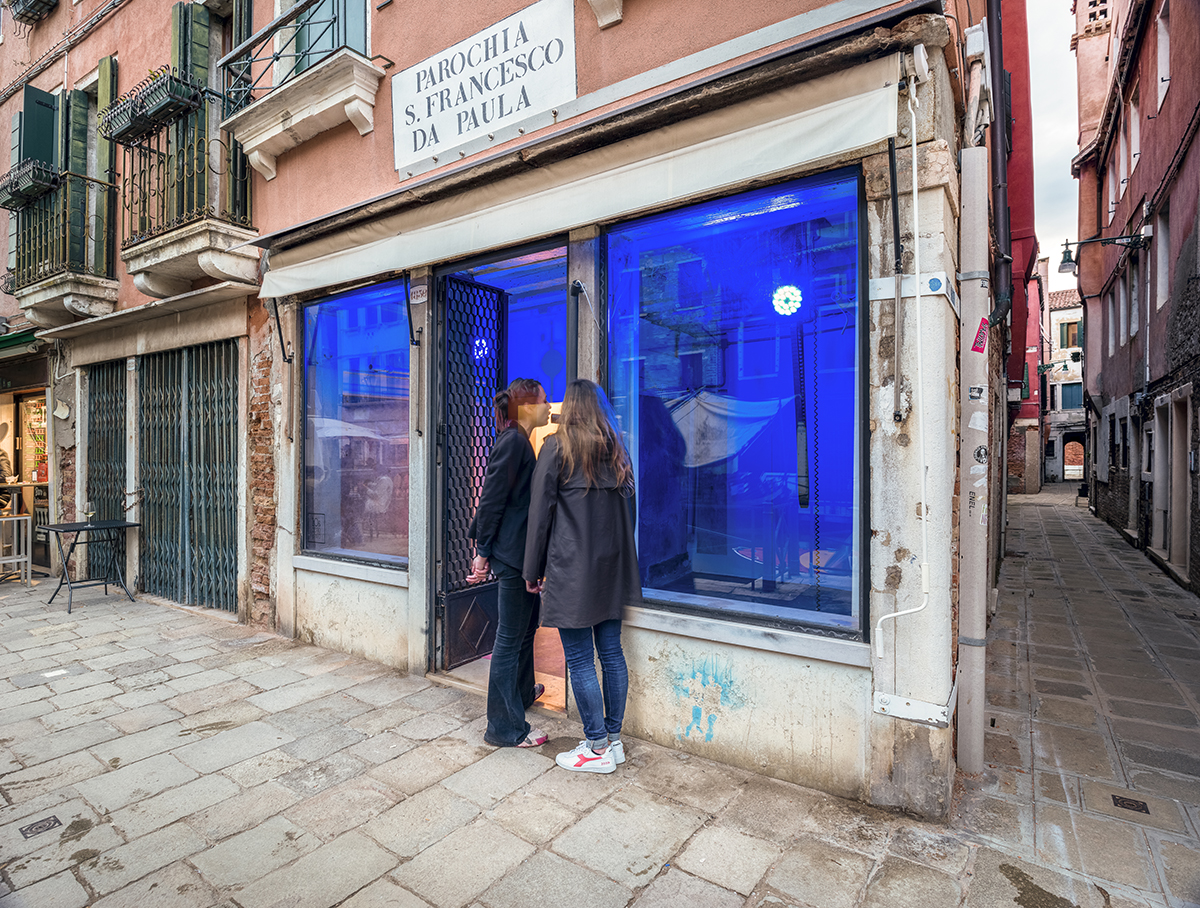
Exhibition View, Tuning Space, 2023, 10 & zero uno, Ph. Filippo Molena 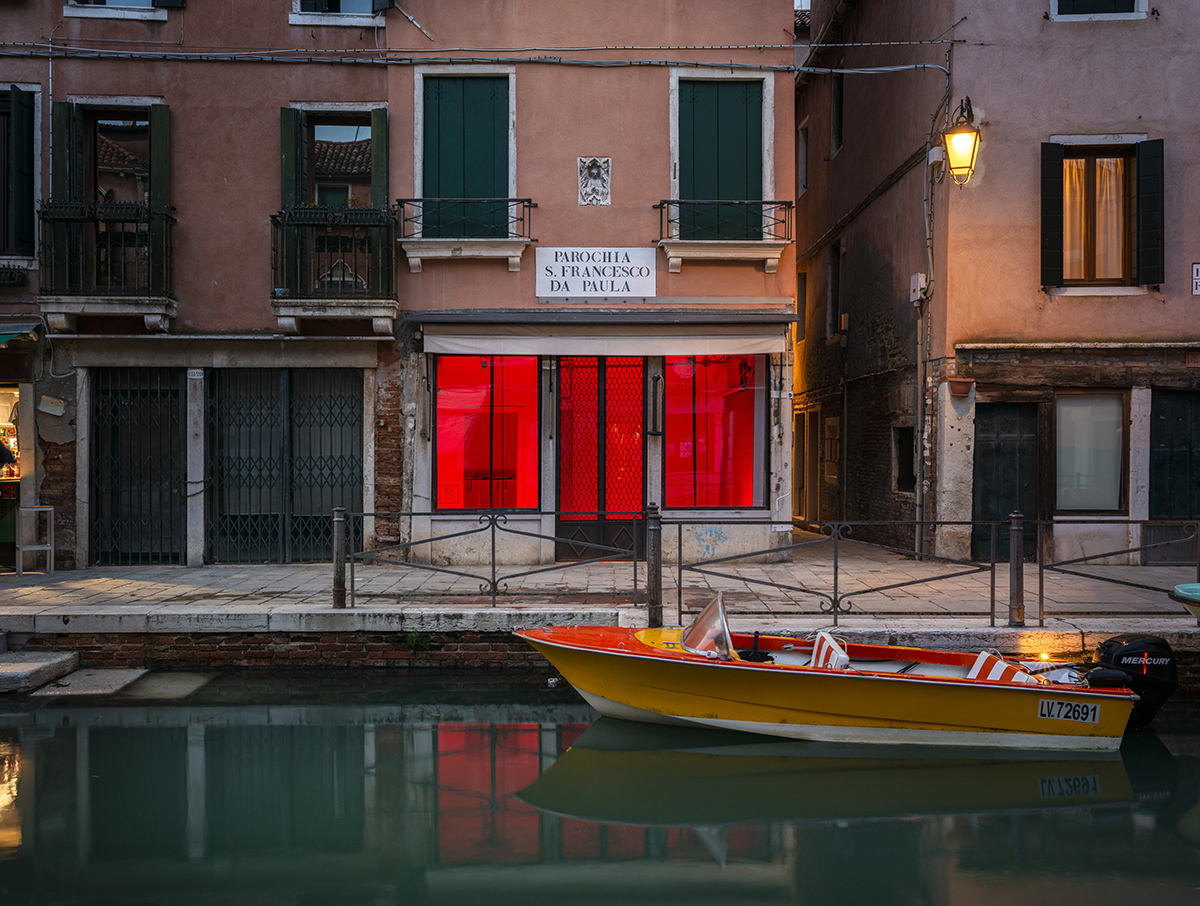
Exhibition View, Tuning Space, 2023, 10 & zero uno, Ph. Filippo Molena 
Exhibition View, Tuning Space, 2023, 10 & zero uno, Ph. Filippo Molena 
Exhibition View, Tuning Space, 2023, 10 & zero uno, Ph. Filippo Molena 
Exhibition View, Tuning Space, 2023, 10 & zero uno, Ph. Filippo Molena 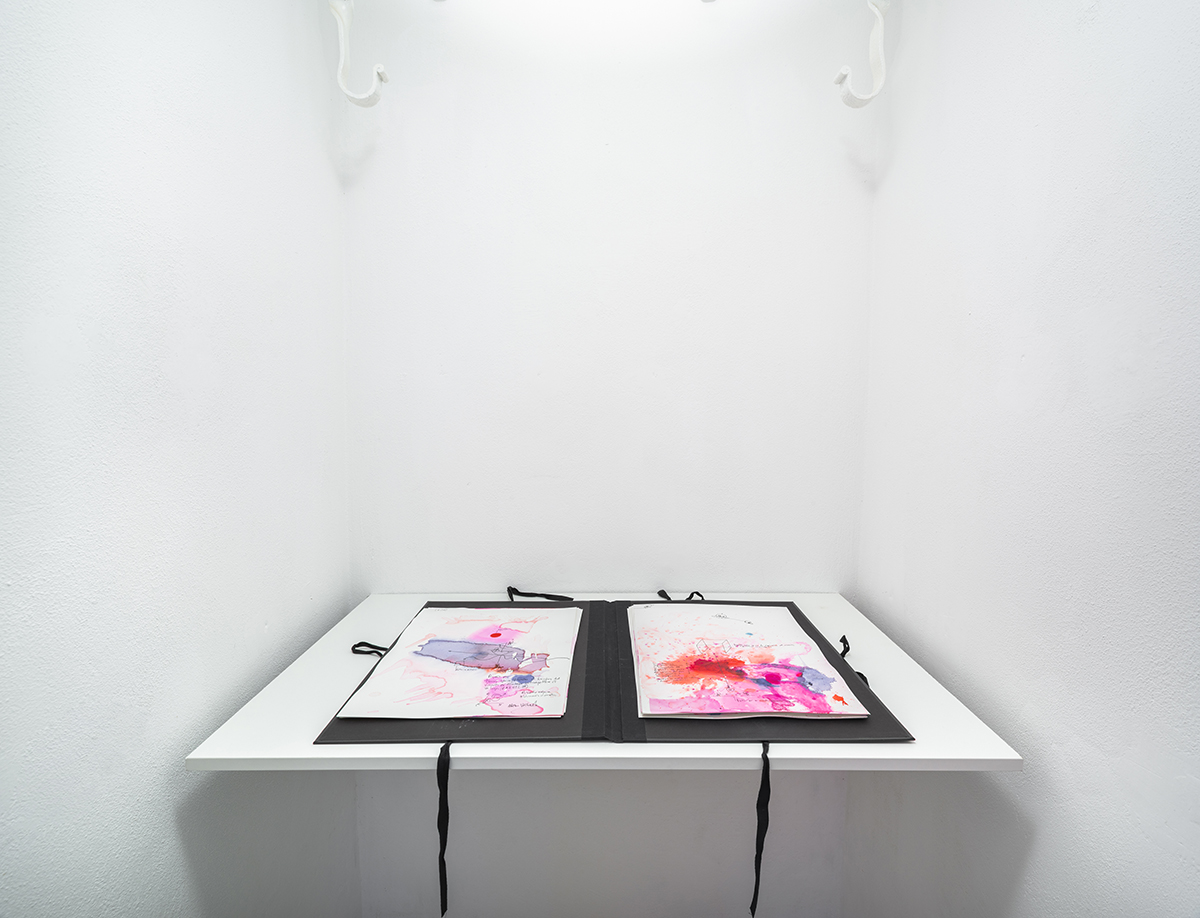
Matteo Vettorello, Tuning space project, 2023, watercolor and ink on cotton paper, 29,7 x 42 cm _ Ph. Filippo Molena 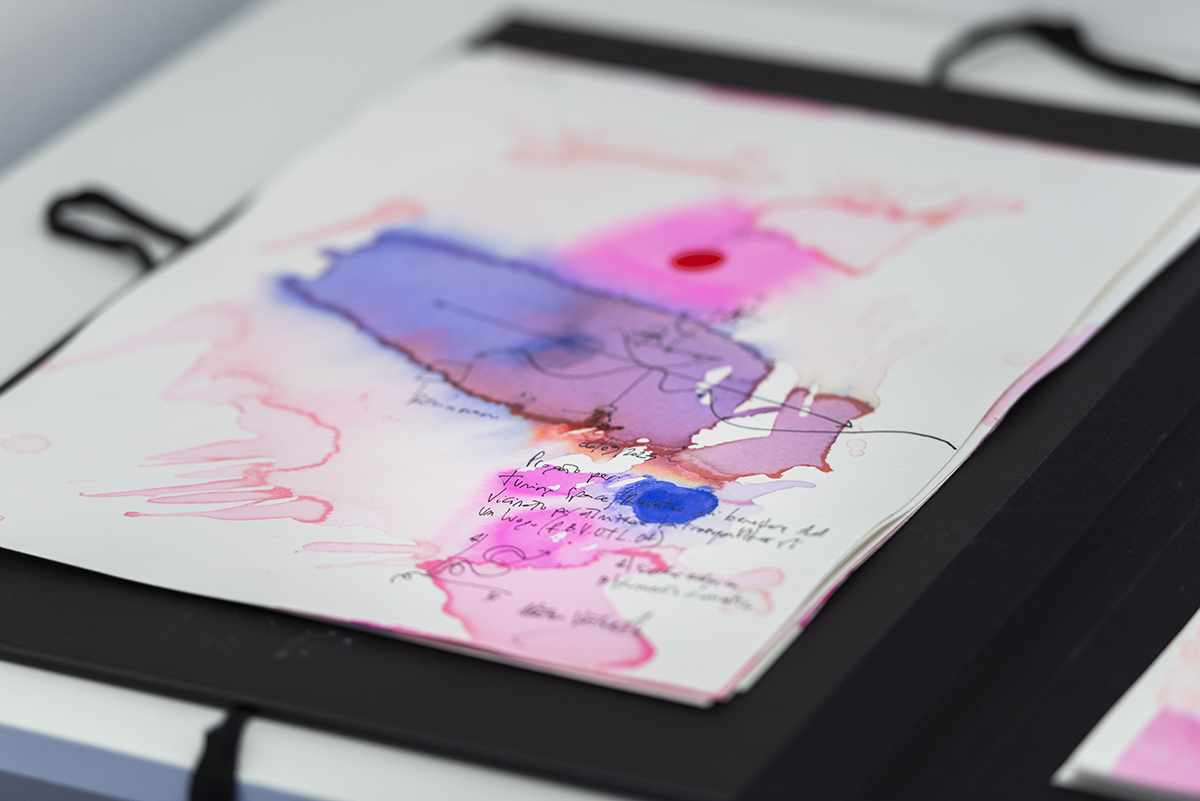
Matteo Vettorello, detail of Tuning space project, 2023, watercolor and ink on cotton paper, 29,7 x 42 cm _ Ph. Filippo Molena 
Matteo Vettorello, detail of Tuning space project, 2023, watercolor and ink on cotton paper, 29,7 x 42 cm _ Ph. Filippo Molena
🖌️ Matteo Vettorello (1986, Venice)
creates sculptures with which to interact, consisting of biometric systems capable of quantifying states of mind that are by definition unmeasurable: they are electromechanical devices designed to solve a paradoxical algorithm, a synthesis of the utilitarian mechanisms of machines and the behavioural habits of contemporary human beings.
He studied Visual Arts at the IUAV institute in Venice and obtained a second level diploma in painting at the Venice Academy of Fine Arts in 2017. Recent exhibitions include: Principi, curated by Francesca Canfora, Biennale Tecnologia, Turin (2022); Condizione of Togetherness, curated by Chiara Boscolo, galleria 10 & zero uno, Venice (2022); Liberi (tutti), curated by Silvia Concari and Alessio Vigni, Habitat Ottantatre, Verona, (2022); La curatela militante, curated by Osservatorio Futura and Elena Castiglia, Turin (2022); Sincronie, curated by Carlo Sala, Auditorium Parco della Musica, Rome (2022). Public installations include: Translator of courtesy for a confused dock, Museo M9, Mestre (2021); Life Beyond Plastic, Istituto Oikos, Piazza XXVI Maggio, Milan (2020); Pressione Simpatica, Edicola Radetzky, Milan (2019). He has participated in several exhibitions and artist residencies of international significance, including Fondazione Bevilacqua la Masa, Venice (2018); VIR ViaFarini-in-residency, Milan (2019); BJCEM, Biennale Mediterranea 18, Tirana (2017); Art Stays festival, Ptuij (2019); In – Edita, Venice (2020). In 2013, he founded the cultural association ALTOlab and co-founded the multimedia label LATOfragile, dedicated to the promotion of visual and sound artists.
 10 & zero uno