

10 & zero uno is pleased to present the first solo exhibition of Andrea Luzi (Ancona, 1997), that will take place in its space in Via Garibaldi 1830, close to the Gardens of the Venice Biennale from January 20th to February 24th, 2024, opening on Friday, January 19th, at 6 PM.
Colando dalle Stelle Oscure, curated by Chiara Boscolo, takes its name from one of the artist’s works and is described through the words of Carlo Sala:
“The viewer is confronted with a figural universe, distinctly dystopian, characterized by anthropomorphic figures of challenging decipherability, appearing as the outcome of an ongoing metamorphosis. Each subject embodies a character of incarnation, a translation between man and animal, beast and deity. […] In the painting ‘The Greatness of Nothing’ (2023), the display is a kind of modernization of the ancient polyptychs that were supplanted by unified background altarpieces at the end of the 15th century. Similar to those works, Luzi’s piece is composed of various fragmented figural elements, forming a choral narrative as a whole. Within the painter’s canvases, we find an iconographic miscellany resulting from a multitude of stimuli and inspirations that never overflow into direct citation but are the product of suggestions derived from the worlds of music, philosophy, graphics, and literature, alternating between high and popular culture. In this, as in other works, the reading of the essay ‘In the Dust of this Planet’ (2011) by the American thinker Eugene Thacker was crucial, a text that seems to update historical pessimism to the peculiar moment dominated by the climate crisis, the danger of mass extinction, and the ontological incapacity to project new futures. Thacker’s nihilistic reflections provide a perfect theoretical framework for Luzi’s paintings, where references to the occult world, the magic circle, a subject that often appears invoking an idea of magical ritual, of a space suspended between the sacred and the profane, the natural and the supernatural, normativity, and transgression. Luzi’s paintings reveal the enactment of a kind of contemporary Bestiary that, following the tradition of medieval ones, enumerates real or imaginary animals, laden with reminiscences of pagan culture.
The iconic forms that appear on the canvases undergo specular mutations in the creative process, where there is initially a pictorial subtraction, followed by a figurative construction guided by the suggestions provided by the chromatic material, bringing forth a series of forms not entirely foreseen. In the compositions, unstable and contorted architectures, mysterious animal forms come to life, aspects that, through the act of painting, configure themselves through the study of volumes, lights, and shadows, delineating visionary and dark worlds. It is worth noting how the author skillfully translates into painting a sensitivity derived from the practice of the monotype graphic technique, a print pulled in a single copy from a drawing made with oil colors on a plate that maintains a series of material peculiarities; the chromatic palette of these works tends toward monochrome (another affinity with the monotype) with a series of earthy colors of predominantly Nordic descent.
The work ‘The Abomination Wavers, Flowing from Dark Stars’ (2023) was inspired by the famous story ‘The Call of Cthulhu’ by H.P. Lovecraft. The painting features incongruous perspectives, buildings with distorted forms (made of a viscous substance at times and immersed in nebulous atmospheres) that seem to recall the words of the American writer when describing the ‘cadaverous nightmare city of R’lyeh’ built by ‘vast, disgusting forms descended, flowing from dark stars.’ These architectonic elements with amorphous morphology and dramatic tones also appear in works like ‘Reaper Power’ (2023), a polyptych that seems to overlap and blend distant inspirations in history and time: from temples to reliquaries, from ephemeral Baroque constructions to the exuberance of twisted columns. However, the wonder and awe of the seventeenth century seem to have been replaced by a feeling of the uncanny, where a sum of familiar images leads to the creation of a sense of disorientation and attraction to something unsettling that escapes our perception, well outlined by Mark Fisher in his last book published during his lifetime dedicated to the phenomenon of the weird. These places are built by the author in a gestural, direct way, without any a priori or philological reflection, as they are the result of a magma of creative substance that generates unstable worlds. ‘Reaper Power’ (whose title refers to the agricultural machine) evokes, on the one hand, the cyclicity of seasons and rituals related to earthwork, and on the other, the concept of power, alluding to the inevitability of death, for a precariousness and transience expressed in the painting through narrative dimension but also at a formal level, where everything is unstable and on the verge of collapse, like the spirit of the time we are living in.”

Exhibition View, Colando dalle Stelle Oscure, 2024, 10 & zero uno, Ph. Filippo Molena 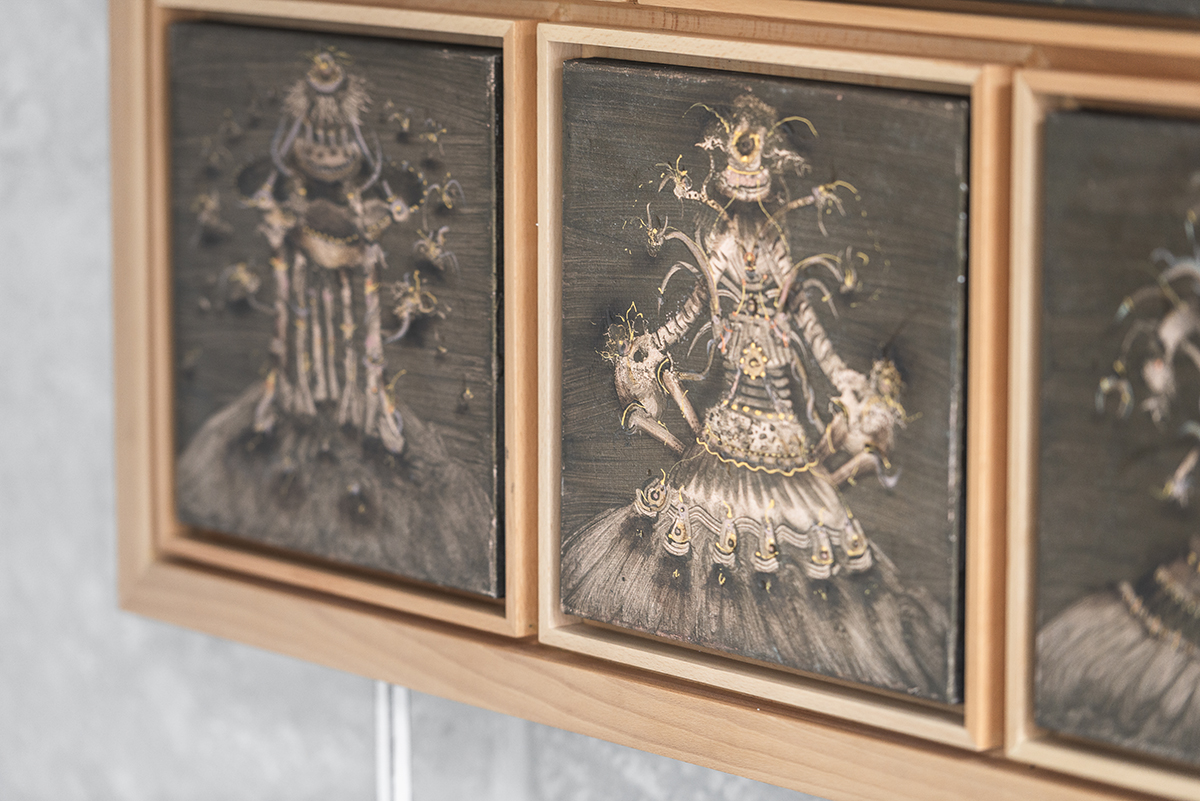
Andrea Luzi, detail of La grandezza del nulla, 2023, oil, acrylic, fabric paint, resin on linen, and beech frames, 150 x 127 cm, Ph. Filippo Molena 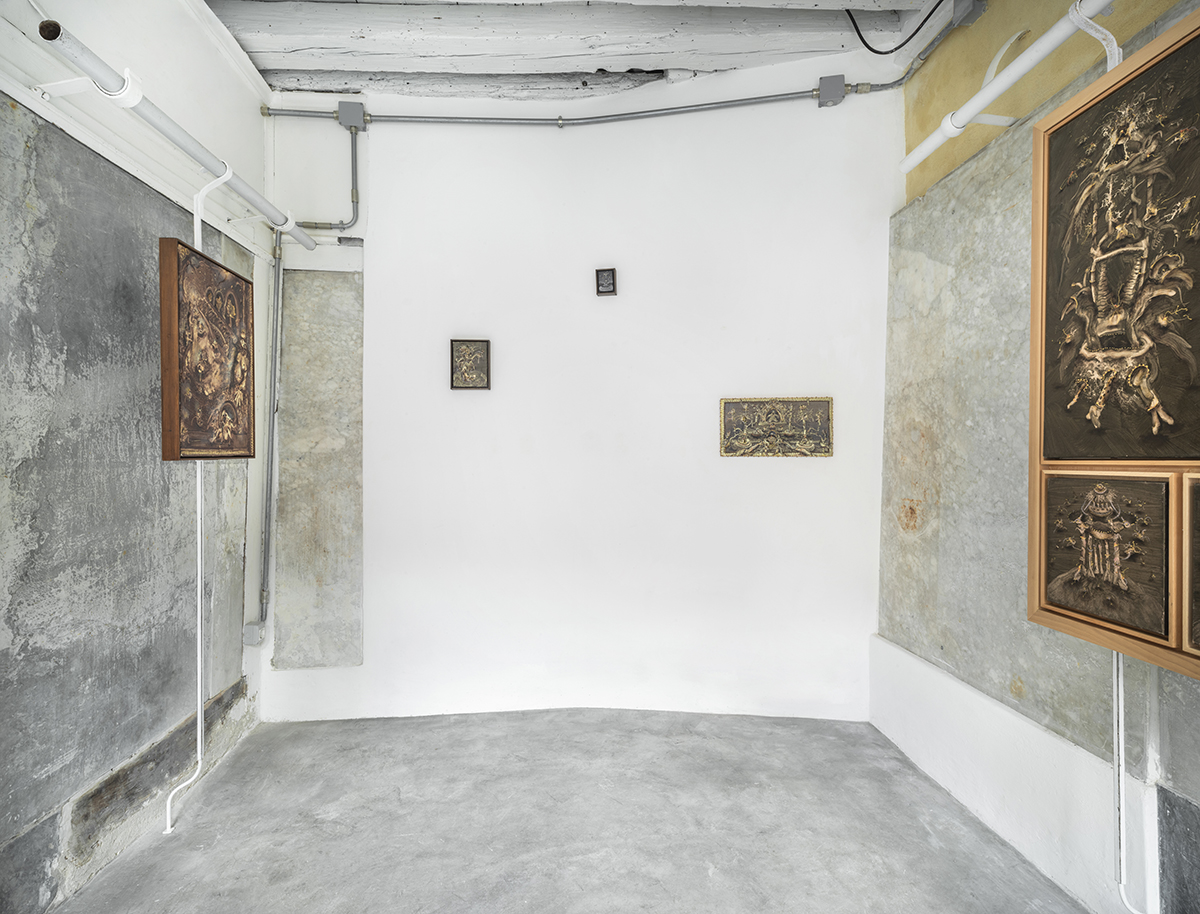
Exhibition View, Colando dalle Stelle Oscure, 2024, 10 & zero uno, Ph. Filippo Molena 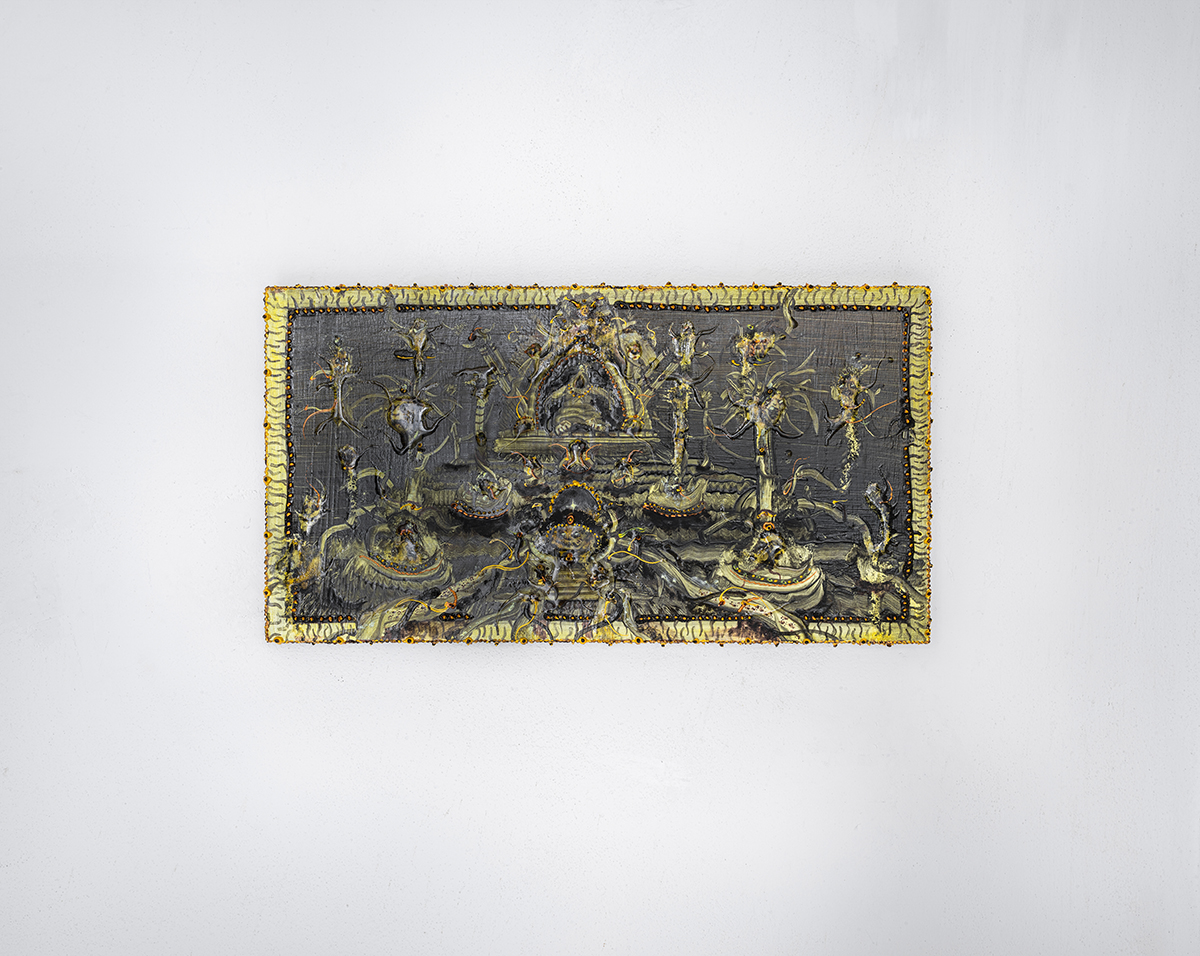
Andrea Luzi, L’abominio vacilla, colando dalle stelle oscure, 2023, oil, acrylic, fabric colour and resin on board, 23 x 37 cm, Ph. Filippo Molena 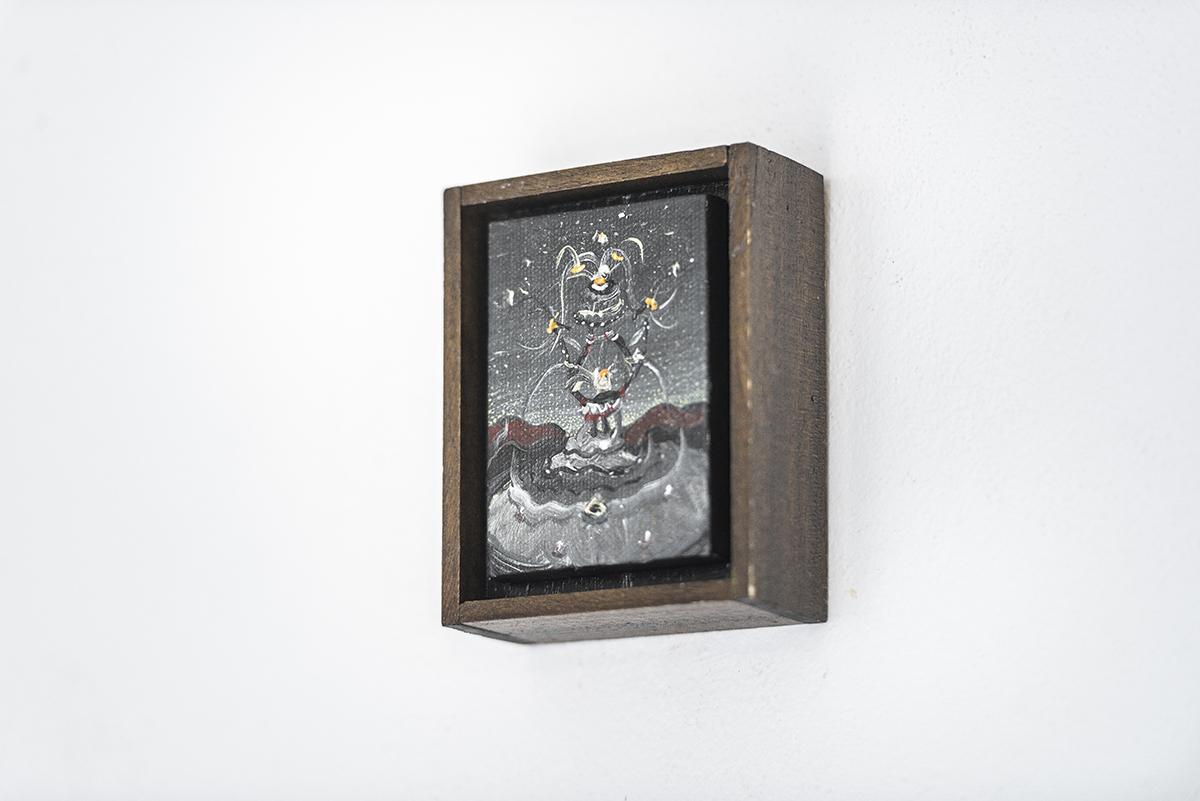
Andrea Luzi, Waxed ace, 2023, ooil and fabric colour on canvas, 9 x 6,5 cm, Ph. Filippo Molena 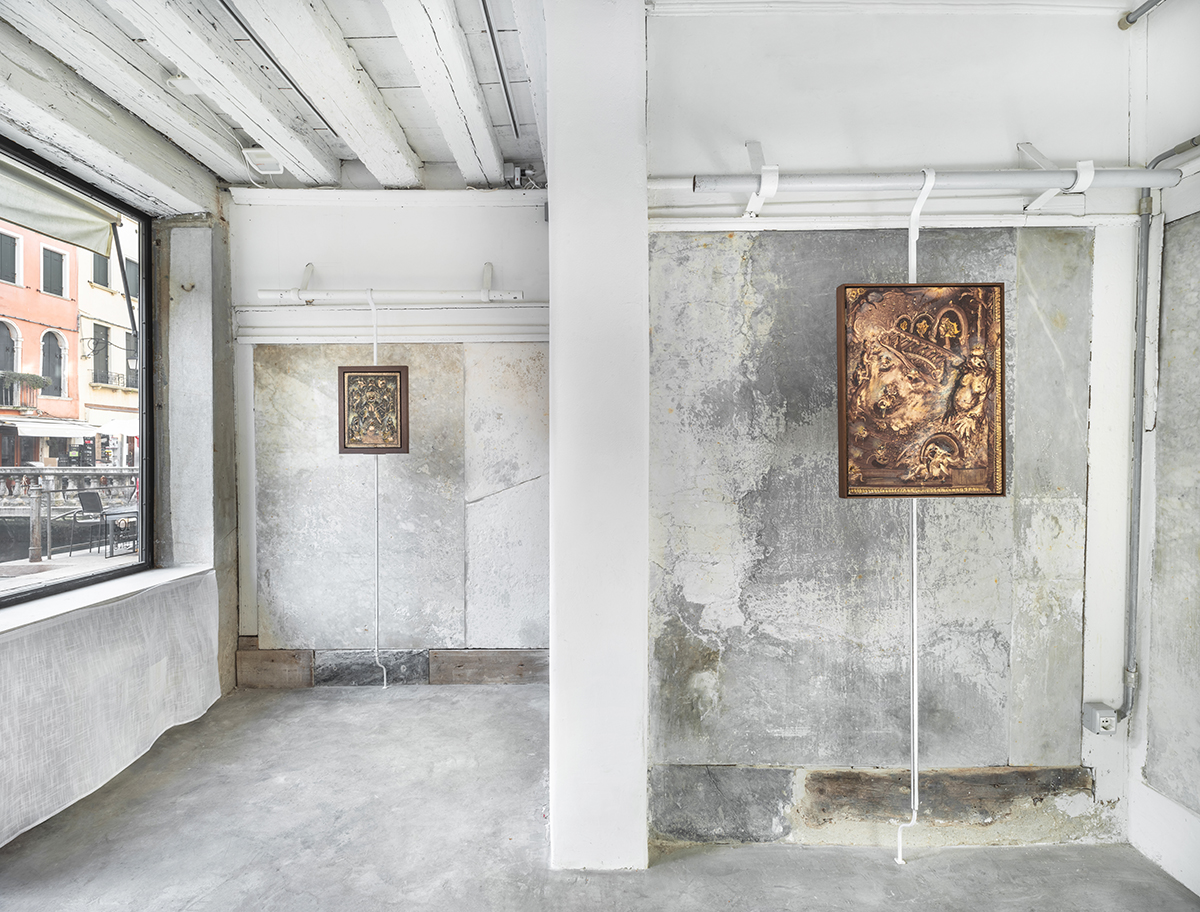
Exhibition View, Colando dalle Stelle Oscure, 2024, 10 & zero uno, Ph. Filippo Molena 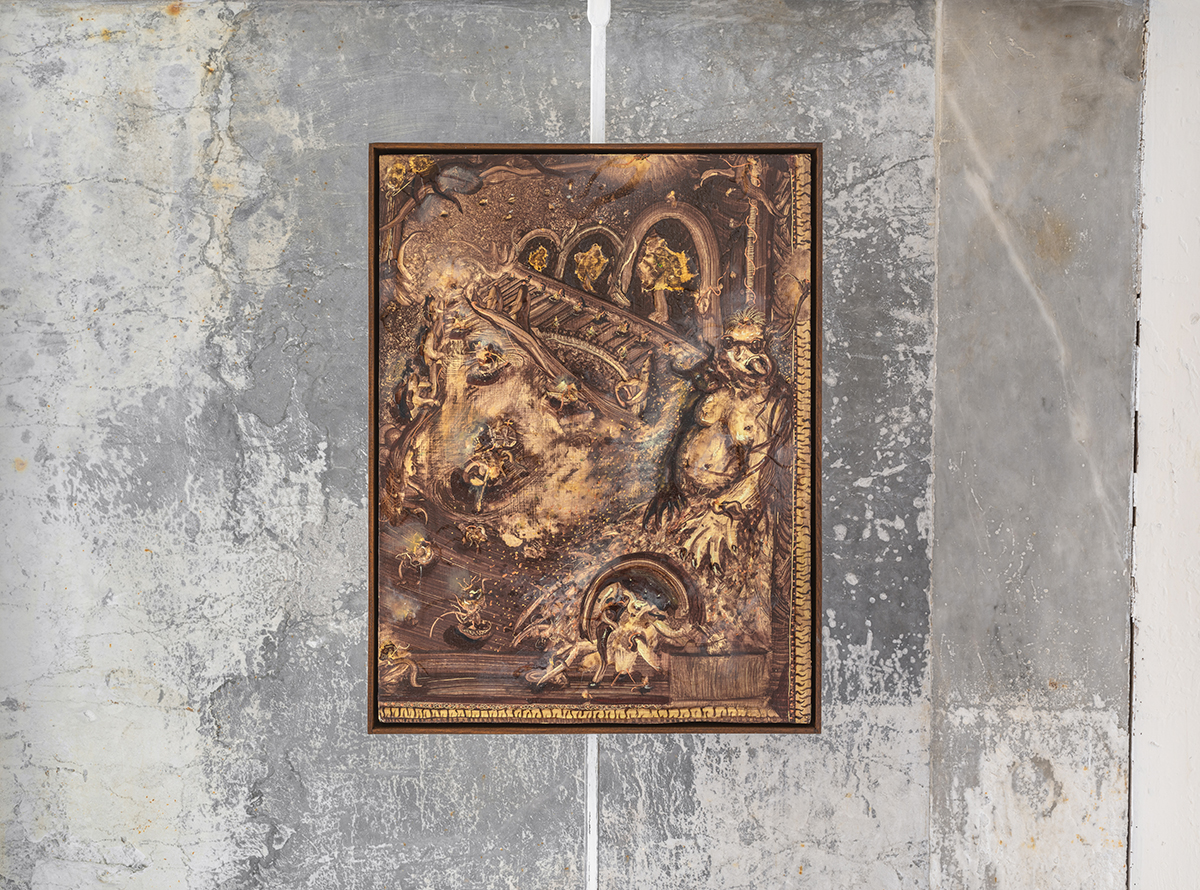
Andrea Luzi, Stringimi, sto per cadere, 2023, oil, acrylic, fabric paint and resin on board, 75 x 45 cm, Ph. Filippo Molena 
Exhibition View, Colando dalle Stelle Oscure, 2024, 10 & zero uno, Ph. Filippo Molena 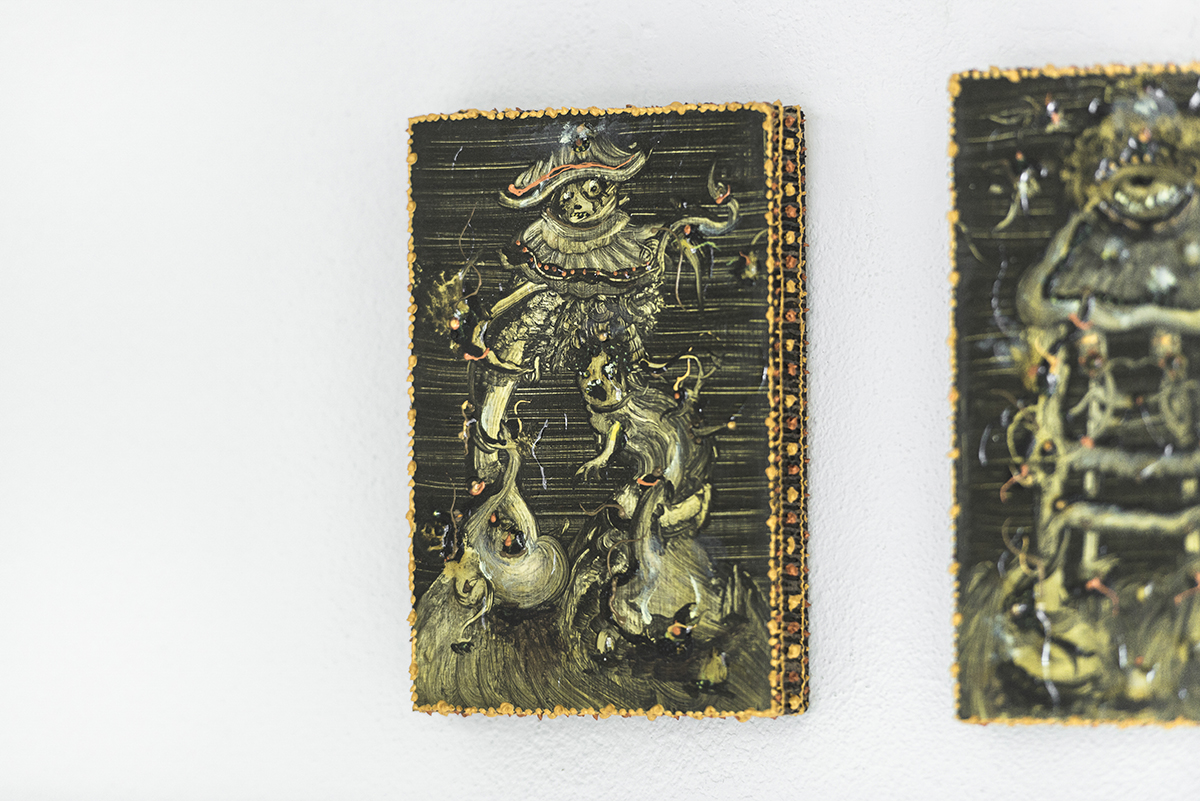
Andrea Luzi, detail of Potenza mietitrice, 2023, oil, acrylic, fabric colour and resin on board, 3 pieces 21 x 15 cm, Ph. Filippo Molena
🎨 Andrea Luzi (1997, Ancona)
lives and works between Vienna and Milan. In 2020, he graduated in decoration from the Academy of Fine Arts in Urbino. In 2019 he founded Hardchitepture together with Lorenzo Conforti and Vittorio Zeppillo, an installation writing collective. The nature of his pictorial production is characterised by a constant inaudibility and a recurring combination, not only compositional, but also iconographic, between high and low culture: in this sense, elements traceable to an obscure and folkloristic dimension experience a possible and controversial sacredness. In 2025 he wins the Isorropia prize for Prisma Art Prize “Conflict Feelings”, curated by Domenico De Chirico, Contemporary Cluster, Rome. Andrea Luzi’s solo exhibitions include “L’odore dei fulmini”,2024, with a text by Federico Montagna, Germi (Milan), “Colando dalle stelle oscure”, 2024, with a text by Carlo Sala, Galleria 10 & Zero Uno (Venice). Other selected group exhibitions include: ‘Call to the Arts’, 2024, Institute of Italian Culture (New York, USA), curated by Giulia Abate, Paranoid Parchetty (Bologna), 2024, curated by Arianna Tremolanti, Sofart (Matteo Novarese), Salon Palermo (Palermo), 2023, curated by Antonio Grulli and Francesco De Grandi, Rizzuto Gallery; Premio Francesco Fabbri (Pieve di Soligo (TV), 2023, curated by Carlo Sala, Villa Brandolini; In December 2023, the first Ep “La grandezza del nulla” was released by Gioia Nera, a Digital Hardcore project composed of Luzi and Frankie Wah.
 10 & zero uno