
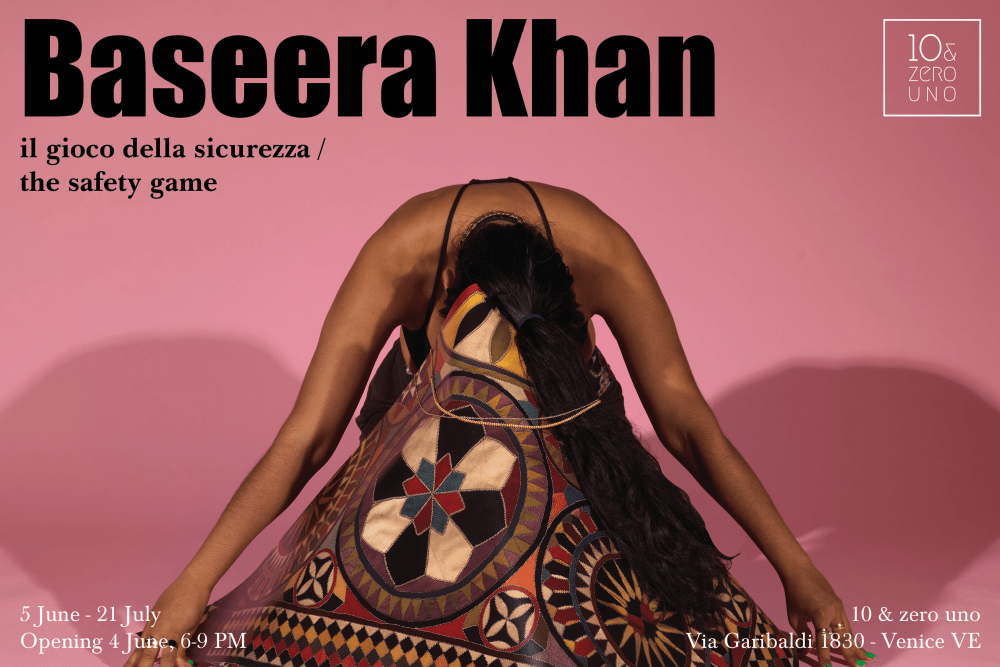
10 & zero uno is glad to present ‘Il gioco della sicurezza / The safety game’, the first solo exhibition of Baseera Khan (Texas, 1980) in Venice, at its space in Via Garibaldi 1830, near the Giardini della Biennale.
The exhibition, curated by Chiara Boscolo and accompanied by a critical essay by Gabriele Romeo, will run from June 5th to July 21st, with the opening on June 4th from 6 to 9 PM. Exploring the recurring themes Khan’s research, the show presents works representative of their practice from conceptual and material point of view. Gabriele Romeo offers a reading of these works that reflects on the artist personal and universal motifs:
“These works are directed to explore a spatial and relational surface within which Baseera, as a “Muslim woman”, self-determines ‘queer’ gendered themes thanks to their strong personality and the enunciating dialectic they are able to give to their multifaceted elaborations – now inscribing embroideries on suspended fabrics, or architectural investigations imprinted with oriental decorative motifs. All this in order to anthropologically reconstruct a stereoscopic view of a feminist who is proud of their brown skin and, above all, of their Indian-Afghan origins.
Based on what I observe and deduce from the works in the exhibition, I cautiously believe that the judgment of this analysis can be reconciled with the thematic and polysemic focus that comes from a decolonization of the narrative projected on a reworking of traditions.
The theory of reworked traditions, extensively discussed by the art historian Katy Hassel in her book “The Story of Art without Men” (2022), is juxtaposed with the compositional methodology and creative composure with which Baseera configures, in a roundabout way and from a generational perspective, their time to our feeling time, through the alphabetic inscription of “algorithmic play” in the multimedia devices they themselves uses, linked to the intrauterine fetish of the Xennial generation theorized by the Australian Dan Woodman.
Baseera’s art is bodily, objectifying, tangible, a direct grasp of the courage to unhinge all doubts about clichés, shattering all forms of taboo and prejudice. It achieves this by challenging the notion of iconoclasm, inserting iconic elements and pictograms that become figurative views of the self-determining word. The same is true of their gold embroidery on black robes, which in my opinion looks like a cross between the Islamic technique of Suzani and the Indian technique of Chikankari. One of their psychedelic prayer rugs reads “I am a body,” an idea that reinforces Khan’s identity by liberating their gender dignity. Baseera thinks of a direct consciousness between the human and the other human, a self-determining phenomenological inquiry within society. This is the exact opposite of what Barbara Kruger had to propose in 1989 in the work entitled Your Body is a Battleground.
And more, accessories, clothes, shoes: a whole world that belongs to the memory of intercultural integration between Western customs and Eastern memories, between the exuberance of social consumption and the wastefulness of a humanity that pollutes and exploits all its creation without scruples.
For this exhibition, Baseera is showing a selection of their most recent fine oil paintings on panel, depicting vases, pearls, and improbable skies. Painted in 2024, all of them, from The Safety Game / Bronze Bead Weight (Green) to The Safety Game / Bronze Balustrade Wight with Loose Rings (Peaches), can be considered as multifunctional “gravitational environmental games” that speak of the force of gravity in any form enunciated by the human hand that operates its gesture within a thermodynamic and self-critical spatial context. From this we might infer an ironic rhetoric about the polygamous individuation of the sexual attraction drive, as is evident in The Safety Game / Stainless Stell Safety Plug (Ruby Reds), with which the corresponding Murano glass sculpture, produced by the hands of master glassmaker Marco Giuman, is associated. Glass, in Baseera’s investigative intentions, becomes the medium-optic for a macro-view on the history of the export of beauty and desire, as it happened in ancient Venice, but in this context it takes on the significance of import/export in the trafficking of exploited prostitutes. All of Baseera’s subjects are “seductive” because the materials themselves are expressions and determinations of a body politic that beguiles and fascinates its user. Oil takes on the meanings of power and geopolitics, plastic symbolizes the refinery and pollution, while textiles are transformed into an anonymous workplace: always open concepts that denounce the gravitational force of these dangerous games”.

Exhibition View, Il gioco della sicurezza / The safety game, 2024, 10 & zero uno, Ph. Filippo Molena 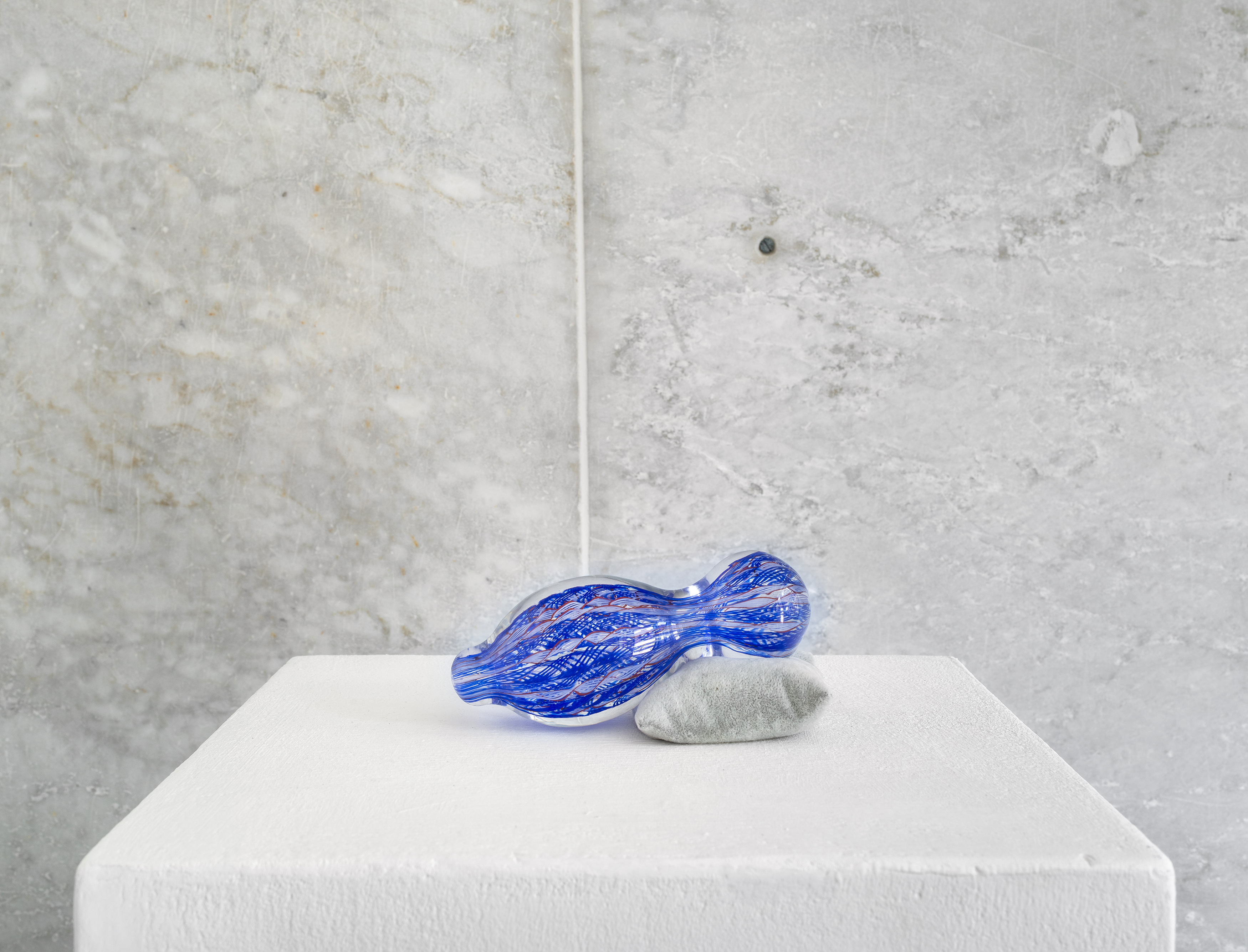
Baseera Khan, The Safety Game / Blue strand, 2024, hand sculpted Murano lattice glass, 6 1/8 x 2 3/8 in (15,5 x 6 cm), Ph. Filippo Molena 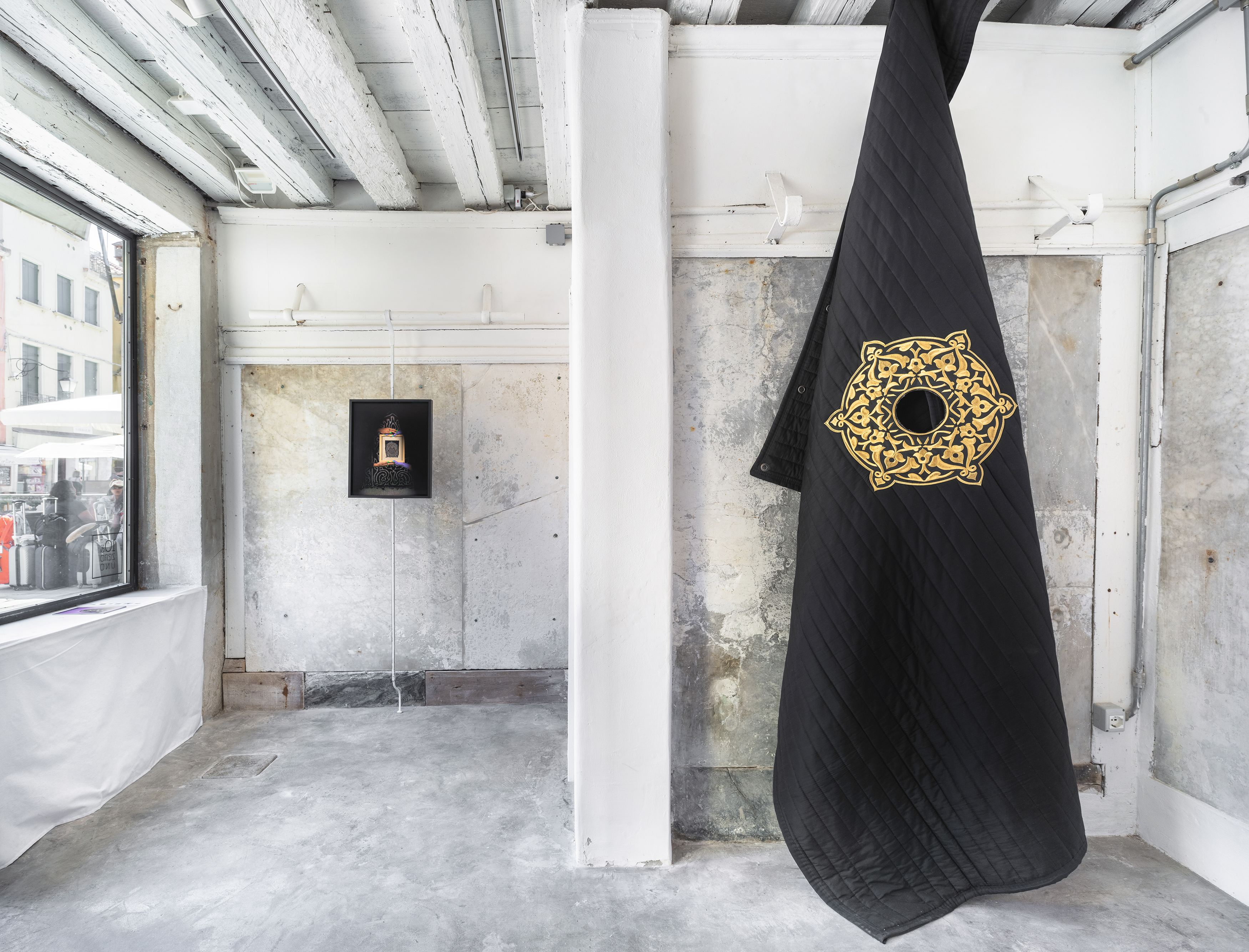
Exhibition View, Il gioco della sicurezza / The safety game, 2024, 10 & zero uno, Ph. Filippo Molena 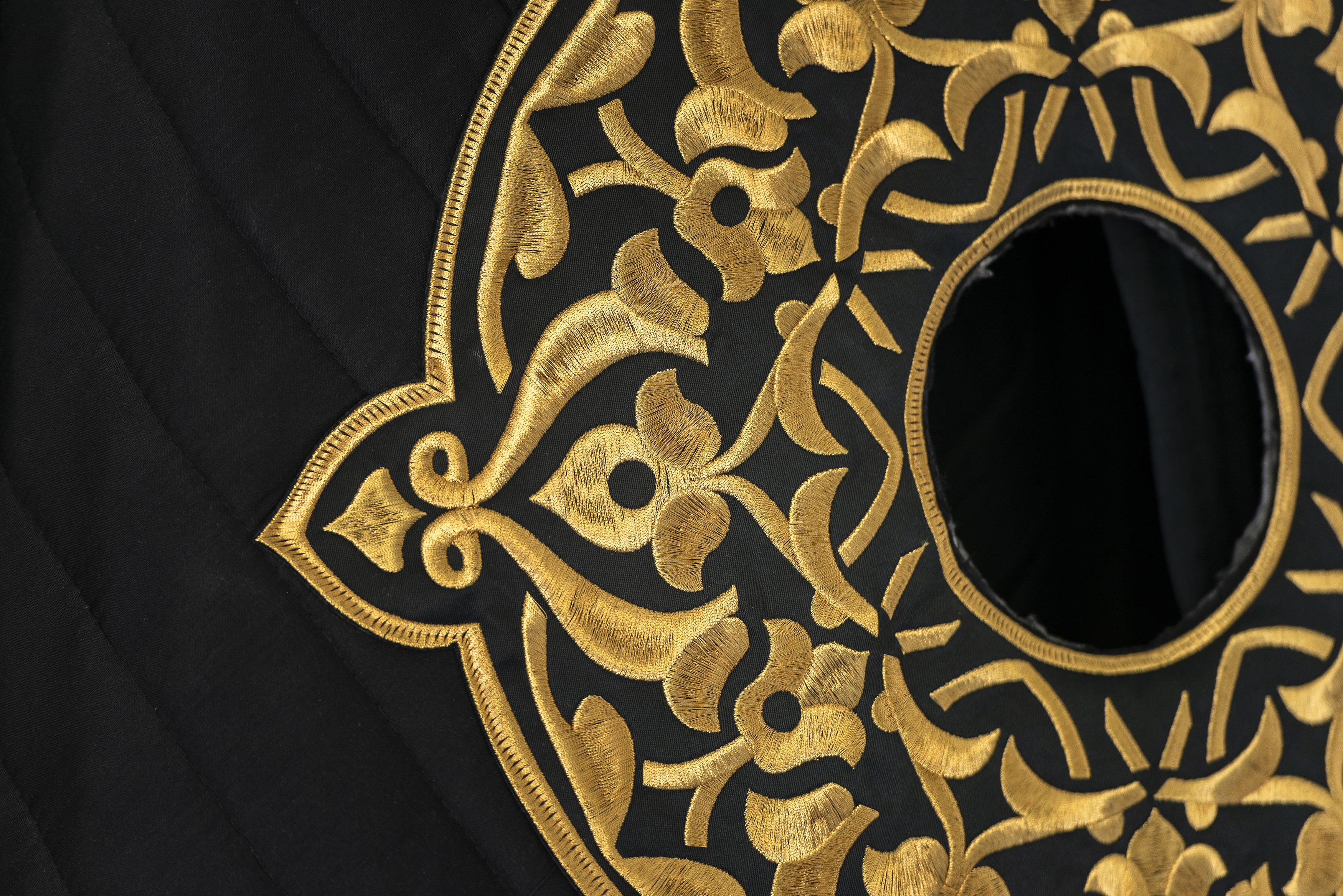
Baseera Khan, detail of Acoustic Sound Blanket 8, 2022, silk, felt, industrial sound insulation, gold custom embroidery, 292.10×76.20×30.48 cm, Edition of 1 plus I AP, Ph. Filippo Molena 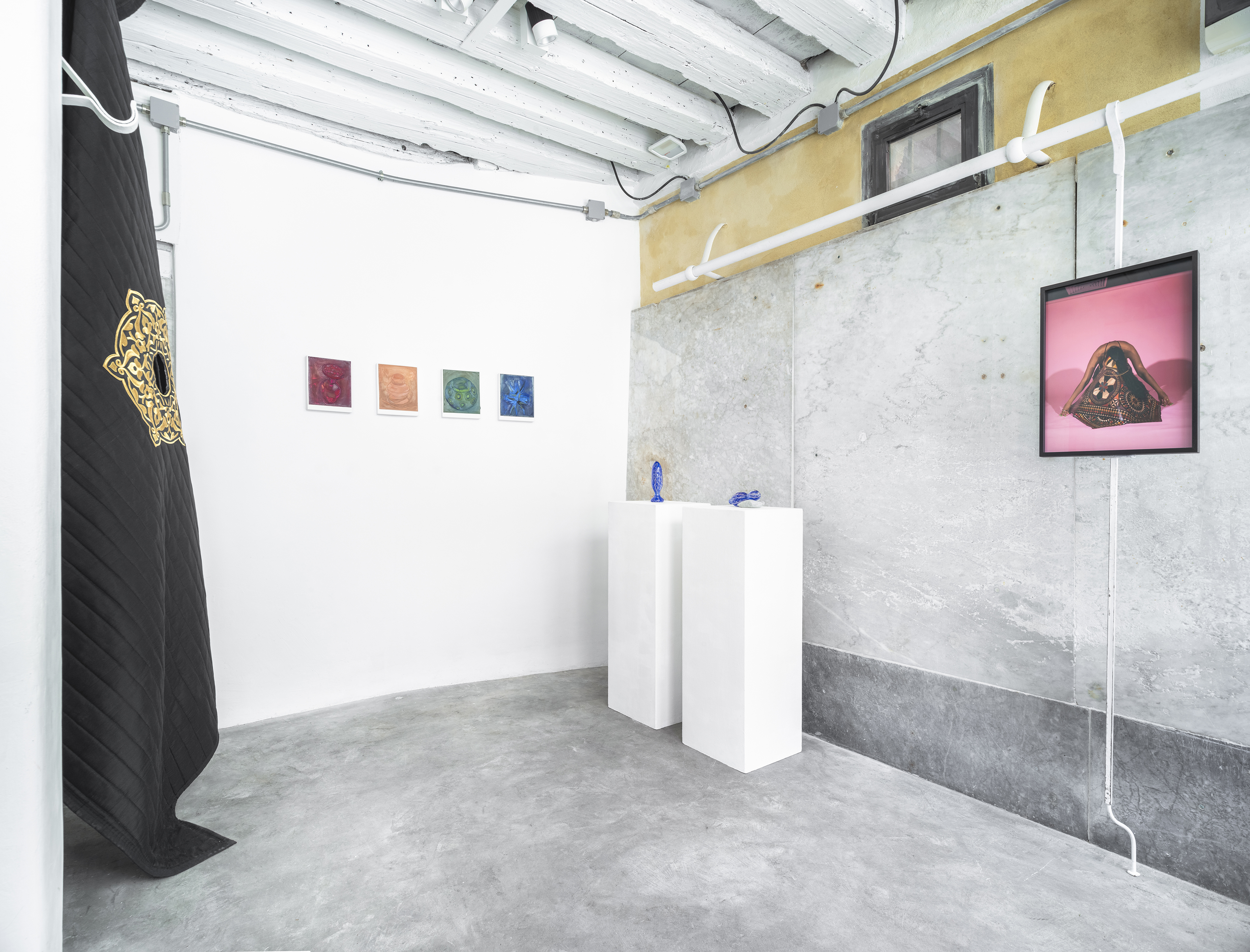
Exhibition View, Il gioco della sicurezza / The safety game, 2024, 10 & zero uno, Ph. Filippo Molena 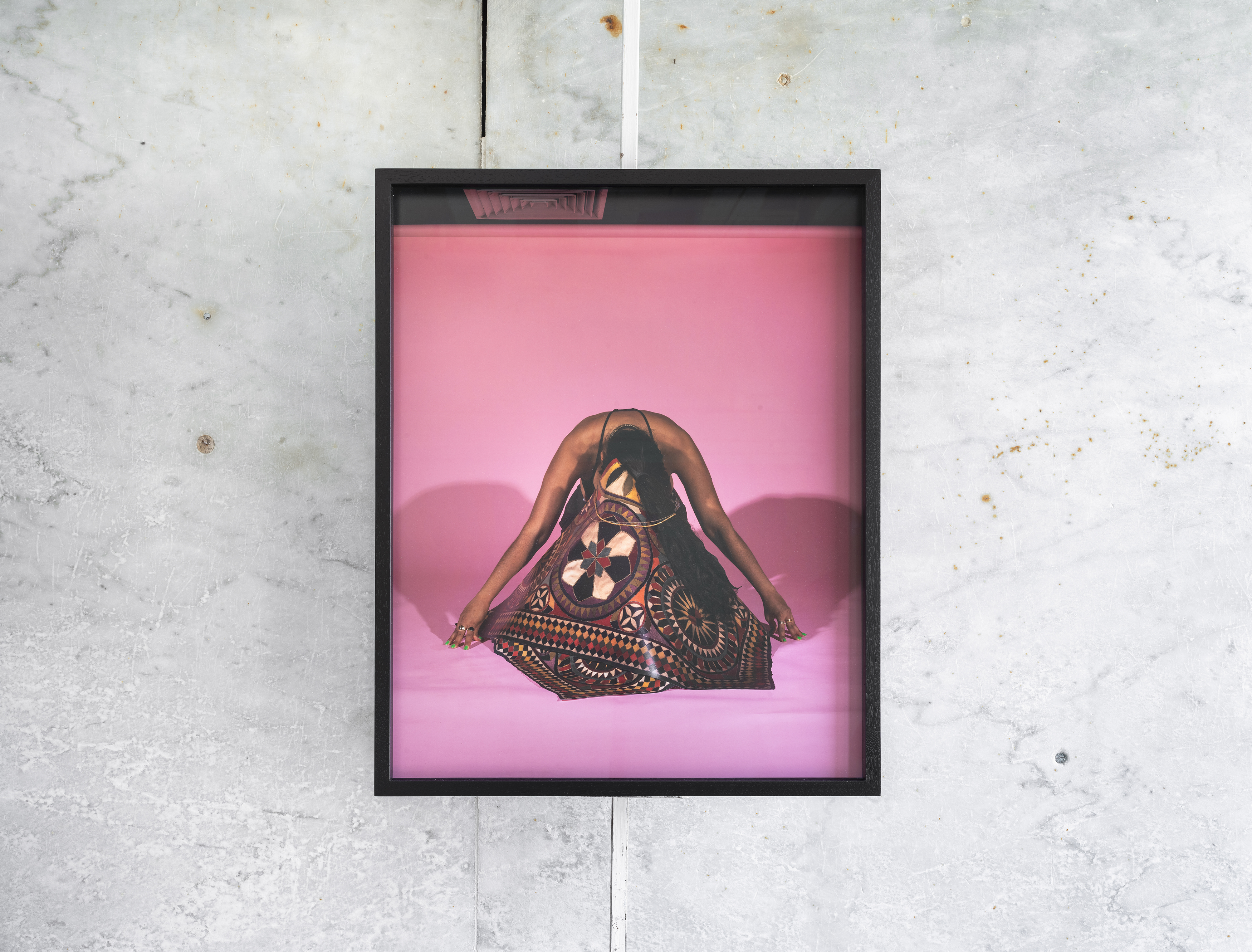
Baseera Khan, Tent Square, Pink, 2023, archival inkjet print, artist’s custom frame, 50,8 x 40,6 cm, Ph. Filippo Molena 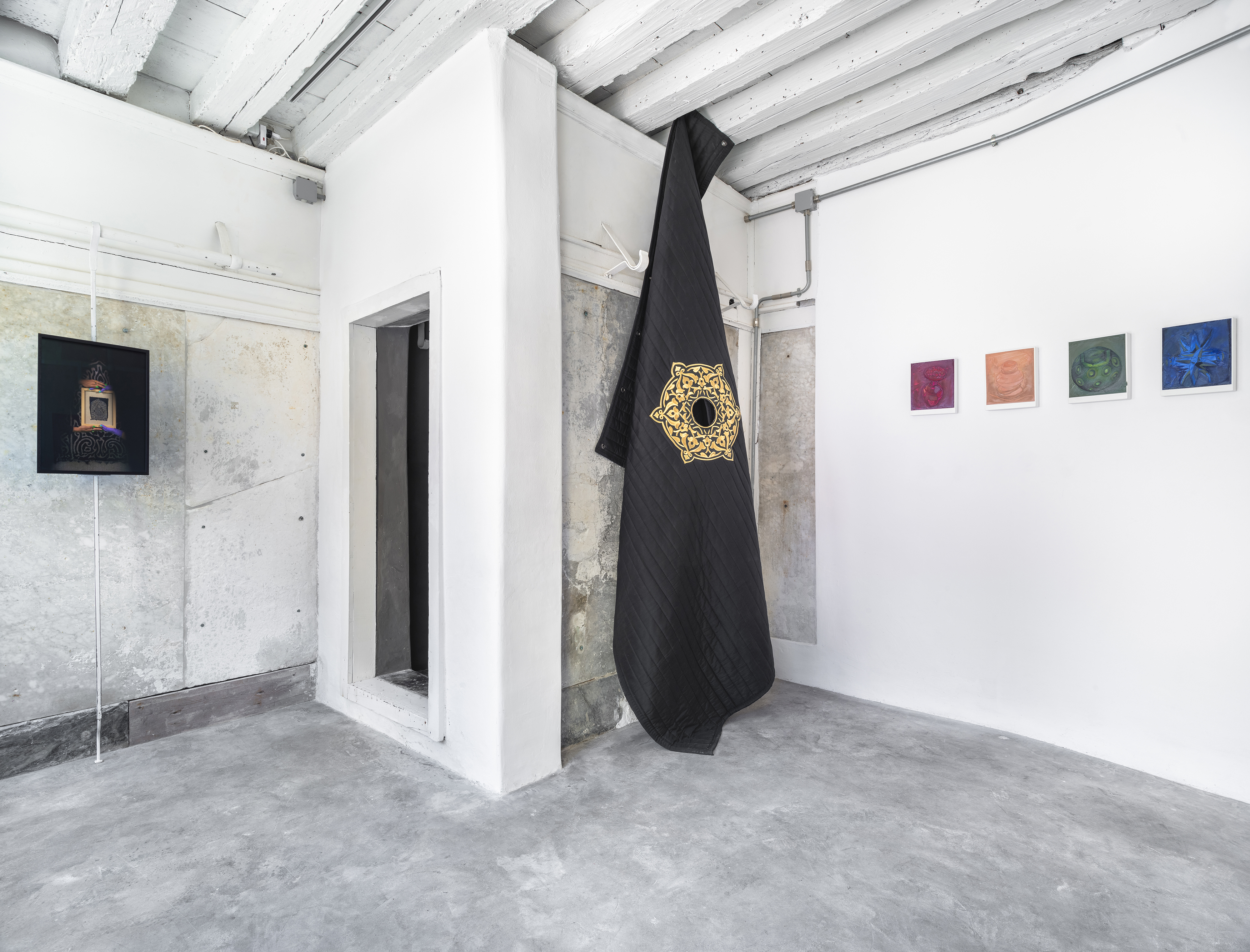
Exhibition View, Il gioco della sicurezza / The safety game, 2024, 10 & zero uno, Ph. Filippo Molena 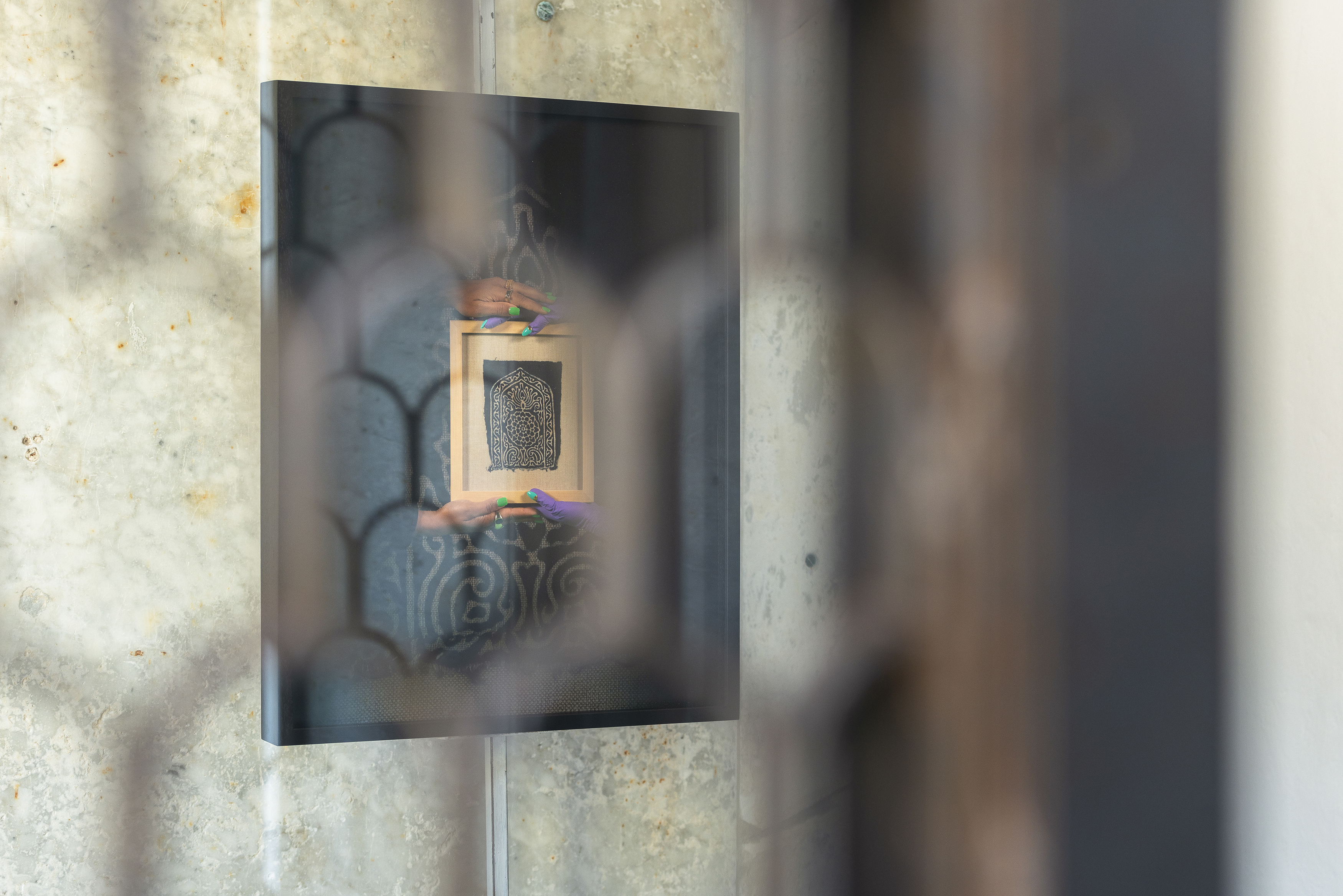
Made in India, Found in Egypt, Black, from Law of Antiquities, 2023, archival inkjet print, artist’s custom frame, 50.80 × 40.64 × 3.81 cm (framed), Edition of 2 plus I AP, Ph. Filippo Molena 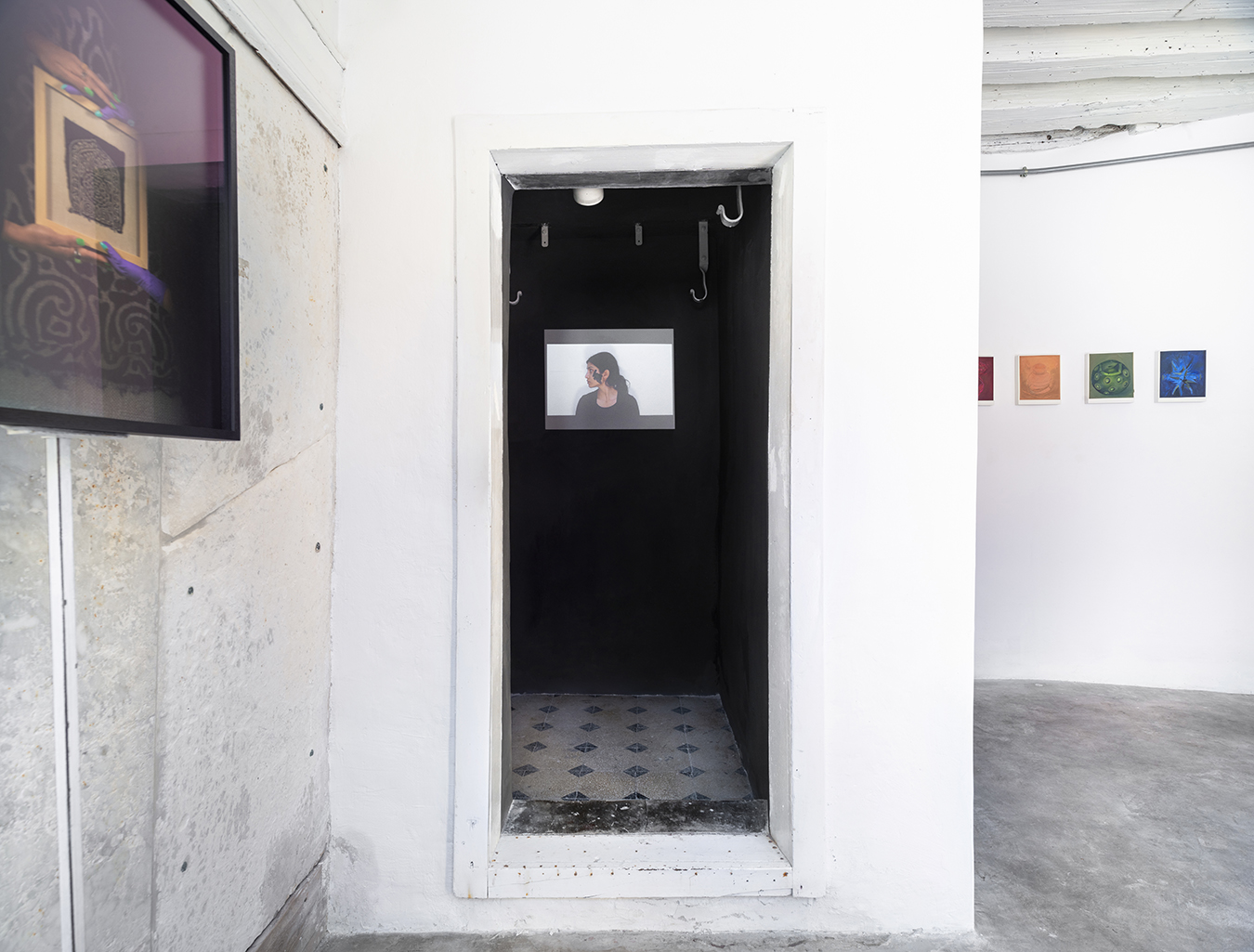
Exhibition View, Il gioco della sicurezza / The safety game, 2024, 10 & zero uno, Ph. Filippo Molena 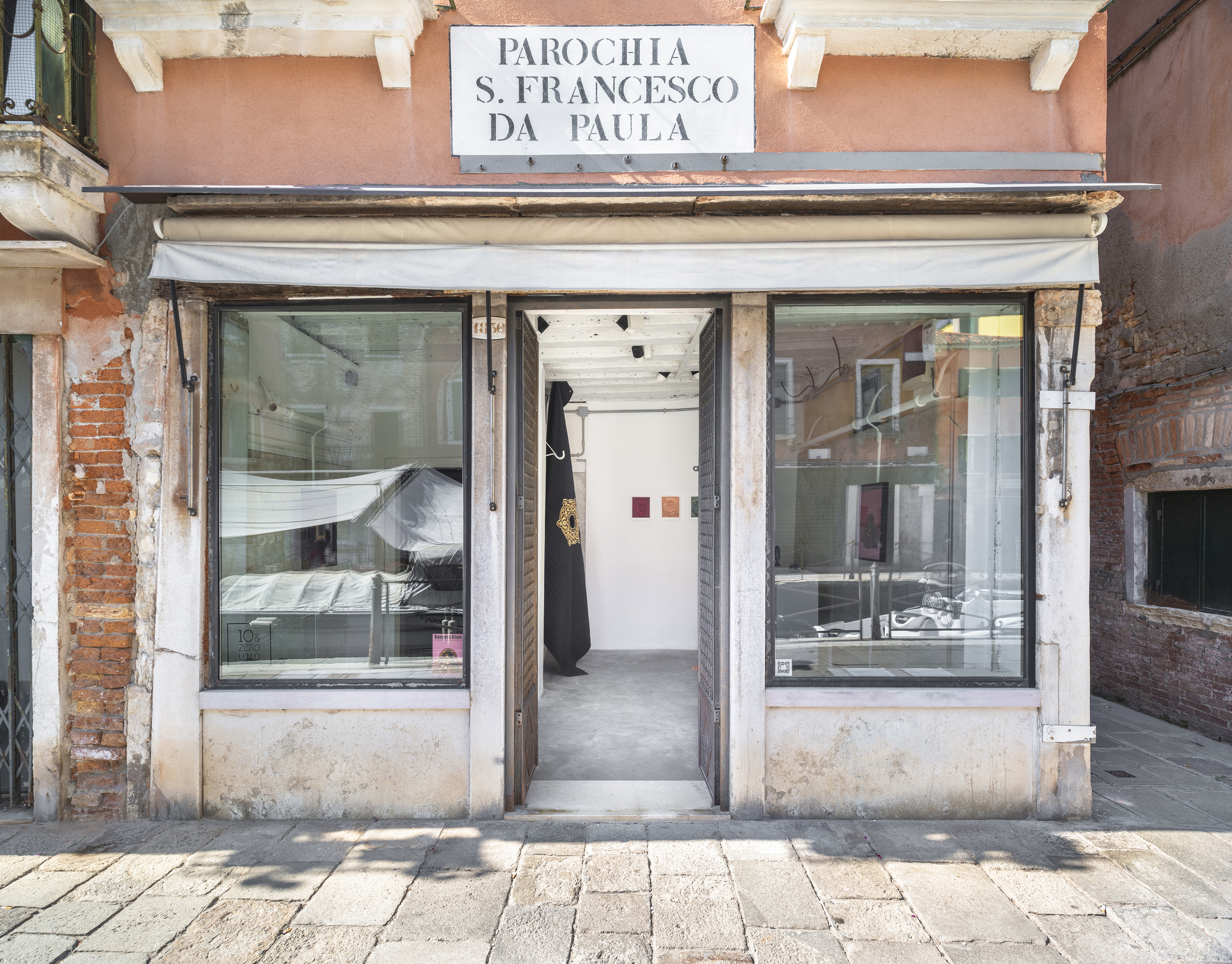
Exhibition View, Il gioco della sicurezza / The safety game, 2024, 10 & zero uno, Ph. Filippo Molena
🎨 Baseera Khan (1980, Texas)
is a New York-based artist focusing on performance, sculpture, and installation, working with a polysemantic and multimaterical language. Their work explores materials and color and the themes of labor, family, religion, and spirituality. “Painful Arc, Shoulder High” is on display at The High Line Park, NYC until summer 2024. Khan’s first solo museum exhibition was at the Brooklyn Museum of Art (2021-22), with a touring exhibition at Moody Arts Center and Contemporary Arts Center (2022-23). They have exhibited at the Wexner Center for the Arts, New Orleans Museum of Art, Munich Documentation Centre, and more. Their performances have been premiered at several locations including the Brooklyn Museum of Art and the Whitney Museum of American Art. Khan has held residencies at The Kitchen NYC and Pioneer Works and won the Artist Prize for the MTV/Smithsonian Channel docu-series “The Exhibit” (2022-23). Their works are in major collections like the Solomon R. Guggenheim and Whitney Museum of American Art. Khan holds an M.F.A. from Cornell University and a B.F.A. from the University of North Texas.
 10 & zero uno