

10 & zero uno is pleased to present Indagine di una piega, a solo exhibition by Eva Chiara Trevisan (Treviso, 1991) who is exhibiting for the first time in its spaces in Via Garibaldi 1830, a few steps away from the gardens of the Venice Biennale. The exhibition opens to the public on January 25th at 6.30 PM and is narrated by the words of Alessandra Maccari.
The ineffable borderline between painting and sculpture, the theme of drapery declined in a contemporary key and the vitality of matter are some of the knots around which the variegated corpus of works that make up Indagine di una piega unfolds. Eva Chiara Trevisan explores the quality of the surface and the possibilities of the fold, modelling a pictorial substance that preserves the sign of completed gestures and activates a haptic perception. The artist lives and works in Venice – the home of tonal painting, where the superimposition of colours and attention to luministic effects produce a plastic illusion – so her orientation towards colour as a means of expression is part of a tradition that characterises the lagoon city in its predilection for an element that is emotionally experienced by the viewer and charged with cultural meanings.
Trevisan’s approach to the chromatic datum is instinctive, he maintains a dialogue with it until he reaches a moment of suspension, and he does this by working on the ground, through a physical relationship with the acrylic substance; in the series Lo que toco (2024) he simulates drapery, an element that dresses the body but is affected by the atmosphere, whose curves generate light and shadow, exhibiting its depth. Colour manifests itself here in its corporeal dimension, the painting emancipates itself from the support and acquires the three-dimensionality, weight and idea of movement typical of reality, giving rise to embodied images where even the reverse can manifest itself. The philosopher Gilles Deleuze, recognising in the Baroque style a textile form that tends to free itself from subordination to a finite body, asserted that ‘perhaps painting needs to break out of the picture and become a sculpture’. In this sense, the artist intends to probe the plastic properties of pictorial matter by creating a hybrid form that mocks the canvas and not only can do without this support but also manages to imitate its textile qualities.
The works Orogenesi and Strato D (from the series Tessuto temporale, 2025-ongoing) appear to be aerial shots of the globe or cutouts of the earth’s surface that refer to the formation of reliefs and a region of the earth’s mantle, respectively. The term surface (from the Latin super-facies, upper face) designates a thickness that delimits a body affected by both inner and outer motions; this element is isolated by the artist by showing how it is composed of various layers that, as in the case of the ground, also fix a precise temporality and can resurface during landslides. Similarly, the irregularities on the skin of the works, the result of the artist’s gesture and the action of the environment, refer to those of the earth. This painting, which begins as a uniform field, ends up behaving like a baroque form, and thanks to its layering allows the creation of undulating movements with effects of dynamic tension. Deleuze in The Fold argued that ‘the informal does not constitute a simple negation of form: it testifies to form as a folded form that exists only as a “landscape of the mental”’: the fold for the author thus becomes the distinctive feature of the Baroque, in a continuous variation that relates matter and soul. Trevisan uses this principle to create the idea of movement that permeates his works; it is a metamorphosis that, as Georges Didi-Huberman states in Ninfa Moderna, has to do with drapery. The latter, elected by Aby Warburg as a ‘pathetic utensil’, has the power to animate the inanimate, and is ultimately an interface of the body – from the bandages to the shroud – that accompanies the passage between the existing and the non-existent, between form and formlessness. The title of the work Lo que toco – Naiadi (2024) refers to the figure of the nymph, a divinity of which Didi-Huberman illustrates the process of separation between body and garment, and consequently the emotions reverberate on the cloth whose fate is formlessness. The artist seems to want to reflect precisely on the fate of the fallen drapery, which obtains a visual autonomy, so her painting acquires a weight and tends to sink downwards. The works in the series Di-spiegare la materia (2024-ongoing), while retaining their object nature, are again placed on the wall and appear as earthy views that take on the appearance of a relic, of a fold locked in its development that conceals a large part of the work while maintaining its tension. The space included in the fold is part of the creation despite its existence being virtual, as is the void embedded in the painting.
One cannot speak of movement without considering the temporal dimension that, in the artist’s practice, is expressed in a continuum where the reminiscences of previous works find their place in the following ones, creating a thread that binds the artist’s entire research. Each layer influences the layering of the other and each new layer modifies the underlying surfaces to constitute temporal thickenings where the past influences the future and the present intervenes on the lived. Trevisan thus seems to activate what Jean Dubuffet called the ‘kinematics of painting’, to indicate the act of the viewer reliving the elaboration of the work, and to show us how matter has its own memory.




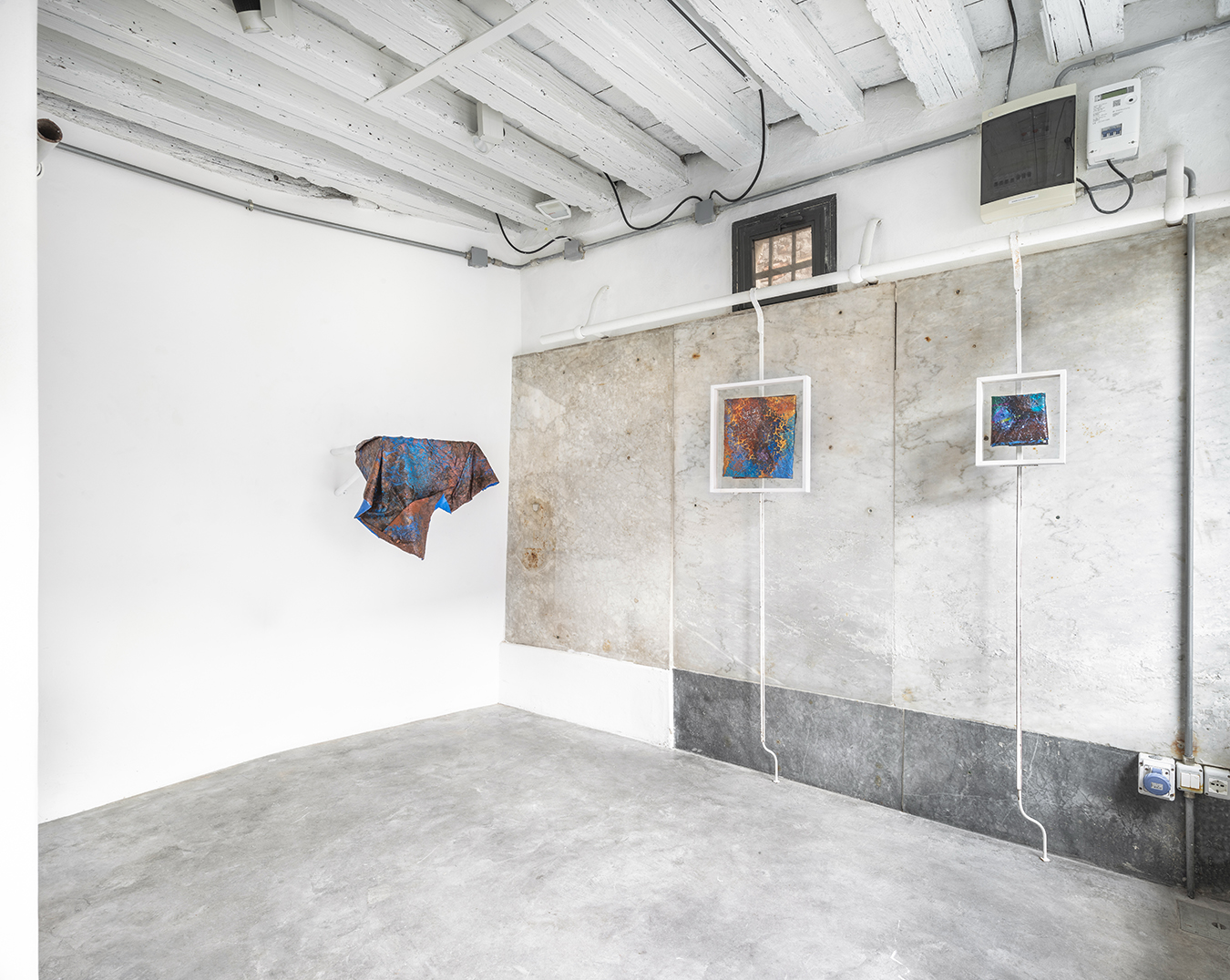
Exhibition View, Indagine di una piega, 2025, 10 & zero uno, Ph: Filippo Molena 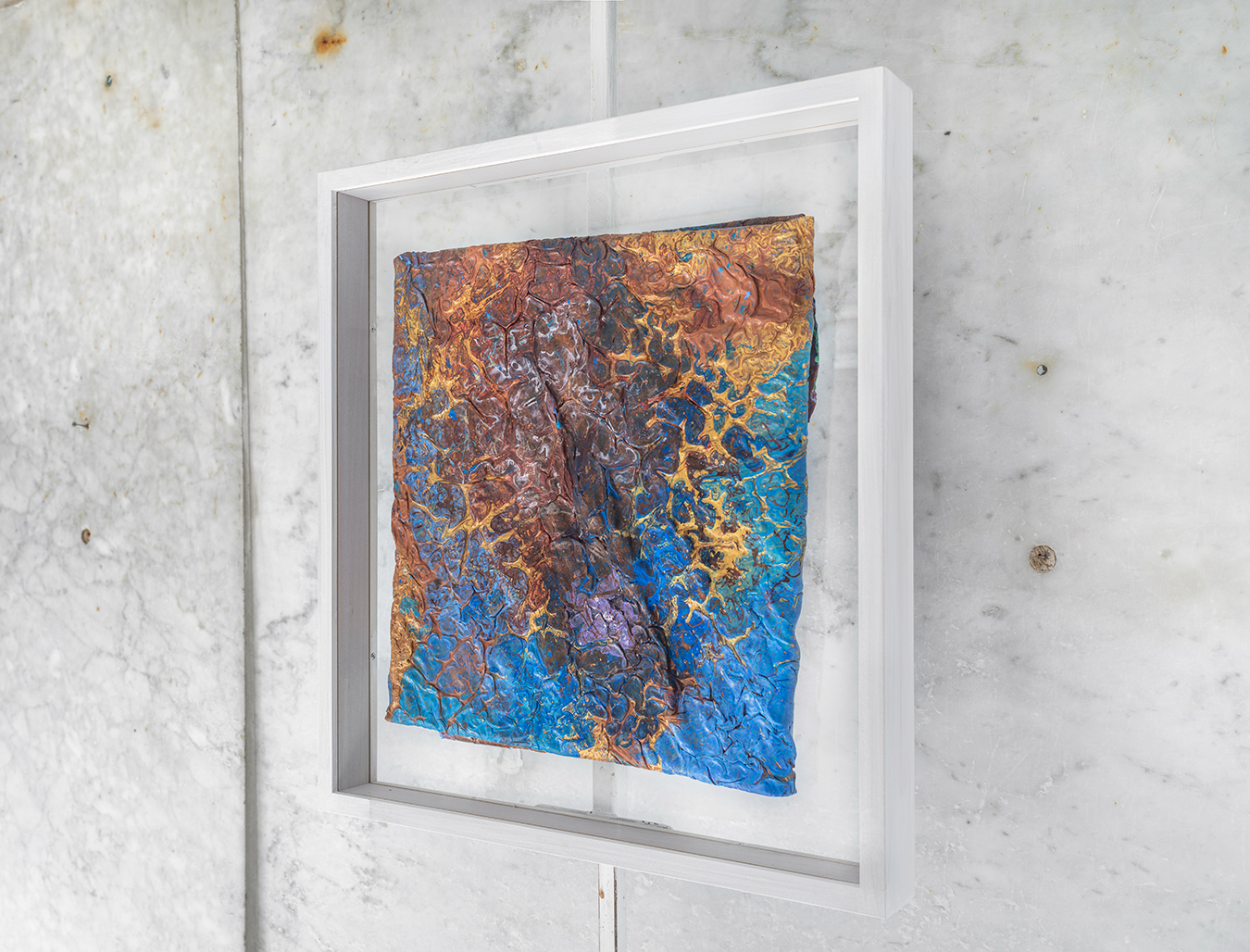
Eva Chiara Trevisan, Di-spiegare la materia – A, 2024, acrylic color layering, 49 x 45,5 x 5 cm, Ph. Filippo Molena 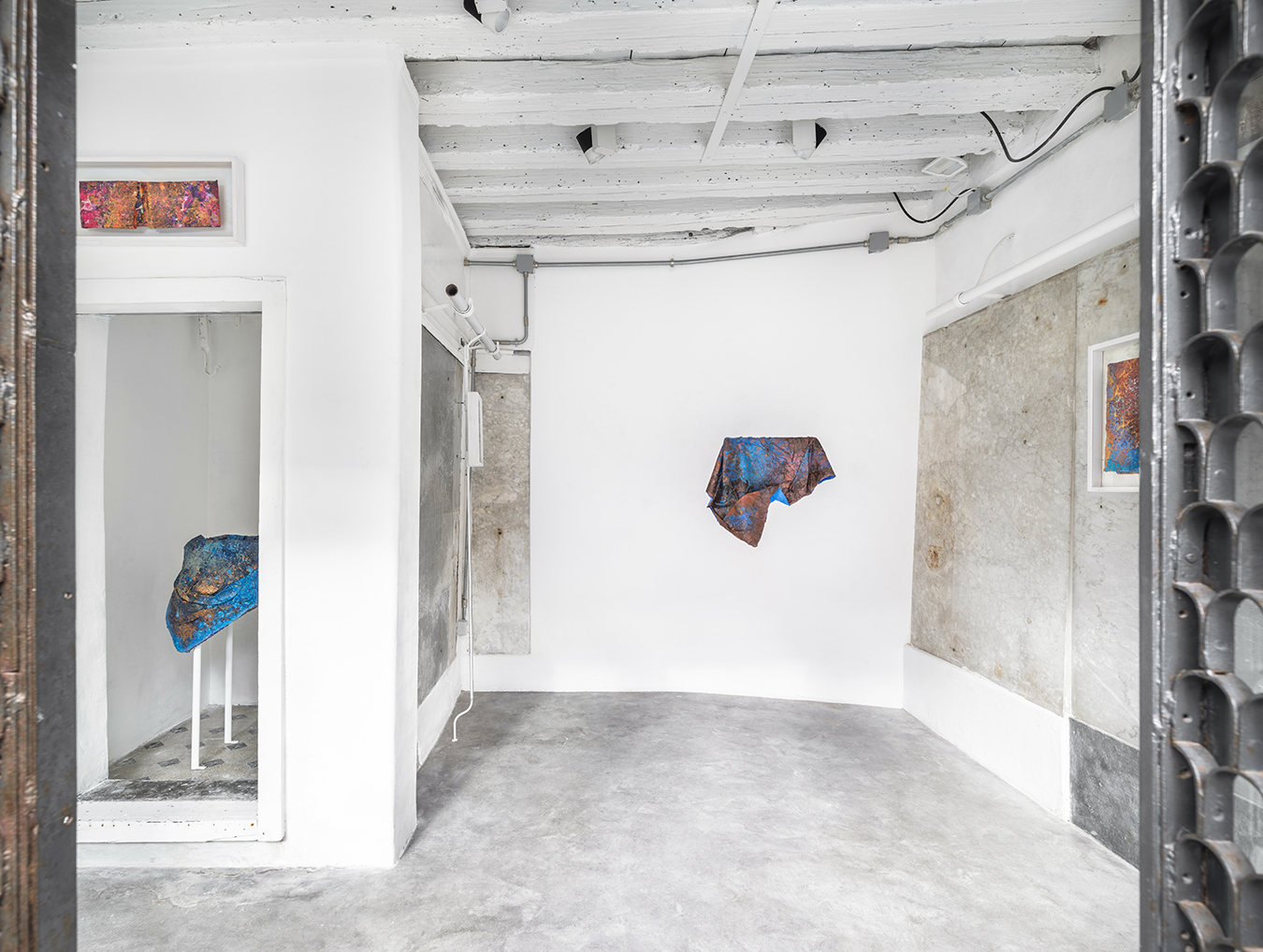
Exhibition View, Indagine di una piega, 2025, 10 & zero uno, Ph: Filippo Molena 
Eva Chiara Trevisan, Orogenesi, 2025, acrylic color layering and iron, 54 x 60 x 90 cm, Ph. Filippo Molena 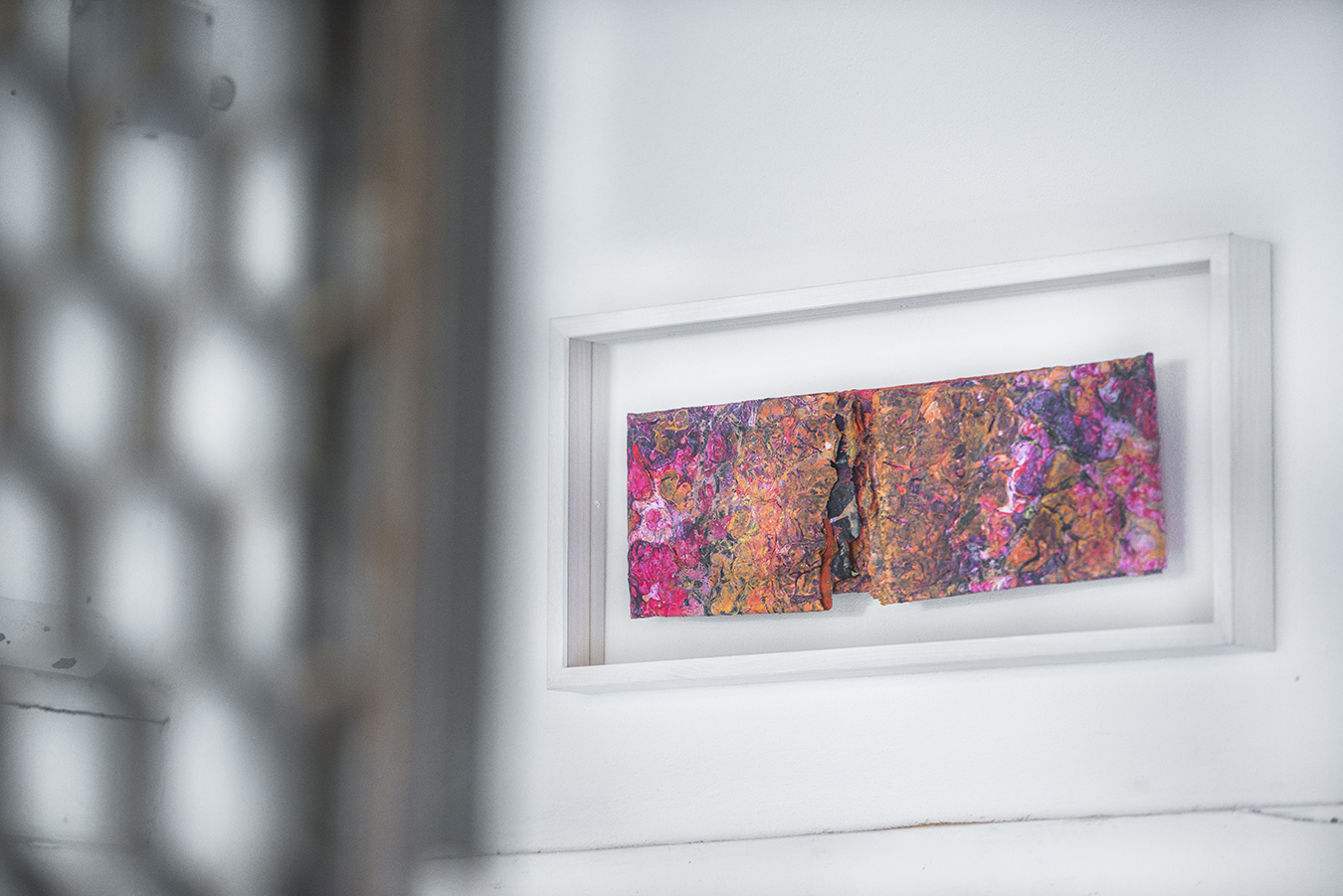
Eva Chiara Trevisan, Di-spiegare la materia – E, 2024, acrylic color layering, 28 x 60 x 5 cm, Ph. Filippo Molena 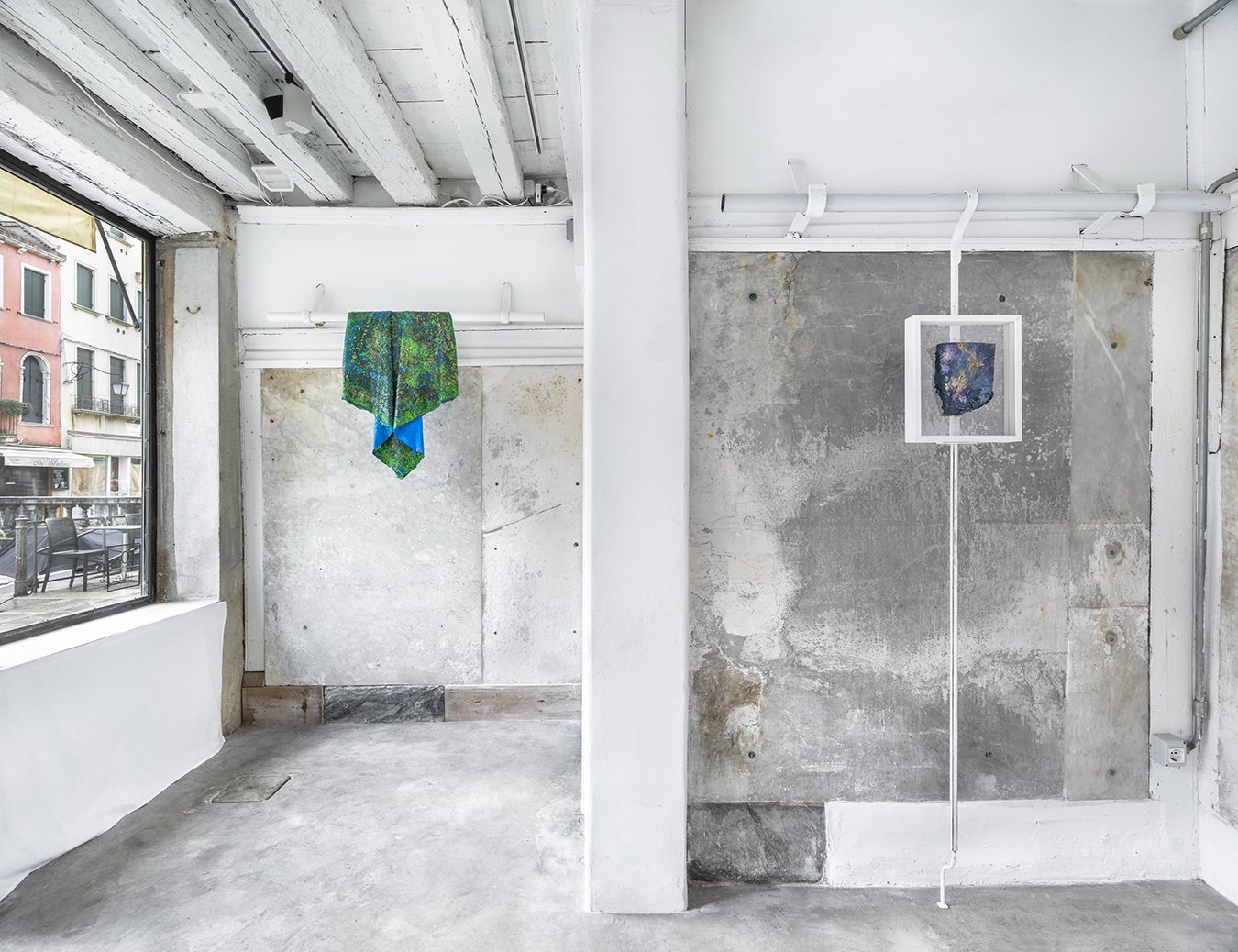
Exhibition View, Indagine di una piega, 2025, 10 & zero uno, Ph: Filippo Molena 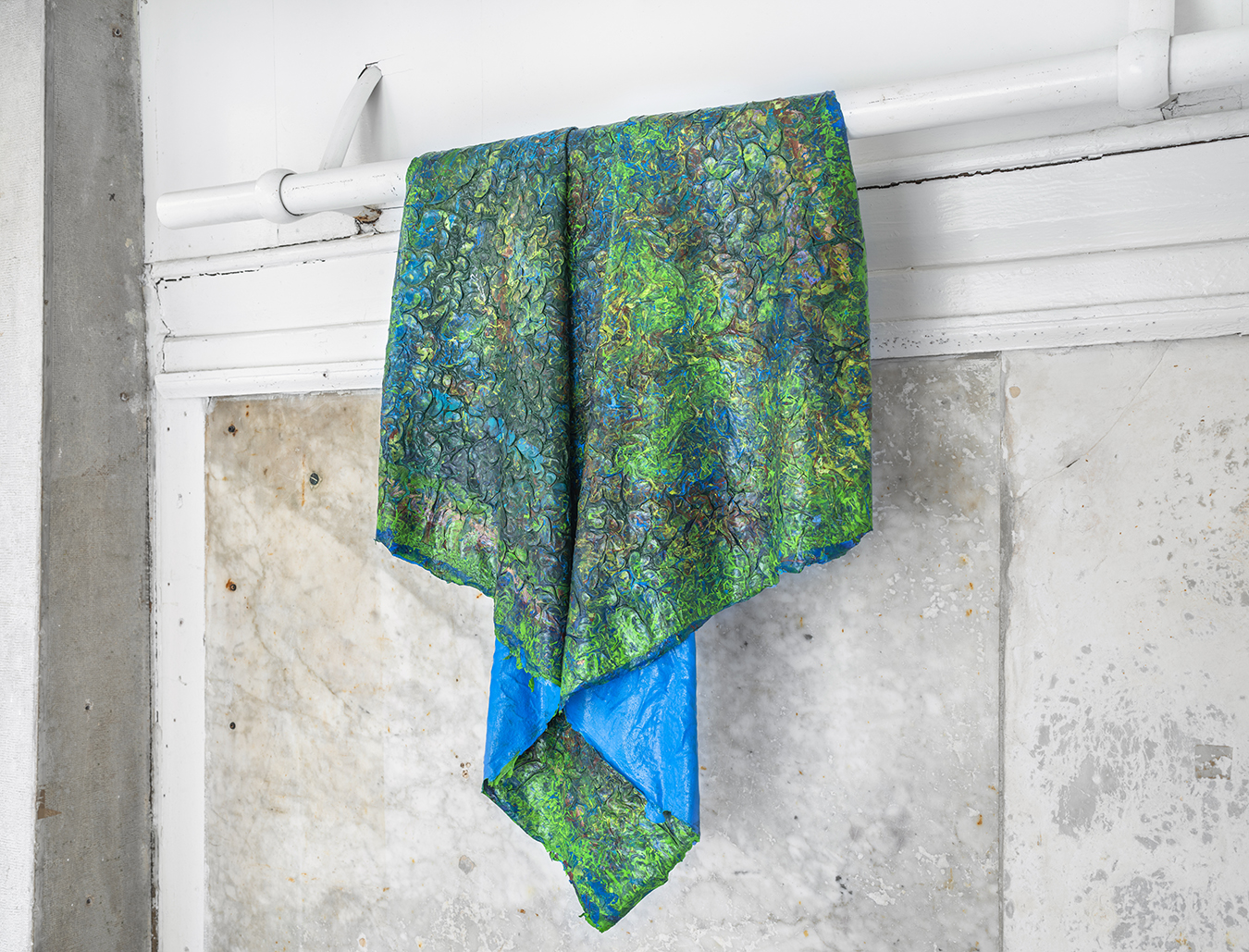
Eva Chiara Trevisan, Naiadi, 2024, acrylic color layering, 86 x 60 cm, Ph. Filippo Molena 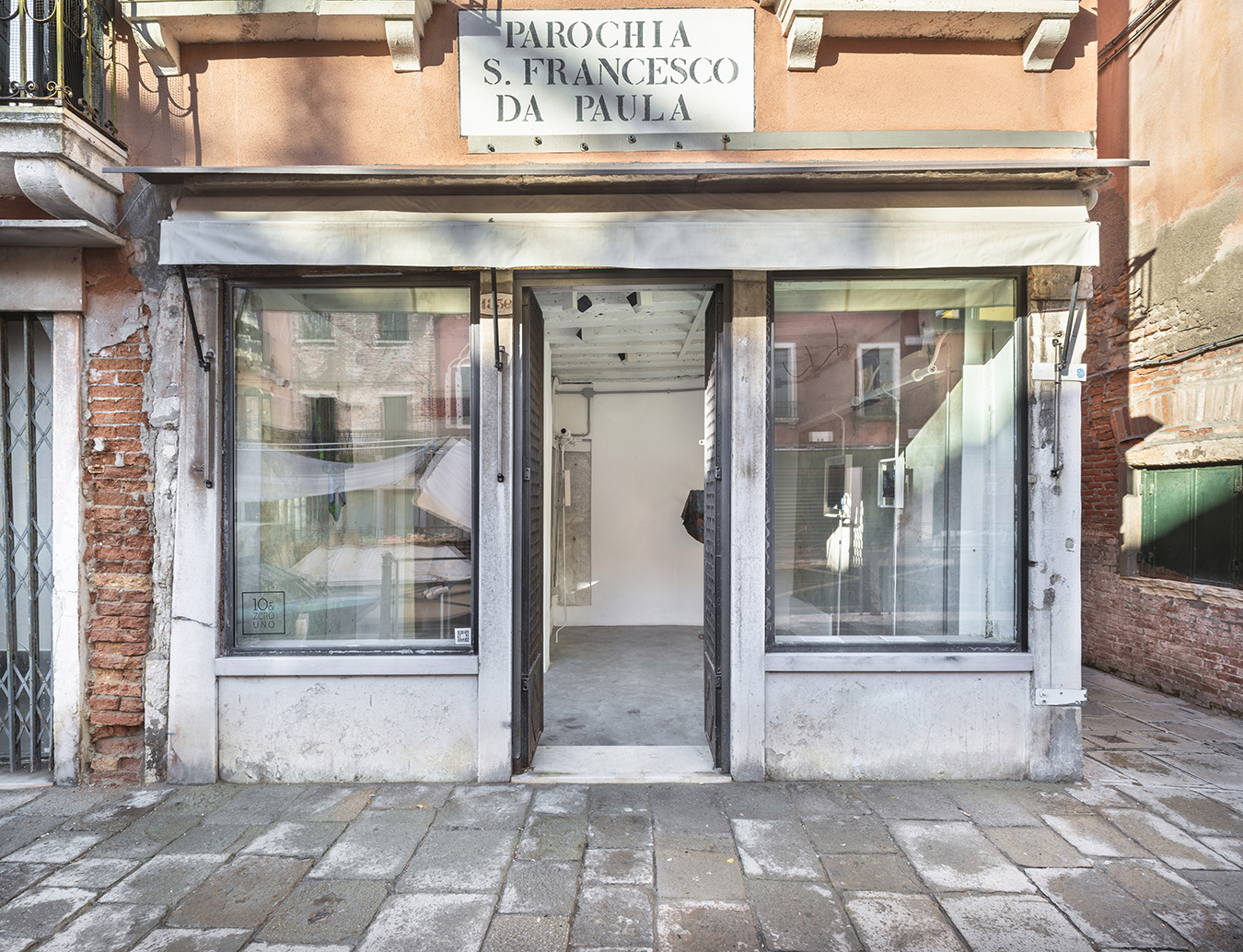
Exhibition View, Indagine di una piega, 2025, 10 & zero uno, Ph: Filippo Molena
🎨 Eva Chiara Trevisan (1991, Treviso)
The artist’s research investigates the transmutation of matter through a practice that aims at a place where memory resurfaces at times, leaving unclear sensations and thoughts, born from the mingling of fragments of books read and conversations overheard. Painting and installation are the two media the artist uses in his research, which is strongly determined by the creative process and the relationship that is created between matter and time, between gesture and colour. The relationship with matter, that constant dialogue between eye and hand, between the tactile sense and visual perception, triggers the thought that then develops through alchemical and philosophical theories on emptiness. Observing his works, the viewer is guided to the discovery of the dimension of sublimation and led into a kind of bewilderment, in order to find nothingness, both of matter and in itself. He completed his studies at the Academy of Fine Arts in Visual Arts in Venice. After a residency in Matera (2017), she decided to undertake an experience abroad in Pamplona (Spain) at the Centro de Arte Contemporanea de Huarte. She returned to Venice as the winner of one of the ateliers at the Fondazione Bevilacqua la Masa in Venice for the year 2018/2019. In 2021 she is among the winners for the Just Imagine residency in Rome. In 2023, he took part in the Via Farini residency in Milan. In 2021 he held his first solo exhibition La Huella, Marina Bastianello Gallery, Mestre (Ve), curated by Marina Bastianello and in 2023 he held his second solo exhibition A Foreign Place, D Contemporary Gallery, London, curated by Raffaella Matrone In the meantime, he took part in various prizes and group exhibitions including ATELIER. IT: un viatico nelle pratiche pittoriche, curated by Andrea Bruciati and Stefano Arienti, at Istituto Villa Adriana e Villa d’Este – VILLÆ, Tivoli (2024); Pittura Italiana Oggi, curated by Damiano Gullì at Triennale Milano, Milan (2023); Premio Francesco Fabbri per le Arti Contemporanee, finalist, curated by Carlo Sala, Villa Brandolini, Pieve di Soligo (TV) (2022, 2020 and 2019) and Combat Prize, finalist, curated by Paolo Batoni, Museo Civico Fattori, Livorno (2017).

Exhibition Press
January 29th, 2025 – ArtsLife: Eva Chiara Trevisan e l’incanto della piega: un dialogo tra materia e tempo – by Francesco Liggieri
January 30th, 2025 – exibart: Panneggi contemporanei: la nuova esposizione di Galleria 10 & zero uno – by the editorial team
February 1st, 2025 – arteIN: Eva Chiara Trevisan e l’incanto della piega – by Francesco Liggieri
 10 & zero uno