
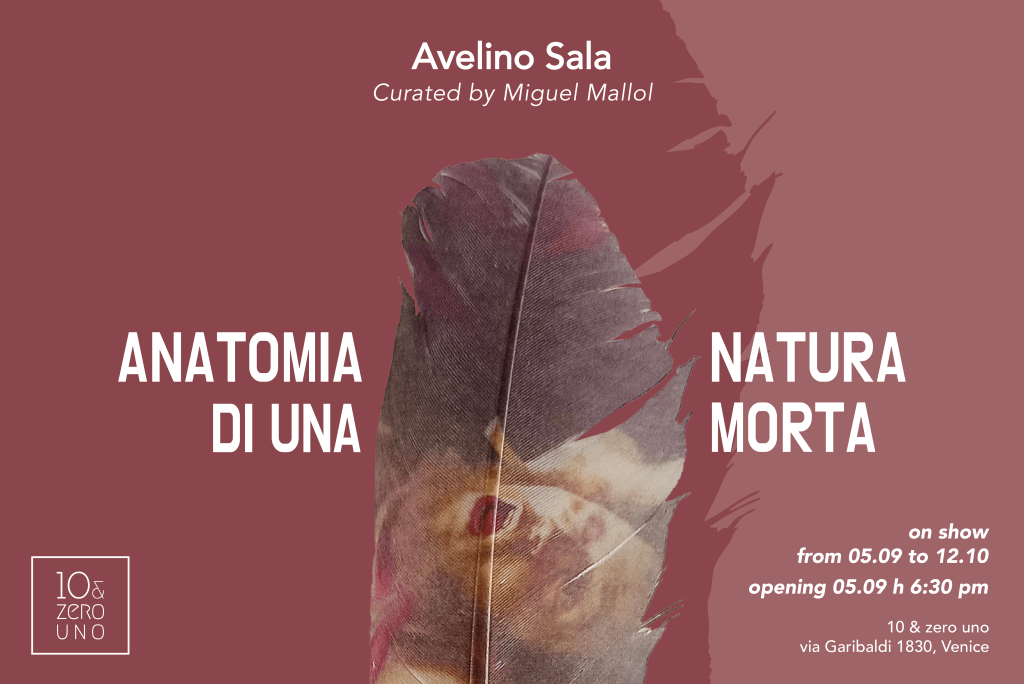
10 & zero uno is proud to present ANATOMIA DI UNA NATURA MORTA, the first solo exhibition in Venice by Spanish artist Avelino Sala, curated by Miguel Mallol. The exhibition, opening during the second weekend of the Mostra del Cinema in Venice, will be held in the gallery’s space near the Giardini of the Biennale, from September 6 to October 12, 2025, and will be inaugurated on Friday, September 5, from 6:30 to 9 PM.
Avelino Sala’s exhibition project, conceived specifically for 10 & zero uno gallery, transforms the space into a living element of the composition. With a theatrical language and brushstrokes that evoke Baroque still lifes, the artist proposes a dialogue between past and present, bringing into contemporary focus the soul of the former butcher shop that now houses the gallery.
Inspired by Marc Augé’s book Non-Places, the exhibition explores transit spaces devoid of identity, in contrast to those places that preserve stories, experiences, and traces of time. The geometric whiteness of the gallery’s white cube—so similar to many other anonymous spaces—becomes a ground for metamorphosis. In the case of ANATOMIA DI UNA NATURA MORTA, the transformation brings the past back to life through a contemporary deconstruction of elements, orchestrated by Avelino Sala’s works.
Like ripples in water, the exhibition’s narrative expands to include the Castello neighborhood and the entire city of Venice. It reflects on what it means to live the city from within or to observe it as a visitor, and on the silent resistance of those who inhabit it in order not to lose its identity as a place.
The three works by Sala engage in a dialogue with one another, forming connections with the space, the city, and the idea of an everyday life under threat. The proposal follows a path already deeply rooted in the artist’s conceptual journey: a metaphorical play with everyday objects, whose meanings he evokes, alters, and subtly re-presents—sometimes incisively, but never arbitrarily. This is not the first time the artist has explored the theme of the “still life” to unsettle the viewer through a language that is explicit, immediate, didactic, and underpinned by a tone of critique. Sala himself states: “The artist has no answers to current problems: he simply observes what exists and returns it in an unusual form.” Shields, baseball bats, logs, neon lights, and stones are just a few of the decontextualized elements he has previously used to raise questions and prompt reflection.
“Naturaleza muerta con cuchillos”. The butcher’s knives—tools of a traditional trade, weapons that cut, divide, dissect—represent here an object with multiple layers of meaning. The material they are made of, Murano glass, is a tribute to artisanal craftsmanship, but in this dual reading also to the commercialization and mercantile capitalism that has historically marked a city now “for sale,” one that is rapidly losing its essence as a living urban core despite ongoing attempts at resistance.
“If memory is taken—meaning a survival of past images—these images will constantly blend with our perception of the present and may even replace it.”
“Naturaleza muerta con plumas: cabezas y góndolas”. Feathers have been a recurring material resource in Sala’s work, used to represent, through an ethereal element—subtle and light—specific cues for much broader reflections. Delving deeper into this initial material reading, one reaches the contrast between the images presented: a symbiosis of past and present, linked by the idea of everyday life, present in both, albeit within different realities.
The city of Venice, with its worldly and local character, has been portrayed for centuries by costumbrista painters to depict traditions and customs of popular realism known worldwide. Its canals and palaces still fill canvases and remain the subject of countless photographs. Yet this poetic dimension conceals a different reality, where the squares once filled with children playing are now occupied by restaurant tables, and local shops and market stalls are vanishing, increasingly replaced by supermarkets and souvenir stands. The result is a city turning into an open-air shop window, where the temptation of profit outweighs the desire and necessity to keep it alive through its local inhabitants. This dual reading of Venetian reality emerges clearly in Avelino Sala’s work. On the one hand, this showcase-city possesses a real essence that resists, that fights, and remains constantly present against this negative transformation. On the other hand, it is a city at times frozen, passively letting itself be dragged along by events. A city that would prefer to remain suspended in time, as if that were a solution: not moving forward into an uncertain future.
Following this reflection, “Naturaleza muerta con pescado”, an essential map of Venice, is displayed hanging inside the cold storage room of the old butcher shop—like a body awaiting its fate. It waits for a moment of pause, of reflection, a shift, an act of salvation in the face of the slow but relentless annihilation consuming it. But, as mentioned, there is also another city: one that is alive, inhabited, and that defends itself. A city that asserts its rights and gives dignity to the sense of belonging. A city that rises from care and memory, through a gesture of protective resistance and constructive will.




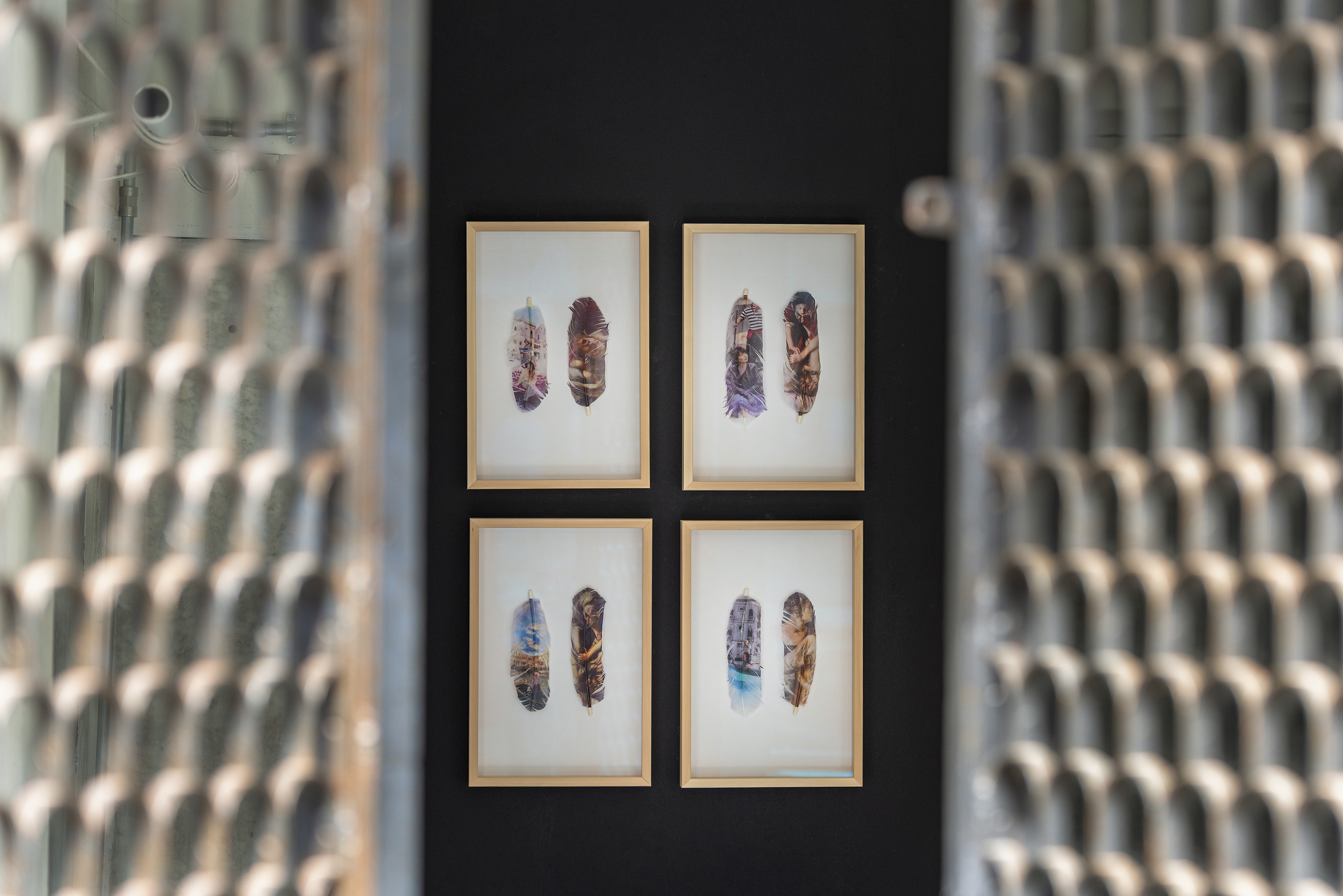
Exhibition View, Anatomia di una Natura Morta, 2025, 10 & zero uno, Ph. Filippo Molena 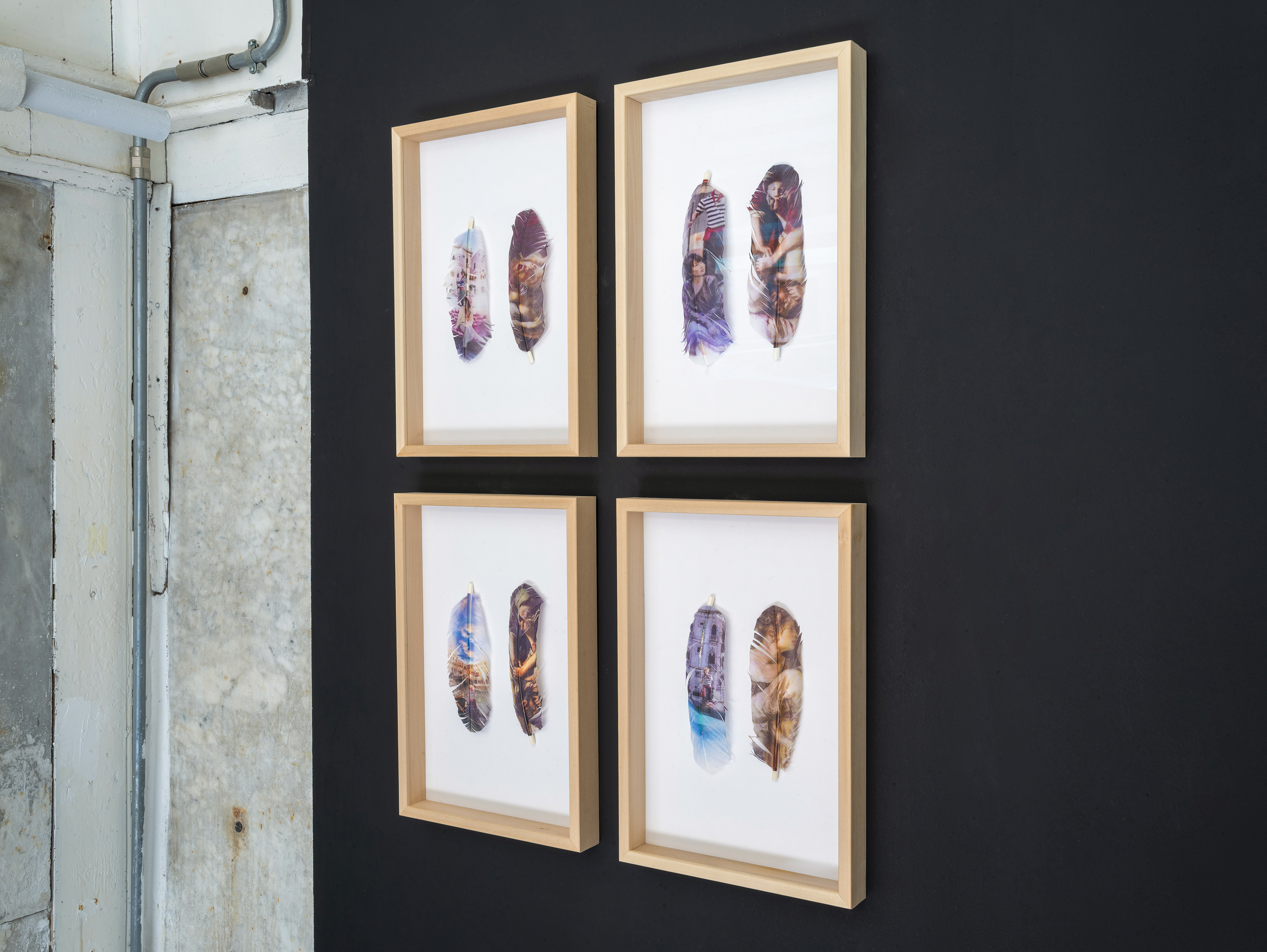
Exhibition View, Anatomia di una Natura Morta, 2025, 10 & zero uno, Ph. Filippo Molena 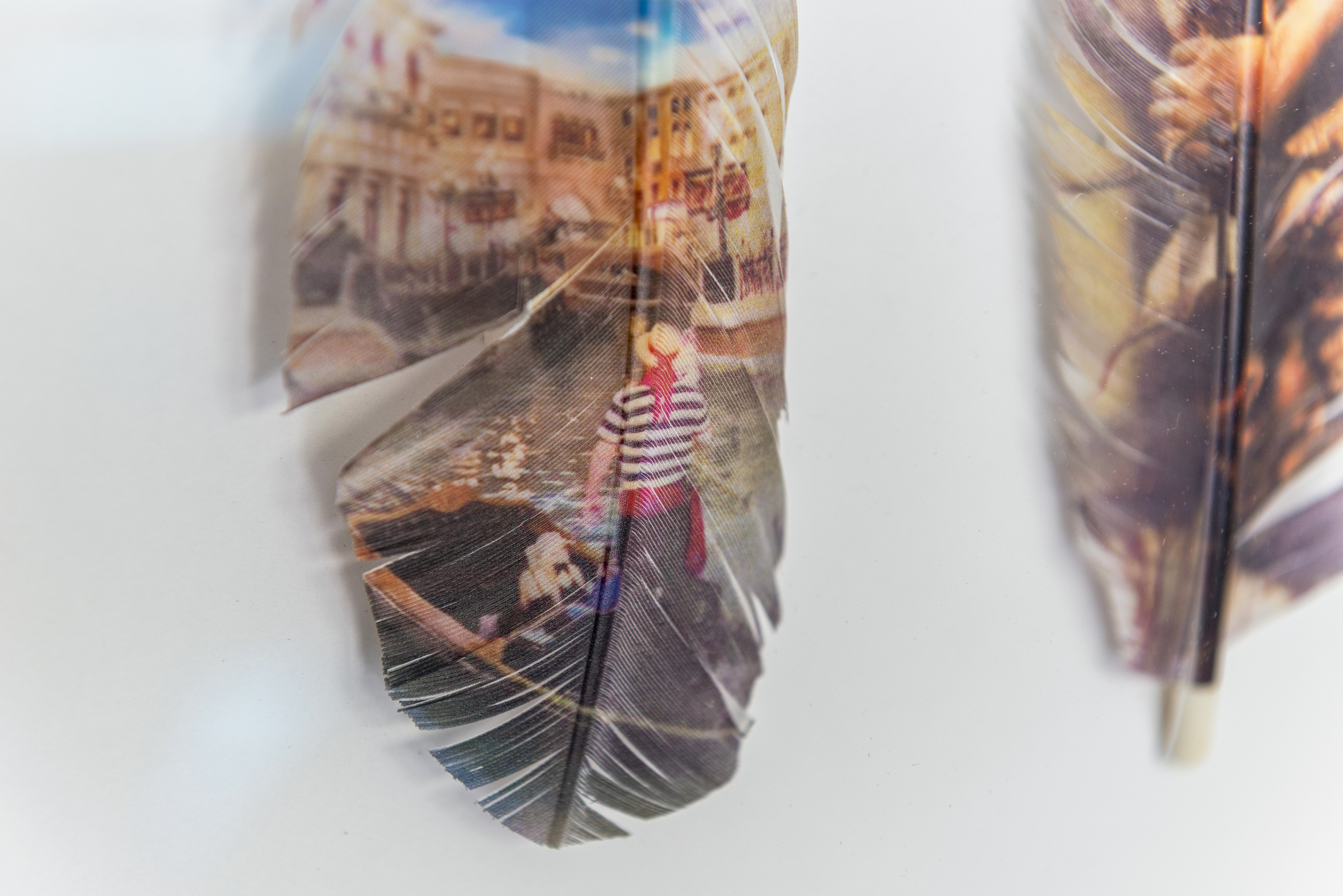
Avelino Sala, detail of Naturaleza muerta con plumas: cabezas y góndolas 4 (Artemisia Gentileschi), 2025, photographic emulsion on duck feather, 42x28x5cm, in Anatomia di una Natura Morta, 2025, 10 & zero uno, Ph. Filippo Molena 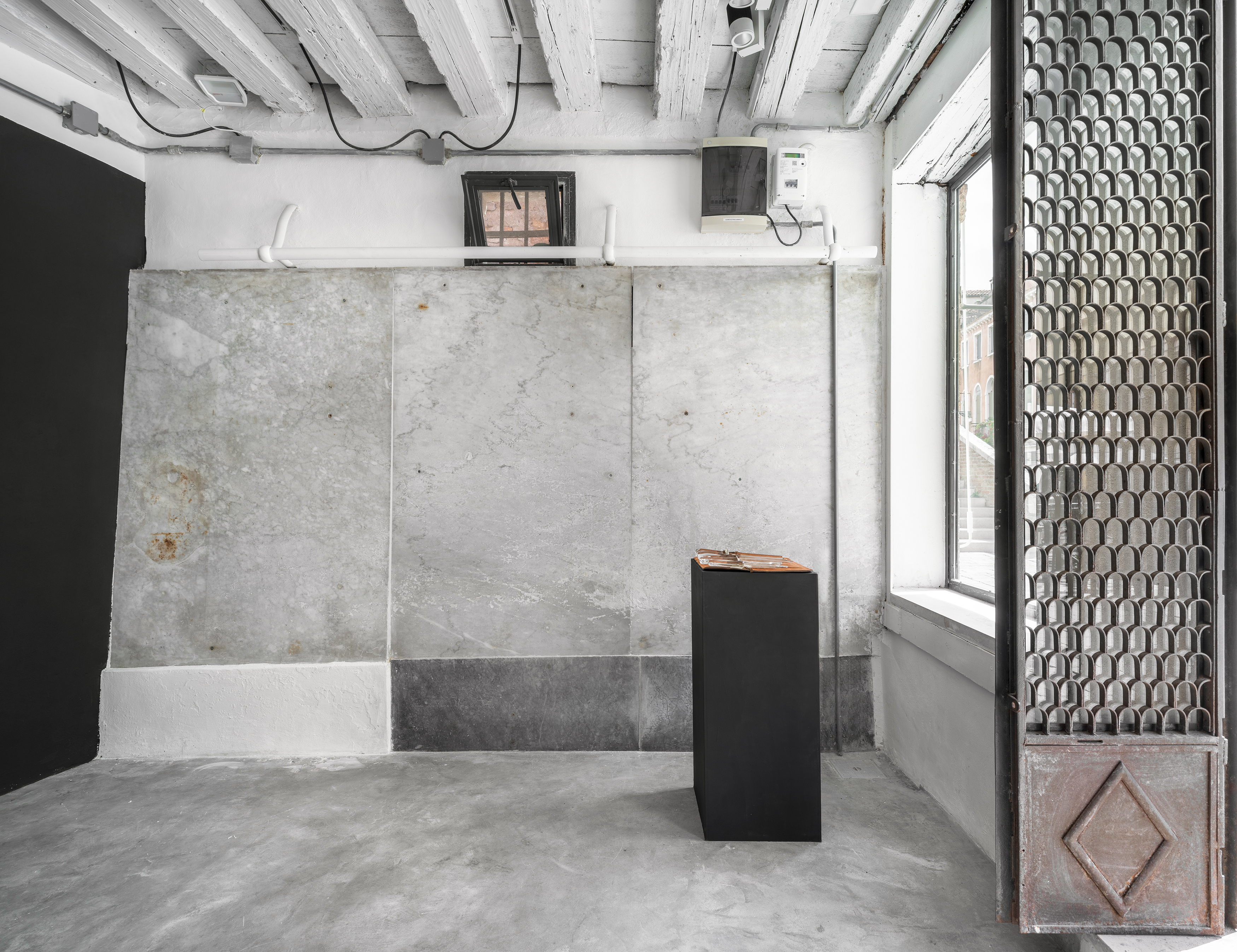
Exhibition View, Anatomia di una Natura Morta, 2025, 10 & zero uno, Ph. Filippo Molena 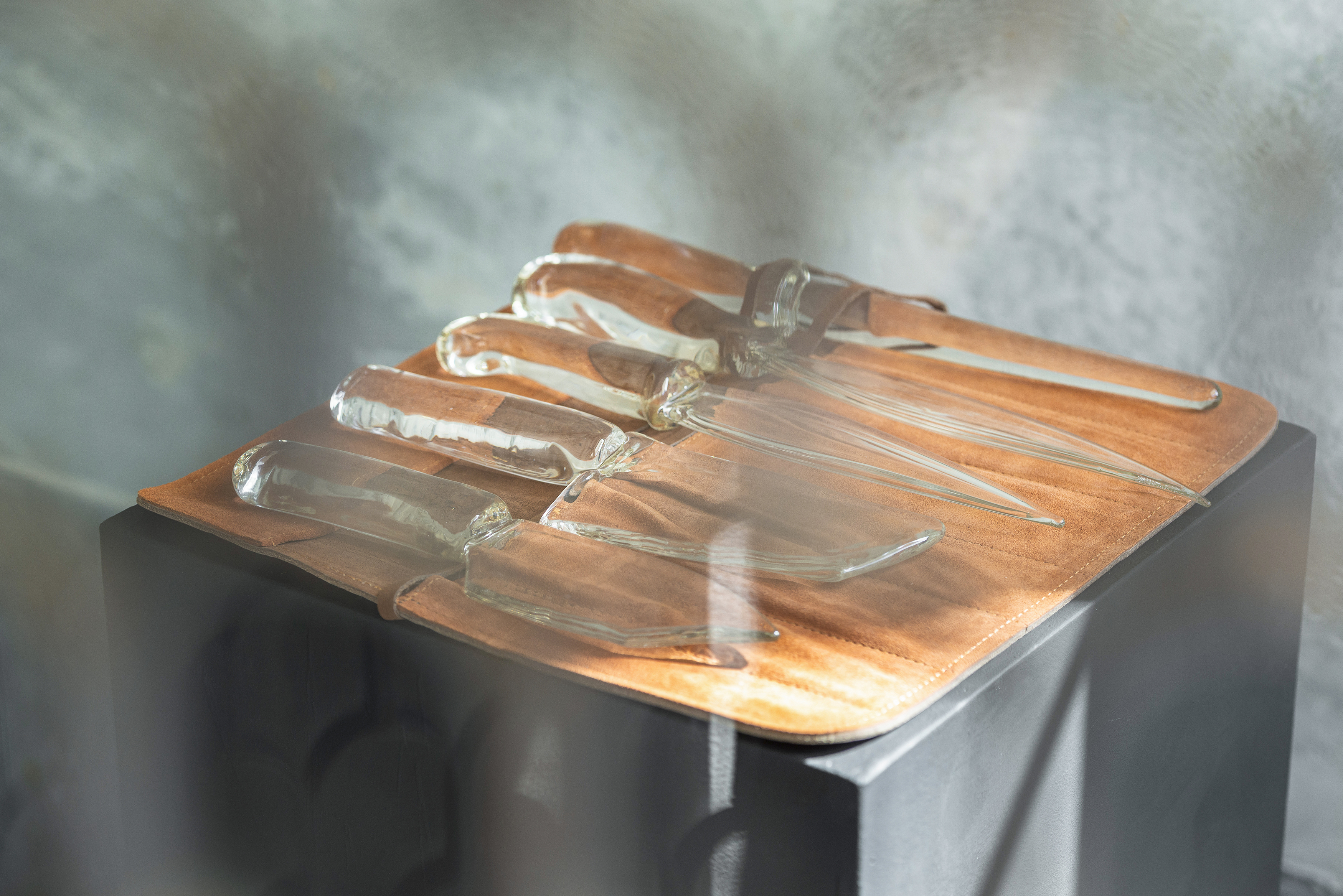
Avelino Sala, Naturaleza muerta con cuchillos, 2025, Murano glass, 40x40cm, in Anatomia di una Natura Morta, 2025, 10 & zero uno, Ph. Filippo Molena 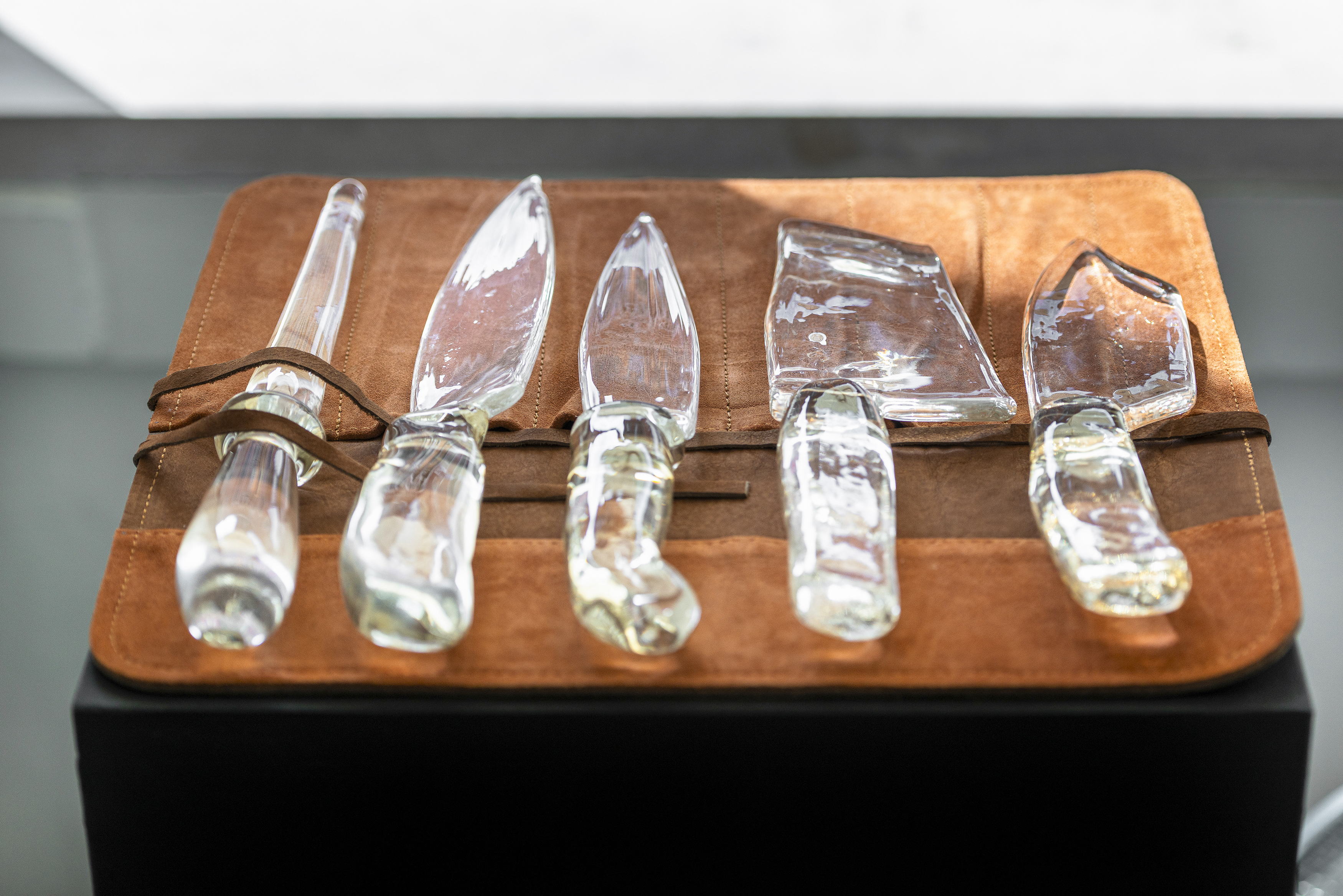
Avelino Sala, Naturaleza muerta con cuchillos, 2025, Murano glass, 40x40cm, in Anatomia di una Natura Morta, 2025, 10 & zero uno, Ph. Filippo Molena 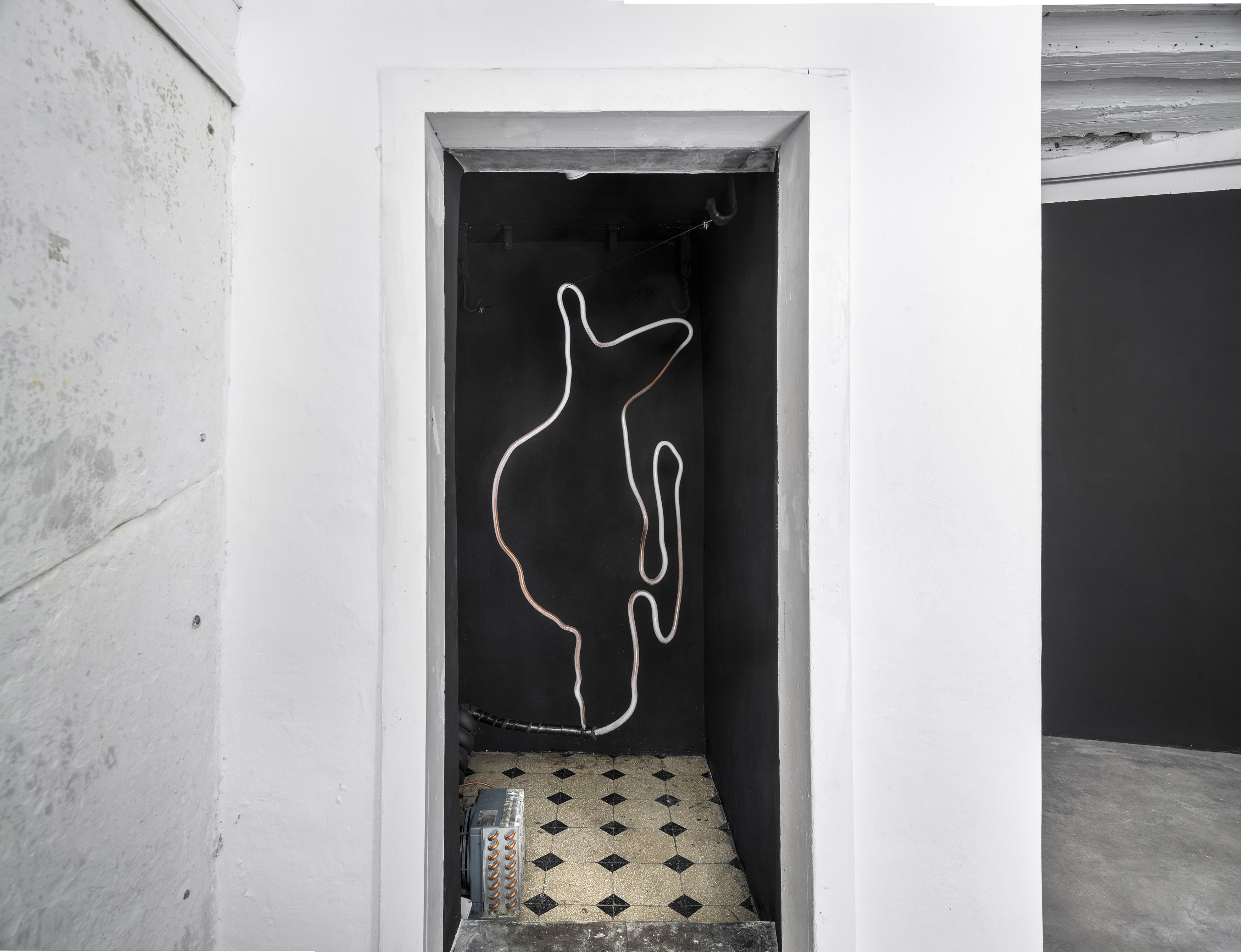
Avelino Sala, Naturaleza muerta con pescado, 2025, copper pipe, motor, ice, 152x72cm, in Anatomia di una Natura Morta, 2025, 10 & zero uno, Ph. Filippo Molena 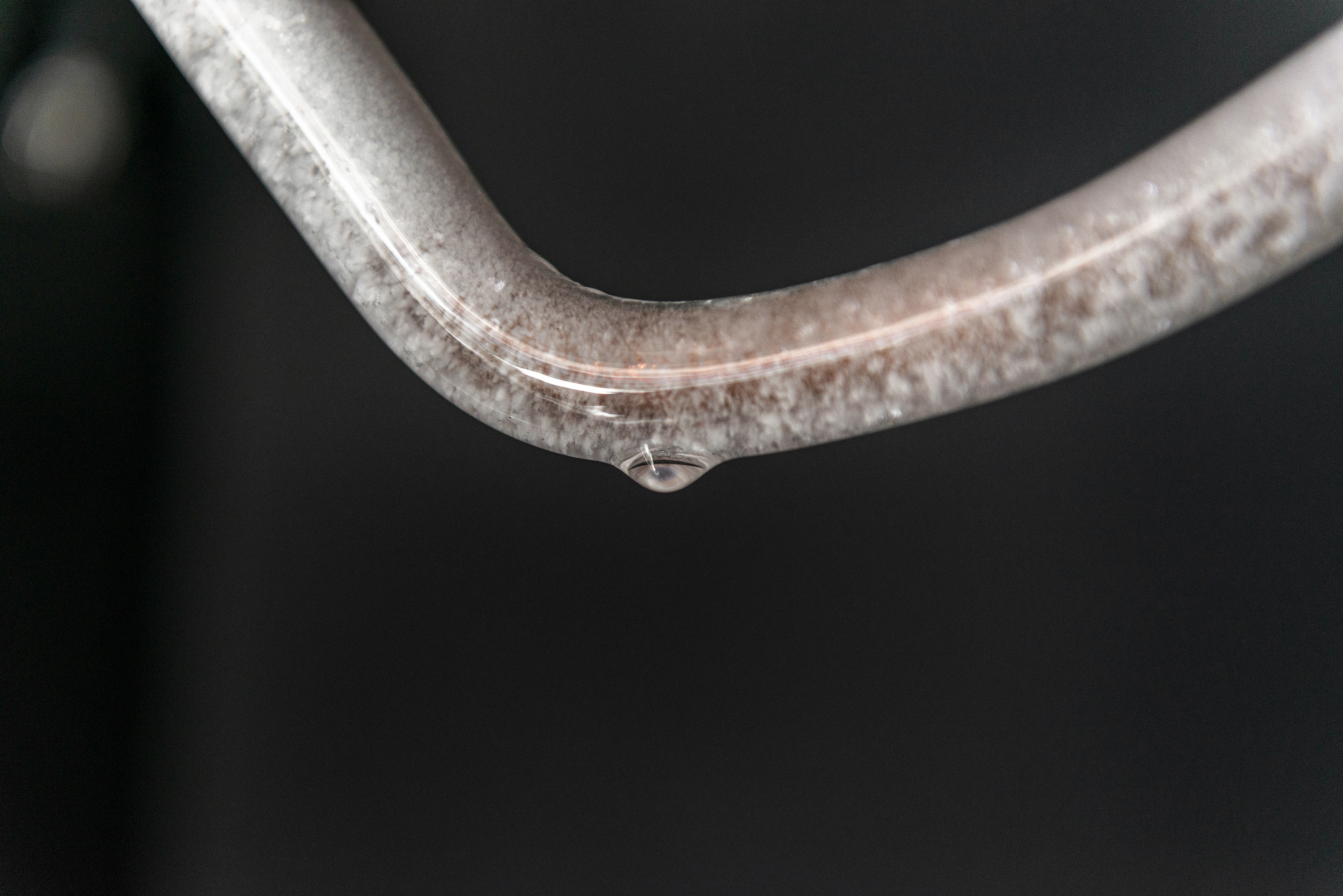
Avelino Sala, detail of Naturaleza muerta con pescado, 2025, copper pipe, motor, ice, 152x72cm, in Anatomia di una Natura Morta, 2025, 10 & zero uno, Ph. Filippo Molena 
Avelino Sala, detail of Naturaleza muerta con pescado, 2025, copper pipe, motor, ice, 152x72cm, in Anatomia di una Natura Morta, 2025, 10 & zero uno, Ph. Filippo Molena 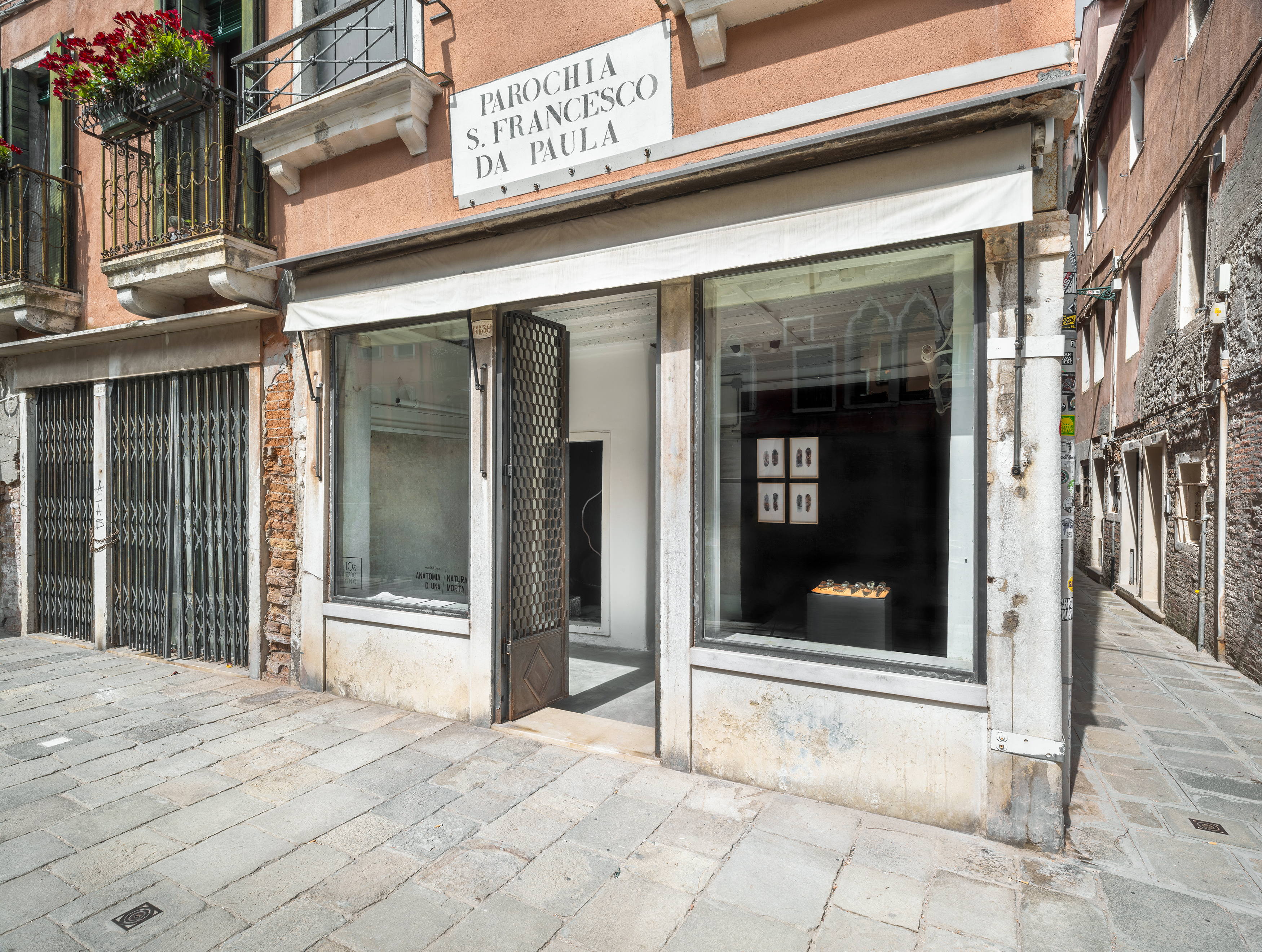
Exhibition View, Anatomia di una Natura Morta, 2025, 10 & zero uno, Ph. Filippo Molena
🖌️ Avelino Sala (1972, Gijón, ES)
is an artist and director of Sublime magazine. He holds a degree with honors in Critical Art Practice from the University of Brighton (UK). He is represented by Galería ADN (Barcelona), Ethan Cohen Fine Arts (New York), Salwa Zeidan (Abu Dhabi), Xavier Fiol (Mallorca), among others. His work as an artist has led him to question cultural and social realities from a poetic perspective, with a critical gaze. By continuously exploring social imagery, Sala seeks to highlight painful issues, demonstrating the power of art as a space for experimentation and the creation of new worlds. He is a key figure in Spain for art understood as a vehicle of political resistance, and his practice carries a form of poetics that reflects on state power and the mechanisms of control it exercises. His distinctive aesthetic reinforces a discourse that is both necessary and powerful, addressing sensitive and relevant topics such as migration, contemporary displacement, the environmental crisis, and the contradictions of capitalism. Sala is a key figure in Spain for art as political resistance. He operates within the global context of contemporary art, exhibiting and participating in biennials in Caracas, Tel Aviv, Istanbul, Bienal Sur, the Nomadic Biennale in Poland and Kosovo, and the Cuenca Biennial (Ecuador), among others. For over 20 years, his work has been shown internationally in venues such as Abrons Arts Center (New York), Museo de Bellas Artes de Asturias, the National Centre for Contemporary Art (NCCA) in Moscow, Matadero Madrid, White Box Art Center (New York), and many more. He regularly participates in international art fairs with the galleries that represent him: ARCO, MACO, ART BRUSSELS, among others. In 2007, he was awarded the Artport International Video Award in Basel (Switzerland) by UNESCO and the New York Foundation for the Arts. In 2010, he won the VAD Prize at the Girona Video Art Festival. He has also received grants from the Spanish Academy in Rome and, in 2012, from the Centre d’Art Le Lait in Albi, France. In 2021, he was awarded the Vegap grant, and in 2022, he received the Barjola Prize for Contemporary Creation. His works are part of several collections, including: Contemporary Art Collection of the Community of Madrid, Centro de Arte Dos de Mayo (CA2M), Galilas POC
(Brussels, Belgium), Fundación Bienal de Cuenca (Ecuador), C21 Museum Collection (Dallas, USA), ARTIUM Collection in Vitoria, Es Baluard Collection in Palma de Mallorca, Centro Niemeyer Collection, Russian National Centre for Contemporary Art (NCCA, Russia), New Pilar Citoler Collection, María Cristina Masaveu Collection, Spanish Academy in Rome, Spanish Ministry of Culture, Masaveu Foundation, CajaMadrid, Bilbao Arte Fundazioa, among others.

Exhibition Press
September 8th, 2025 – Segno Online: Avelino Sala dialoga con Venezia – by Efthalia Rentetzi
September 26th, 2025 – Juliet Magazine: Anatomia di una natura morta: Avelino Sala a 10 & zero uno – by Francesco Liggieri
October 12th, 2025 – ArtsLife: Anatomia di una “natura morta” a Venezia – by Francesco Liggieri
 10 & zero uno